Peperomia Wilting: Plasmolysis & Turgor Pressure Science
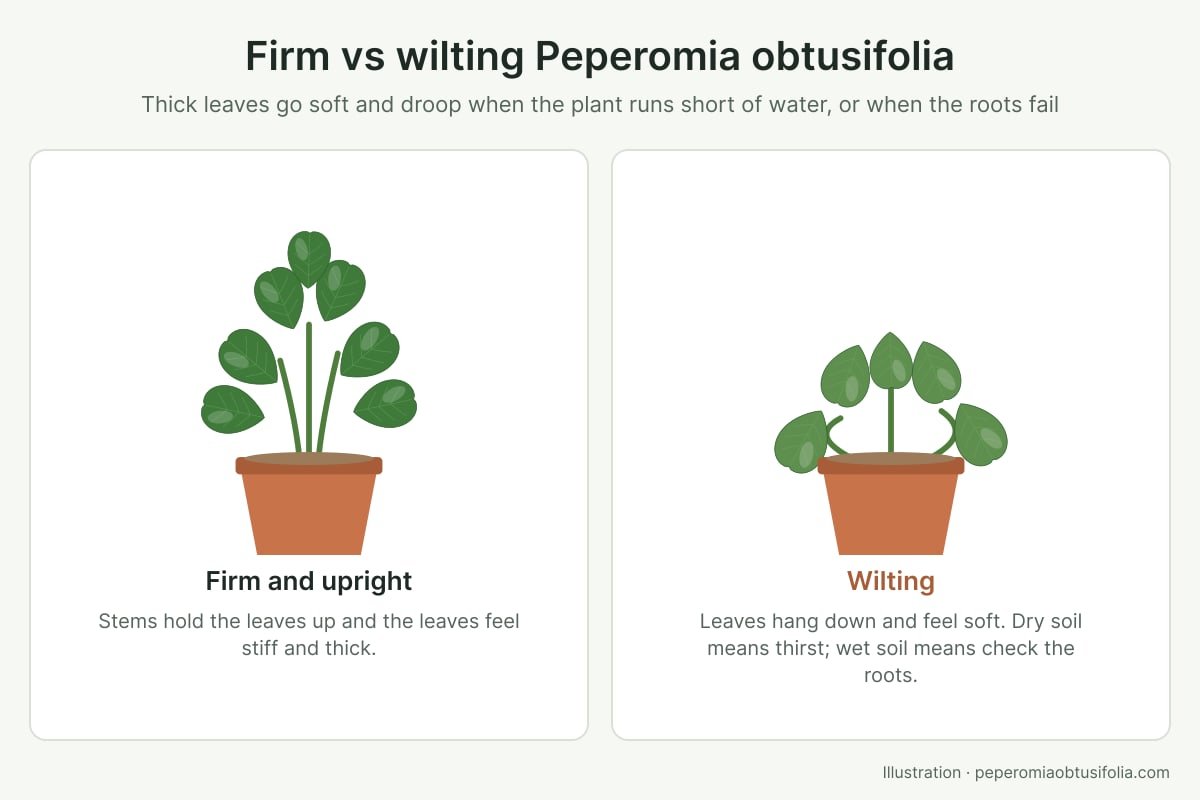
Peperomia wilting happens in both dry and waterlogged substrate, and the same limp, drooping appearance can mean opposite things: simple dehydration with a straightforward fix, or root failure that needs unpotting and root surgery. Checking the substrate before responding is the single step that prevents making the wrong problem worse.
Quick Diagnosis Table
| Substrate condition | Leaf texture | Additional signs | Most Likely Cause |
|---|---|---|---|
| Bone dry, pot noticeably light | Soft, slightly wrinkled | No odour | Dehydration |
| Wet or damp, pot heavy | Soft, sometimes yellowing | Sour smell; roots black or mushy if checked | Root rot / anoxia |
| Moist, normal weight | Firm but drooping | Occurs on a very hot day, recovers by evening | Temporary heat-driven wilting |
| Recently repotted or propagated | Soft, localised | Occurred within days of root disturbance | Transplant or cutting stress |
What This Symptom Looks Like
Peperomia obtusifolia has no woody stem tissue to hold it upright mechanically — it relies entirely on turgor pressure, the internal push of water against the cell walls in its water-storing leaf and stem tissue. When that internal pressure drops, cell walls lose rigidity and the whole plant droops, regardless of why the pressure dropped. This is what makes wilting deceptive: the visible symptom looks essentially the same whether the cause is too little water available or a root system that has lost the ability to move water it has plenty of. The substrate is what actually distinguishes them, not the leaves.
Causes Ranked from Most to Least Likely
1. Root rot in wet substrate
The more serious cause, and the one most often mistaken for the opposite problem. Substrate that stays wet for too long suffocates this species' fine, drought-adapted roots; the damaged root system can no longer transport water to the canopy even though water is right there in the pot. Confirm: check the substrate — if it's wet or damp rather than dry, and especially if there's a sour smell, this is root failure, not thirst. Unpotting reveals black or mushy roots rather than firm, pale ones.
2. Dehydration
The simpler and more recoverable cause. Once the substrate dries out completely and the plant's stored water reserves are depleted, there's nothing left to maintain turgor. Confirm: the pot feels noticeably light, the substrate is bone dry at depth (not just the surface), and there's no odour — a straightforward hydraulic deficit rather than a vascular failure.
3. Heat-driven temporary wilting
Less common, and distinguished by timing rather than substrate condition. On an especially hot day, water loss through the leaves can briefly outpace what even healthy roots in moist substrate can resupply. Confirm: substrate moisture is normal, roots are presumably healthy, and the plant recovers on its own once the room cools in the evening — if it does not bounce back, reconsider the substrate-based causes instead.
4. Transplant or propagation stress
A cutting or a recently repotted plant can wilt simply because its root system was disturbed and cannot yet supply water at the rate the leaves demand. Confirm: timing — wilting that began within days of a repot or a fresh cutting being taken, on a plant with otherwise unremarkable substrate, points here rather than to an ongoing watering problem.
Step-by-Step Recovery Plan
- Check the substrate before doing anything else — this single check determines which of two opposite treatments is correct, and picking wrong actively worsens the actual problem.
- For dehydration: water thoroughly until it runs from the drainage holes, let the pot drain fully, and expect turgor to return within a matter of hours to about a day.
- For root rot: unpot the plant, smell and inspect the roots to confirm, then remove all soft or black roots with sterilised scissors and repot into fresh, free-draining substrate. Withhold water until the top few centimetres are dry before watering again — the full sequence is in the overwatering rescue guide.
- For heat-driven wilting: do nothing to the watering — simply wait for the room to cool, and confirm recovery by evening before assuming a substrate problem instead.
- For transplant or cutting stress: maintain stable, moderate conditions and patience rather than adding water or fertiliser in response — the plant needs time to rebuild root function, not more inputs.
- If the stem base is black and soft, the damage has become systemic rather than confined to the roots — at that point, taking a stem cutting from any still-healthy upper growth is more reliable than trying to save the original root system.
Recovery Signs and Realistic Timeline
For dehydration, recovery is the fastest and most visible of all these causes — turgor typically returns within hours of a thorough watering, and a plant that doesn't perk up at all within a day probably wasn't simple dehydration to begin with. For root rot, recovery is slower and less certain: expect several weeks before new, firm growth confirms the repotted plant has re-established a functional root system, and judge success by that new growth rather than by whether the already-wilted leaves recover, since they generally will not. For heat-driven wilting, recovery should be same-day once temperatures drop. If none of the expected recovery patterns appear on the expected timeline, reconsider whether the original diagnosis was correct.
How to Prevent Recurrence
Water on a dry-down check — top 2-3 cm dry, pot noticeably lighter — rather than a fixed schedule, since this single habit prevents both major causes: it stops chronic wet substrate before root rot starts, and it catches genuine dryness before the plant depletes its reserves. Confirm moisture at depth with a skewer or by pot weight rather than judging by the surface alone, since surface dryness and depth dryness do not always match. During heat waves, check on the plant more frequently rather than changing the watering schedule preemptively — a hot day doesn't necessarily mean the substrate has dried faster. For the general thresholds this all sits on top of, see the complete care guide, and for a broader symptom-first view beyond wilting specifically, see the problems guide.
FAQ
See the frontmatter FAQ block above for direct answers on cause, recovery, and heat-driven wilting. For related symptoms sometimes confused with or co-occurring with wilting, see sudden leaf drop, downward curling, and wrinkled, soft leaves — all three share the same underlying turgor mechanism as wilting and are worth checking together.
Care FAQ
Why is my Peperomia wilting if the substrate is wet?
This is the more serious of the two wilting causes. If substrate has stayed wet too long, roots suffocate and fail, and a plant with failed roots cannot move water even when it is surrounded by it — wilting despite wet substrate is the signature of root rot, not thirst, and adding more water makes it worse.
Can a wilted Peperomia recover?
Yes, if the cause is genuine dehydration — a thorough watering restores turgor within hours to a day. If the cause is root rot, recovery requires unpotting, removing the damaged roots, and repotting into fresh substrate, and even then only succeeds if enough healthy root tissue remains.
Why do the leaves feel soft instead of firm?
Firmness comes from turgor pressure — water pushing outward against the cell walls in the leaf's water-storing tissue. When that internal pressure drops, whether from too little water reaching the cells or the substrate being too dry, the cell walls lose rigidity and the leaf feels soft or limp rather than firm.
Does heat cause wilting even with healthy roots and moist substrate?
Yes, though it is less common than the two substrate-related causes. On a very hot day, water loss through the leaves can briefly outpace how fast the roots can resupply it, causing temporary wilting that resolves once temperatures drop — if the plant perks back up in the evening without any watering change, this is the likely explanation rather than a substrate problem.