
Dull Peperomia Leaves: Restoring the Signature Gloss
Dull Peperomia obtusifolia leaves almost always trace back to dust or hard-water mineral residue sitting on the leaf surface, not anything wrong with the plant itself. The fix is plain water and a soft cloth — never a commercial leaf-shine product, which coats the leaf in oil or wax and can block the stomata the plant uses to breathe.
Quick Diagnosis
| What you see | Likely cause | Confirming check | First action |
|---|---|---|---|
| Visible grey film, wipes away easily | Household dust | Rub a small area with a dry finger — dust transfers visibly | Wipe with a damp microfiber cloth |
| Faint chalky haze, won't fully wipe off dry | Hard-water mineral residue | Still present after a dry wipe; softens with a damp cloth | Damp wipe first; diluted acid wash if it persists |
| Leaves feel slightly less firm, dullness widespread | Sustained low humidity | Hygrometer reads below 30-40% RH | Correct room humidity, not just clean the leaf |
| Overall pale, flat colour rather than a surface film | Possible nutrient shortfall | No film present after cleaning; leaves stay dull | Resume or adjust half-strength feeding in season |
| Dullness with curling, spotting, or drooping alongside it | A different, unrelated symptom | Check for curling, spots, or wilting specifically | See the related diagnoses below rather than just cleaning |
Why Peperomia Leaves Lose Their Gloss
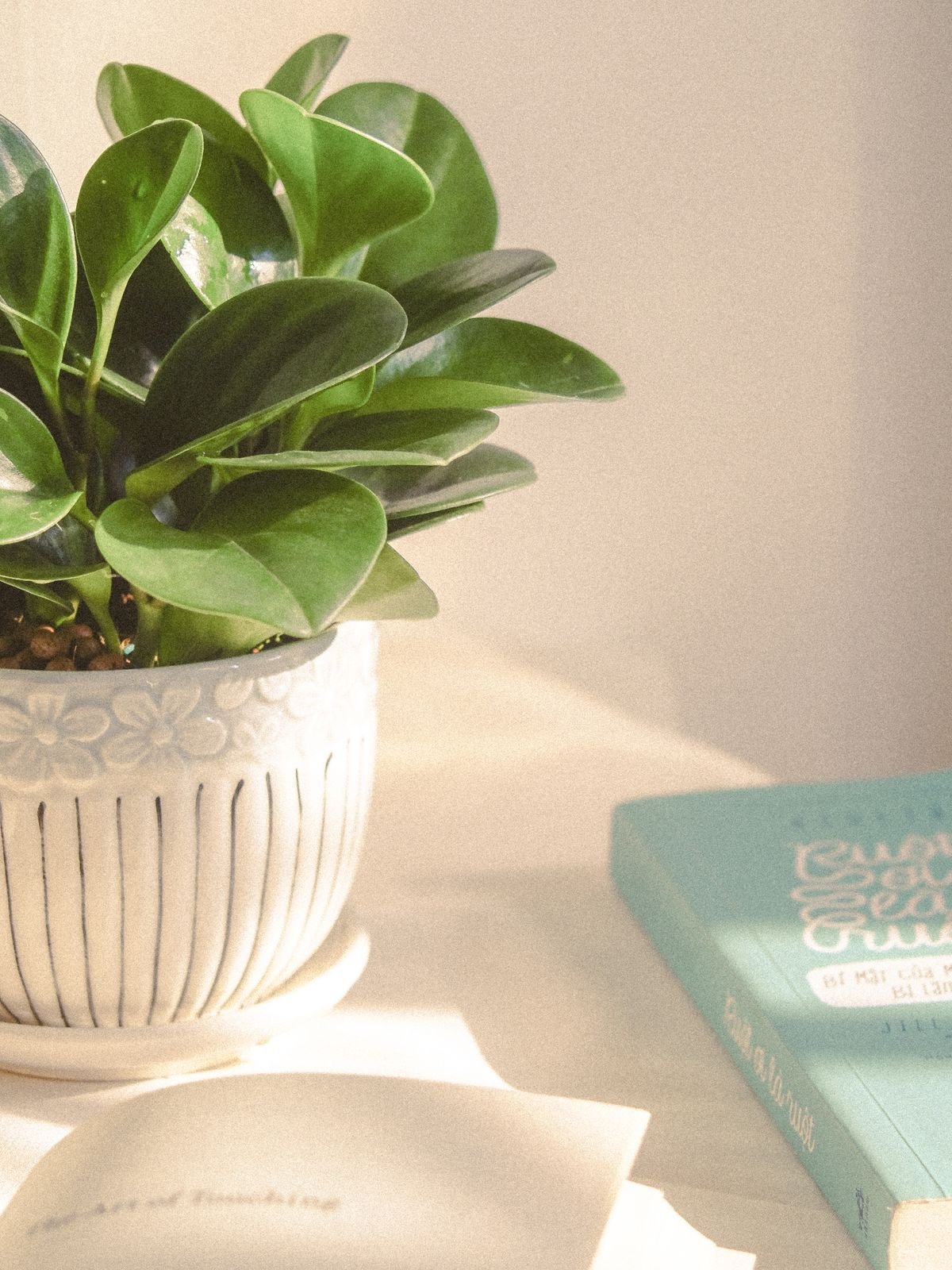
The high-gloss finish that gives this species its "baby rubber plant" nickname comes from a genuinely thick, waxy cuticle — not a coating that needs topping up. When that natural shine looks muted, a specific, identifiable cause is almost always responsible:
Household dust. Because the leaves are broad, flat, and horizontal in places, they collect dust the way a shelf does. This is not purely cosmetic — a dust layer blocks light from reaching the chloroplasts underneath and, once thick enough, can reduce gas exchange through the stomata, the microscopic pores concentrated on the leaf underside.
Hard-water mineral residue. Splashed or misted tap water that evaporates from the leaf surface leaves behind dissolved calcium and magnesium as a faint chalky film, muting reflectance without any dust being present.
Sustained low humidity. In persistently dry air, the outer cuticle can lose some of its suppleness over time, similarly to how skin looks less supple in dry conditions — a genuine environmental cause rather than a surface residue, and one that cleaning alone does not fix.
A genuine nutrient shortfall. Less common than the two surface causes above, but a plant short on the micronutrients involved in chlorophyll production can look pale and flat rather than deep green and reflective.
How to Clean and Restore the Shine Safely
Plain water and a soft microfiber cloth is the correct default method, including for a household with pets. Dampen a clean microfiber cloth with room-temperature or lukewarm water — filtered or distilled water avoids reintroducing the same mineral residue you are trying to remove — and wipe each leaf, supporting it from underneath with your other hand since the succulent petioles can snap under wiping pressure. Microfiber is structured to lift dust rather than just push it around, which is why it outperforms a standard cloth for this task.
This is also the pet-safe method: commercial cleaning sprays and leaf-shine products often contain fragrances or other additives that can be a mild irritant if a curious cat or dog brushes against a freshly treated leaf, whereas plain water introduces nothing beyond what the plant already tolerates. It does not change the species' own non-toxic status to cats and dogs either way — see the general toxicity overview for that separate question — but it does remove one more unnecessary chemical from a shared living space.
For hard-water mineral spots specifically that plain water alone does not lift, a mild diluted acid wash — a teaspoon of lemon juice or white vinegar per cup of distilled water — dissolves the mineral film effectively. Rinse it off with plain water immediately after wiping rather than leaving it to air-dry, since prolonged acid contact can damage the waxy cuticle you are trying to restore. This is an occasional spot treatment for mineral buildup, not a routine cleaning method.
Wipe the leaf undersides periodically, not just the tops. Most dust settles on the upper surface, but early-stage pests such as mites or mealybug crawlers are more often found underneath — a monthly underside check catches problems before they establish, on top of restoring shine evenly across the whole leaf.
Addressing the Environmental Causes
Cleaning resolves surface residue; it does not fix low humidity or an actual nutrient shortfall, which need their own corrections.
Light. Gloss is partly a function of what there is to reflect — a plant in a dim corner looks flatter regardless of leaf condition. Moving it toward the light requirements guide's working target of roughly 2,000-4,000 lux restores visible vibrancy on top of any cleaning.
Humidity. Normal household humidity is fine for this species, and keeping the room from getting very dry supports the waxy cuticle's natural suppleness — a humidifier paired with a hygrometer is the reliable way to get there, more so than a pebble tray. See the humidity guide for the full setup.
Fertiliser. A balanced liquid feed at half strength, monthly through spring and summer only, supplies the micronutrients involved in chlorophyll production if a genuine deficiency — rather than surface residue — is the actual cause. See the fertiliser guide for dosing.
Recovery Signs and Realistic Timeline
A single cleaning pass typically restores visible gloss immediately if dust or mineral residue was the cause — there's no waiting period, since the shine was never actually lost, just covered. Environmental causes take longer: expect a few weeks of consistently corrected humidity or light before new growth reflects the improvement, since existing leaves won't regain suppleness overnight and older leaf tissue responds more slowly than new growth does. If dullness persists after a thorough clean and a few weeks of corrected light and humidity, a genuine nutrient shortfall is the more likely remaining explanation.
How to Prevent Recurrence
Wipe leaves monthly as routine maintenance rather than waiting for visible dullness to prompt it, checking undersides at the same time for early pest signs. Keep the air from getting very dry and light at roughly 2,000-4,000 lux as a matter of course, both covered in the guides linked above, since a plant already in its optimum environment rarely develops the environmental causes of dullness in the first place. Use filtered or distilled water for cleaning specifically, even if tap water is used for normal watering, to avoid reintroducing the same mineral residue each time.
Related Diagnoses
Dullness that appears alongside other symptoms is usually a different, more specific problem than a surface film. If the leaves are also curling, see the curling leaves guide, or the downward curling guide if the curl is specifically downward. If leaves are going soft and wrinkled rather than just losing shine, see the wrinkled leaves guide. If the plant is dropping leaves outright alongside the dullness, see the leaf drop guide. For the full diagnostic reference across all symptom types, see the complete problems guide.
Care FAQ
Why do my Peperomia leaves look dull instead of glossy?
Almost always dust or hard-water mineral residue sitting on the leaf surface, rather than anything wrong with the plant. Less commonly, sustained low humidity or a genuine nutrient shortfall can also flatten the natural shine. Plain water and a soft cloth resolve the surface causes; the environmental causes need addressing separately.
Is leaf shine spray safe to use on Peperomia?
No. Most leaf shine products leave an oil or wax film that blocks the stomata — the microscopic pores mostly on the leaf underside that the plant uses for gas exchange. The natural waxy cuticle on this species already provides the shine; it does not need an artificial coating.
What is a pet-safe way to clean Peperomia leaves?
Plain, room-temperature water and a soft microfiber cloth. This avoids the fragrances, phthalates, or other additives in commercial cleaning sprays that can be a mild irritant if a curious pet brushes against a freshly treated leaf, and it does not affect the plant's own non-toxic status to cats and dogs.
Does dust actually harm the plant, or is it just cosmetic?
Both. A dust layer blocks light from reaching the chloroplasts and can physically reduce gas exchange through the stomata if it builds up enough, so regular cleaning is a genuine care task, not just an aesthetic one.