Propagating Variegated Peperomia: Avoid Reversion
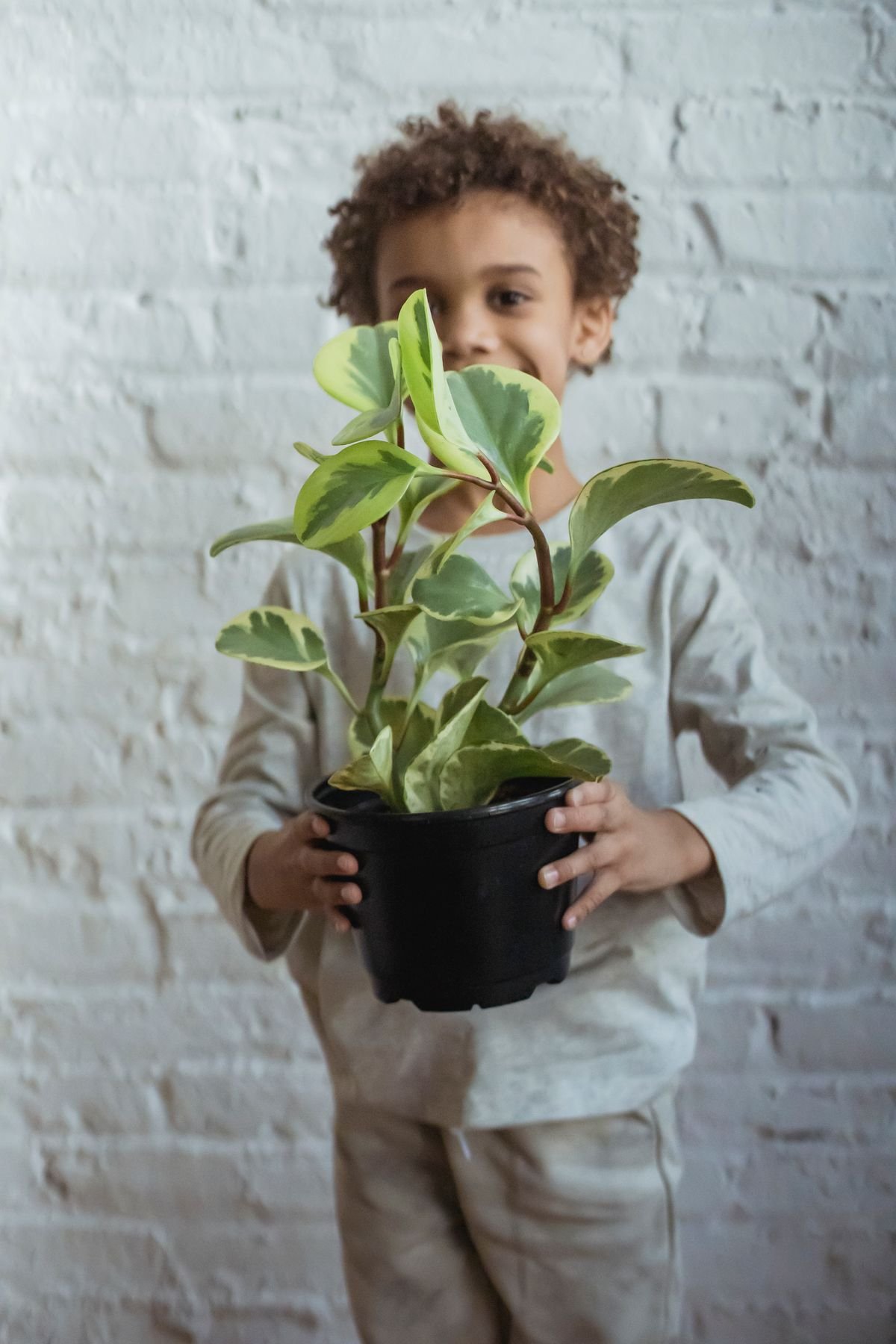
Propagating variegated Peperomia obtusifolia works reliably when the cutting includes at least one node from a stem showing genuine green-and-cream striping — the biggest failure risk is choosing a leaf cutting or an almost entirely white stem section, both of which fail to produce a variegated plant regardless of otherwise correct care.
When to Use This Method
This method suits any variegated cultivar — 'Variegata', 'Albo-Marginata', 'Marble', 'Lemon Lime' — where preserving the white or cream pattern in the new plant matters. It is the wrong choice if variegation isn't a priority, since a leaf cutting is simpler to take from a solid green parent and works fine for the all-green form. It is also not suitable if no stem section on the parent shows both node structure and a reasonable proportion of green tissue — an entirely white stem cannot support itself as a standalone cutting no matter which propagation method is used.
Spring and summer are the more forgiving seasons for this method, since the parent plant's faster active growth translates into quicker rooting and a shorter window during which the vulnerable node sits in a rooting medium without support. It can still be attempted in autumn or winter, but expect a slower timeline and be more conservative about medium moisture, since a dormant-season cutting has less metabolic activity to fight off rot.
Tools, Medium, and Cutting-Selection Checklist
- Tools: clean, sharp scissors or a blade, sterilised with 70% isopropyl alcohol before cutting.
- Medium: water, moist perlite, or a 50/50 perlite-and-bark mix — any of the standard rooting media works, since the deciding factor here is the cutting itself, not the medium.
- Cutting selection: choose a stem section with visible green-and-cream striping along its length, including at least one, ideally two, nodes. Avoid a section that reads as nearly solid white, since it lacks enough functional chlorophyll to power its own growth.
Step-by-Step Method
- Identify a striped stem section with two nodes. The node is a cluster of meristematic tissue at each leaf junction, and in a variegated specimen it carries the same organised layering responsible for the parent's pattern.
- Cut cleanly below the lower node, leaving roughly one node's worth of bare stem beneath it.
- Strip the leaf from the lower node so it can dedicate its energy to root production, while leaving the leaf on the upper node intact as the plant's initial energy source.
- Let the cut end callus for a few hours in a dry, room-temperature spot before placing it in the rooting medium — this reduces the risk of the node rotting before roots form, since nodes are metabolically active tissue and more vulnerable to rot in stagnant, cold conditions than the less active internode sections.
- Place the cutting in water or moist perlite, with the lower node submerged or in contact with the moist medium and the upper leaf above the surface.
- Position in bright, indirect light — the same 2,000-4,000 lux range this species needs generally, since a dim spot slows rooting regardless of cutting quality.
Rooting and New-Growth Signs
Root initials typically appear at the submerged node within a few weeks, though this varies with temperature and season — expect a longer wait in a cooler room or during autumn and winter. The more meaningful milestone is new growth at the upper node: a small new leaf or shoot emerging there confirms the cutting has successfully rooted and is functioning as an independent plant, and its variegation pattern is the real test of whether the chimera transferred successfully.
Transition and Aftercare
Once roots are a few centimetres long, pot the cutting into a small container with a free-draining mix — the standard 50% peat-free compost, 30% perlite, 20% bark ratio works well. Water-rooted cuttings benefit from a gradual transition rather than an abrupt move to soil, since water-formed roots are structurally different and adapt over a couple of weeks to a soil environment. Hold off on fertiliser for the first month, since a newly potted cutting has limited root capacity to use it, and resume the plant's normal watering-on-dryness routine once new growth confirms establishment.
Failure Diagnosis
- Node turns soft or dark, no roots after several weeks: most likely rot from a stagnant or overly cold environment — see the cuttings-rotting guide for the full rescue protocol.
- New growth at the upper node emerges solid green: the node's chimeric layers didn't carry through — this happens occasionally even with correct technique, and the resulting all-green cutting can still be grown on as a normal green-form plant if variegation isn't essential.
- Cutting wilts and collapses within days: likely too much green tissue was missing from the original stem section, leaving insufficient energy reserve to sustain the cutting through rooting.
- No visible progress after a long wait with a firm, healthy-looking node: check water temperature and light level before assuming failure — cool rooms and low light slow this process considerably without necessarily stopping it.
FAQ and Comparison With the Main Alternative
Division is the main alternative when a variegated specimen already has multiple stems at the base — see the division guide — since it separates an already-established, already-variegated stem rather than rooting a new one from scratch, skipping the rooting uncertainty entirely. Water propagation specifically is covered in more depth in the water propagation guide, and the broader comparison across all propagation methods for this species lives in the main propagation guide.
Care FAQ
Can I propagate a variegated Peperomia obtusifolia from a leaf cutting?
Technically yes, but the plantlet almost always regenerates as solid green. Variegation in this species is chimeric — held in the outer meristem layer — and a leaf cutting has to build an entirely new meristem from tissue that lacks that layer, so the green lineage takes over. A stem cutting with at least one variegated node is the reliable method.
Why does a stem cutting preserve variegation better than a leaf cutting?
A node already contains organised meristematic tissue carrying the chimeric layers responsible for variegation. A new branch growing from that node inherits the same layered structure directly, rather than having to reconstruct a meristem from scratch the way a leaf cutting does.
Is it better to include one node or two in a variegated cutting?
Two nodes is the more reliable choice for a beginner. The lower node, stripped of its leaf, becomes the primary rooting point, while the upper node with its leaf intact becomes the new growth point — giving the cutting a larger energy reserve and a backup point of development if the first node struggles.
What if my cutting comes out almost entirely white?
A stem section that is nearly or completely white lacks enough green, chlorophyll-bearing tissue to sustain itself and typically fails regardless of care quality. Choose a cutting with a visibly striped stem showing a meaningful proportion of green rather than one that looks the most dramatically variegated.