Propagate Variegated Peperomia from Leaves: 95% Fail
You should not propagate variegated peperomia from leaves if the goal is to keep cream, white, or yellow patterning. Leaf cuttings of Peperomia obtusifolia chimeras such as 'Variegata', 'Marble', and 'Albo-Marginata' regenerate plantlets that revert to solid green in the large majority of cases (typically above 95%). To keep the pattern, use a stem cutting with at least one variegated node — the only structure that already holds the layered meristem.
Leaf regeneration still works as biology: green P. obtusifolia leaf methods remain valid in the leaf propagation guide. This article answers a narrower question — why that method fails for chimeric colour, and what replaces it. Step-by-step node work lives in propagating variegated peperomia from nodes.
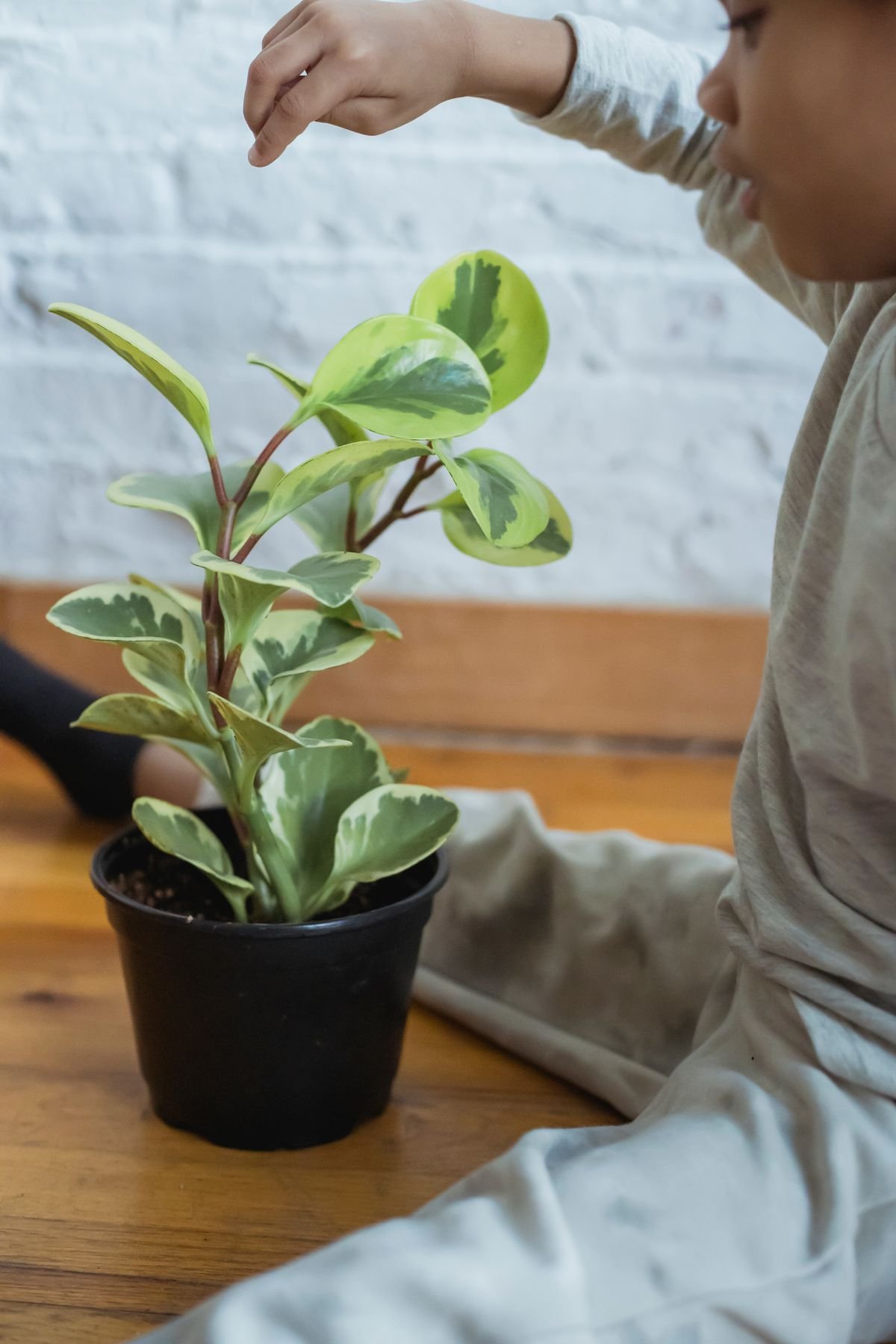
Quick Reference: Leaf vs Stem for Variegated P. obtusifolia
| Method | Roots / plantlet | Pattern outcome | Use when |
|---|---|---|---|
| Leaf + petiole | Slow (weeks to months) | Almost always all-green | You want green stock from surplus leaves |
| Stem + variegated node | Faster; 14–42 days typical for stem roots | Pattern preserved if node is chimeric | You need true-to-type variegates |
| Division of multi-stem plant | Immediate | Pattern kept on each division | Mature clump at repotting |
Site position (opinions / stats): variegated leaf cuttings are not a reliable path to patterned plants; stem cuttings with a variegated node are required. See also Wikipedia: chimera (genetics) and meristem.
1. Propagate Variegated Peperomia from Leaves: The Chimera Problem
To propagate variegated peperomia from leaves is to ask a leaf to invent a new growing tip. In solid-green tissue that works via totipotency. In a periclinal chimera it does not copy the architecture that makes the leaf look variegated.
Botanists describe shoot tips as layered:
- L1 — outermost layer (often epidermis)
- L2 — sub-epidermal layer where many variegation mutations sit
- L3 — inner corpus, frequently all-green
White or cream patches lack functional chloroplasts. They are maintained only while those layers stay organised at the apical meristem. A leaf cutting does not transplant that organised tip; it forces adventitious organogenesis from mesophyll and petiole cells that usually carry only the green genotype.
The widely repeated hope — more light will make the baby variegated — confuses two events. Light can reduce environmental reversion on an existing chimera (variegation light thresholds). It cannot rebuild missing cell layers in a leaf-derived meristem.
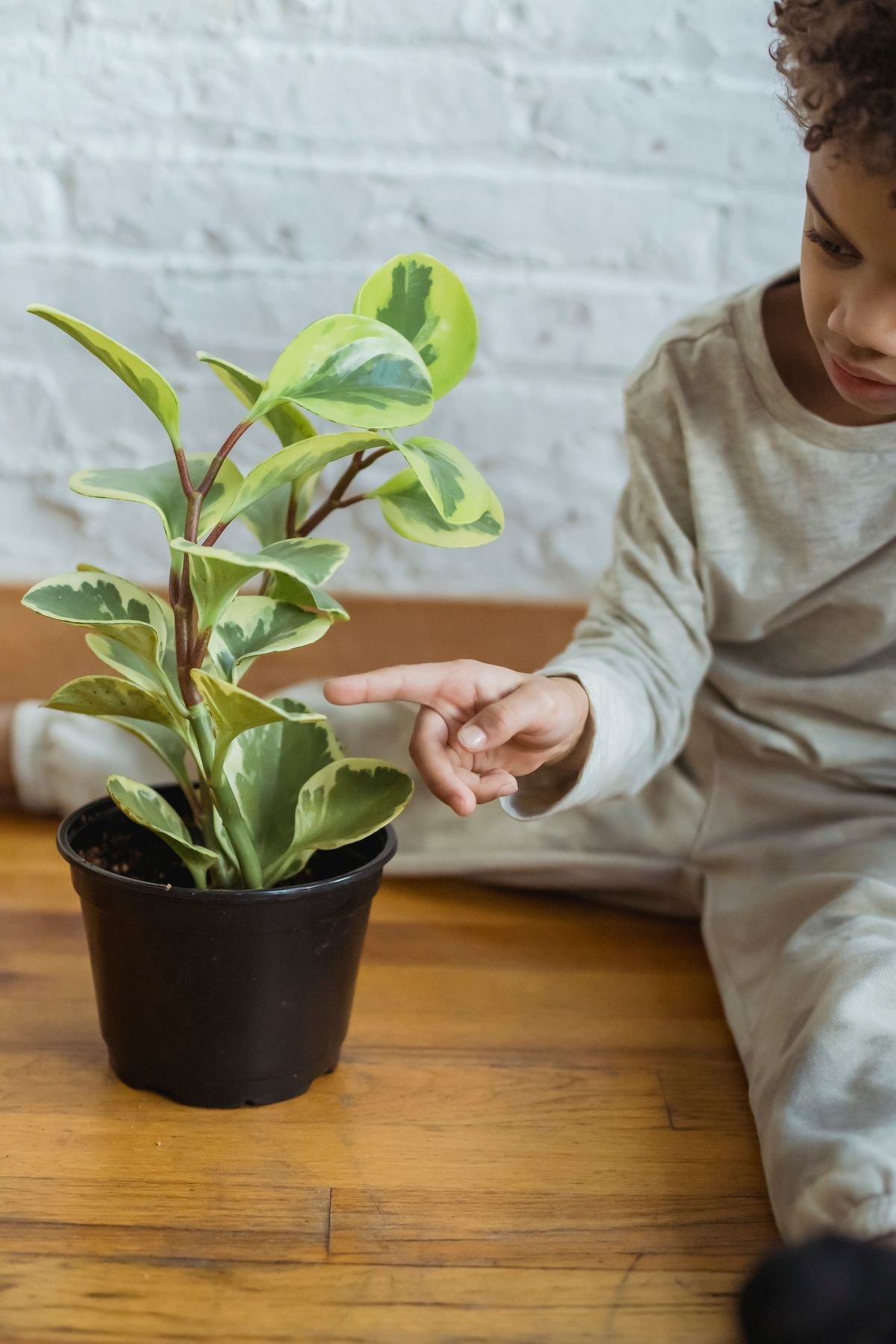
2. Why Leaf-Derived Meristems Default to Green
When a leaf calluses and forms a shoot:
- Origin bias — regenerating cells are drawn from green-capable layers.
- Energy bias — chlorophyll-bearing cells outcompete white tissue while a new tip organises.
- No template — without a node, there is no pre-stacked L1/L2/L3 map to continue.
Result: a solid-green plantlet that behaves like 'Jade' stock. That is not temporary etiolation; it is a different meristem composition. Pruning or fertiliser will not paint variegation onto it later (reversion mechanics).
What you will see in the tray. Roots may appear first along the petiole while the original leaf stays variegated — that leaf is still parental tissue. Colour of the new shoot is the only verdict. Growers often misread a rooted variegated leaf as “success” before any adventitious bud emerges, then discard months of work when the pup is green.
Timelines if you run the experiment anyway: leaf cuttings often need 28–56 days to root and months for a visible plantlet — then you discover the colour outcome. Stem cuttings show roots in roughly 14–42 days depending on medium, with pattern readable as soon as the axillary shoot expands. For method comparisons across all four approaches, see how to propagate P. obtusifolia.
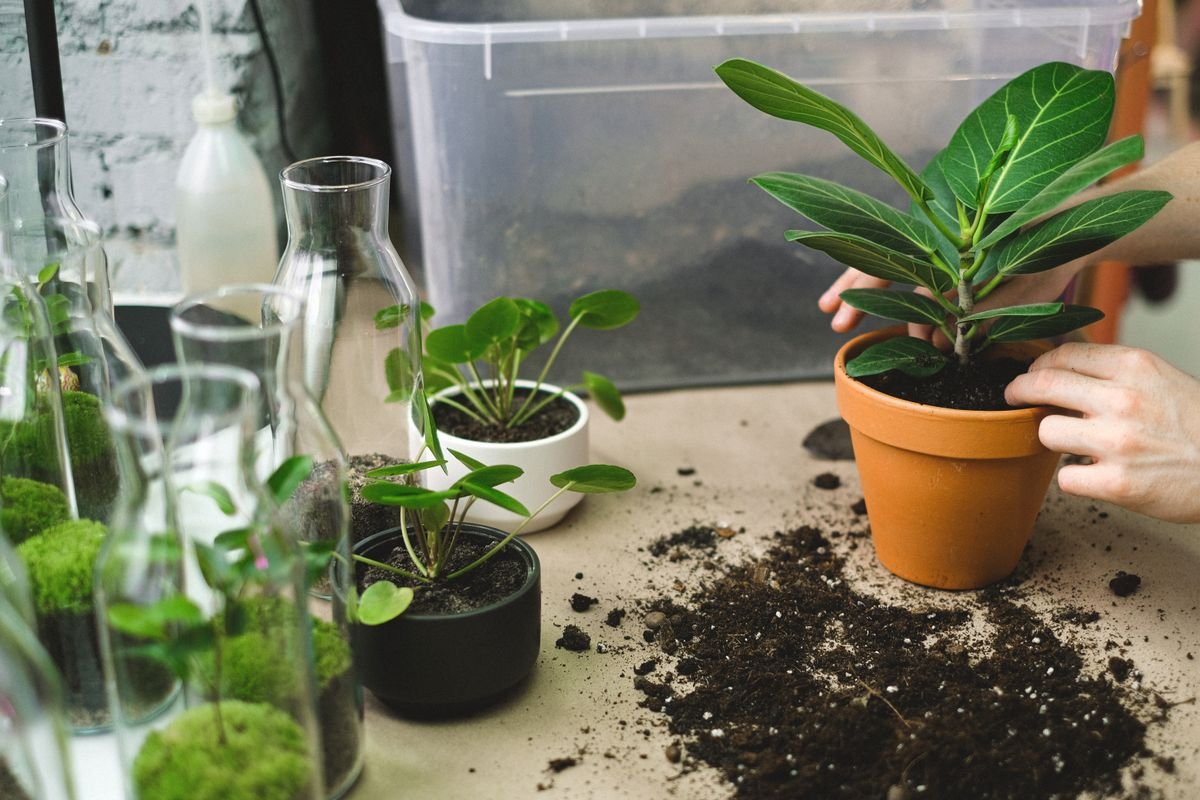
3. Chimeral vs Genetic Variegation — The Rare Exception
Leaf cuttings preserve colour only when variegation is fixed in every cell's genotype (genetic / plastid inheritance in some taxa), not when it depends on layered chimerism.
Cultivated P. obtusifolia favourites — 'Variegata', 'Marble', 'Albo-Marginata', 'Alba', 'Lemon Lime' — behave as chimeras for practical propagation. Treat leaf methods as green-only for these. If a different Peperomia species shows identical splash patterning on every seedling-like regeneration, it may be genetically fixed — still verify with a test leaf before destroying scarce stem material. For obtusifolia collectors, assume chimera until proven otherwise (variegata science; variegation photosynthesis).
4. What to Do Instead: Stem Cutting with a Variegated Node
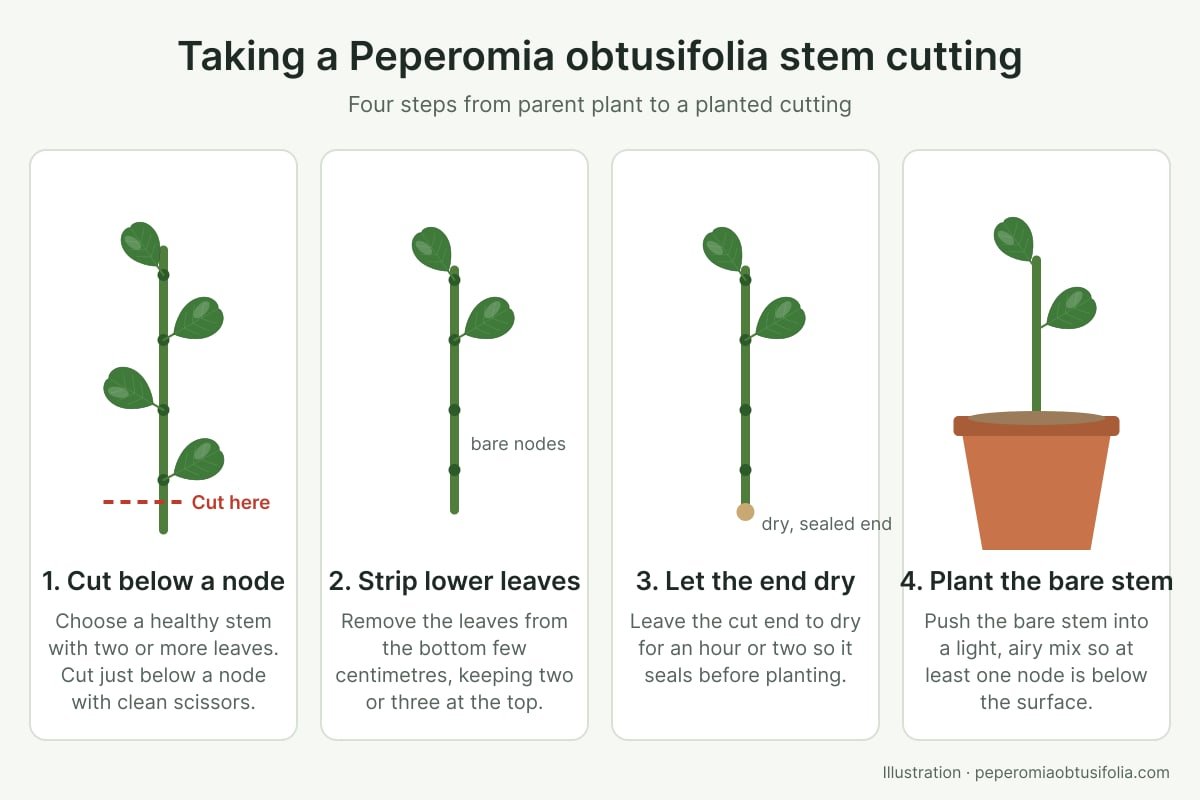
Selection. Cut just below a node where the stem or attached leaf still shows clear variegation. Avoid nodes that have already pushed a solid-green axillary shoot. A green stripe running up one side of the stem is a warning that shoots from that sector will trend green (reversion).
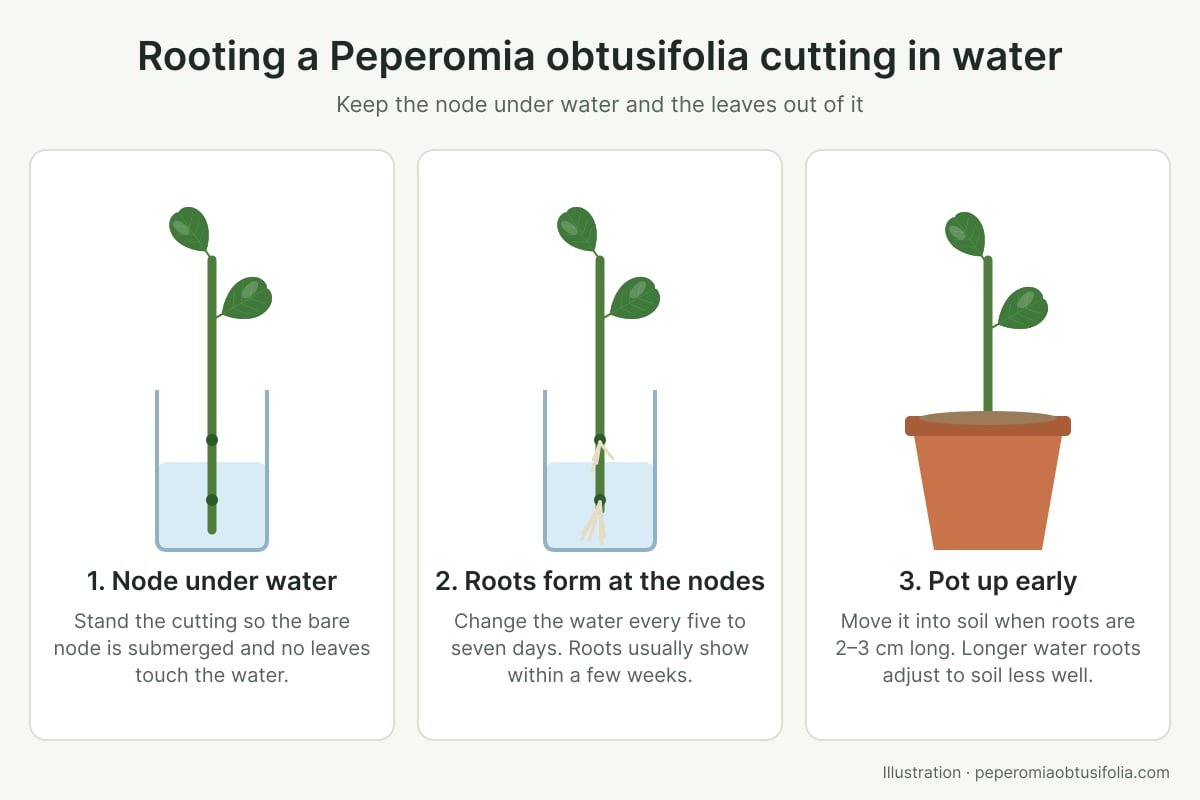
Preparation. Remove lower leaves that would sit in the medium; leave one or two patterned leaves. Optional brief callus. Root in water or in 50% perlite / aerated mix at 22–25 °C under roughly 70–80% RH if using a vented dome. Hormone is optional — P. obtusifolia roots readily without it in season.
Two-node option. Where stem length allows, one bare lower node for roots and one upper node with a variegated leaf for the shoot improves insurance without changing the chimera rule.
Light after rooting. Hold leaf-surface light in the upper band for variegates — about 30–40% higher than the green-form optimum of 2,000–4,000 lux, typically toward 2,500–3,200+ lux — so the meristem is not pressured to favour all-green tissue (window direction; Missouri Botanical Garden profile). Root the cutting in water — see the water propagation guide for that method's specific timing and container setup — or in aerated substrate as described above; if the cut surface shows any softness before roots appear, the cuttings rotting guide covers the rescue window.
Full node protocol: propagating variegated peperomia nodes. General stem method: stem cutting propagation. Species profile: NC State Extension.
5. If You Already Started Leaf Cuttings from a Variegate
Honest outcomes:
- All-green plantlets — keep as ordinary green peperomias, gift, or compost. Do not wait months for colour that will not arrive.
- Weak, mostly white sprouts — rare and usually non-viable; insufficient chlorophyll to sustain growth.
- Parent plant — leaf removal does not “steal” chimeral layers from remaining stem tips; continue stem propagation from patterned nodes.
Season still matters for speed (best time to propagate), but season does not override chimera rules.
Conclusion
Propagate variegated peperomia from leaves only if you accept green offspring. Chimeral P. obtusifolia cultivars lose organised L1/L2/L3 structure when a leaf rebuilds a meristem from scratch, so patterned plants require stem cuttings that include a variegated node. Use leaves to multiply green stock; use nodes to multiply the cultivar you actually bought. That distinction is the difference between a planned collection and a tray of accidental 'Jade'.
Care FAQ
Can you propagate variegated Peperomia obtusifolia from leaf cuttings?
You can regenerate a plantlet from a leaf, but it will almost always be solid green. Cultivars such as 'Variegata', 'Marble', and 'Albo-Marginata' are periclinal chimeras; leaf regeneration rebuilds a meristem from tissue layers that do not carry the full variegation map.
Why do variegated Peperomias revert when grown from leaves?
Adventitious shoots usually arise from mesophyll or L2/L3-derived cells that are genetically green. Without an intact apical meristem holding organised L1–L3 layers, the cream or white pattern is not reconstructed. Site trials and chimeric theory put true-to-type recovery from leaves well below reliable rates — typically above 95% reversion.
How can I propagate a variegated Peperomia and keep the colour?
Take a stem cutting that includes at least one node showing variegation on the stem or attached leaf. The node carries a pre-organised meristem. Root it in aerated substrate or water, then grow on at higher light than an all-green plant needs.
Will high light stop a leaf cutting from reverting?
No. Extra lux can help an already chimeric stem hold pattern, but it cannot restore layers that were never present in a leaf-derived meristem. A plantlet born green stays green.
What should I do with green plantlets from variegated leaves?
Treat them as solid-green 'Jade'-type stock if you want more green plants. Do not expect them to re-variegate. For patterned offspring, restart from a variegated stem node.