
How Fast Does Peperomia Grow? Rate, Seasons & Stalls
How fast does peperomia grow? For Peperomia obtusifolia, expect roughly 2–5 cm of new extension in the spring–summer growing window and near-zero measurable stem elongation from November through February in temperate indoor homes. Mature indoor height clusters around 20–30 cm after several seasons — not after one summer flush. That rate matches site horticultural observation aligned with extension profiles (Missouri Botanical Garden; RHS). These growth-rate figures assume the general baseline in the complete care guide is already being met.
Retail claims of “12 inches a year” describe best-case trailing extension under strong culture, not a typical upright windowsill centimetre budget. Final dimensions and the upright-to-decumbent habit belong in the size guide; winter metabolic slowdown belongs in the dormancy guide. This article is growth rate only.
| Context | Typical rate | Notes |
|---|---|---|
| Spring–summer (good lux) | ~2–5 cm extension | Active node production |
| Nov–Feb (temperate home) | ~0 cm | Semi-dormancy / low DLI |
| Indoor mature height | 20–30 cm | Multi-year outcome |
| Stretch without thick leaves | Not “fast growth” | Etiolation — fix light |
1. How Fast Does Peperomia Grow: Dense Leaves, Slow Centimetres
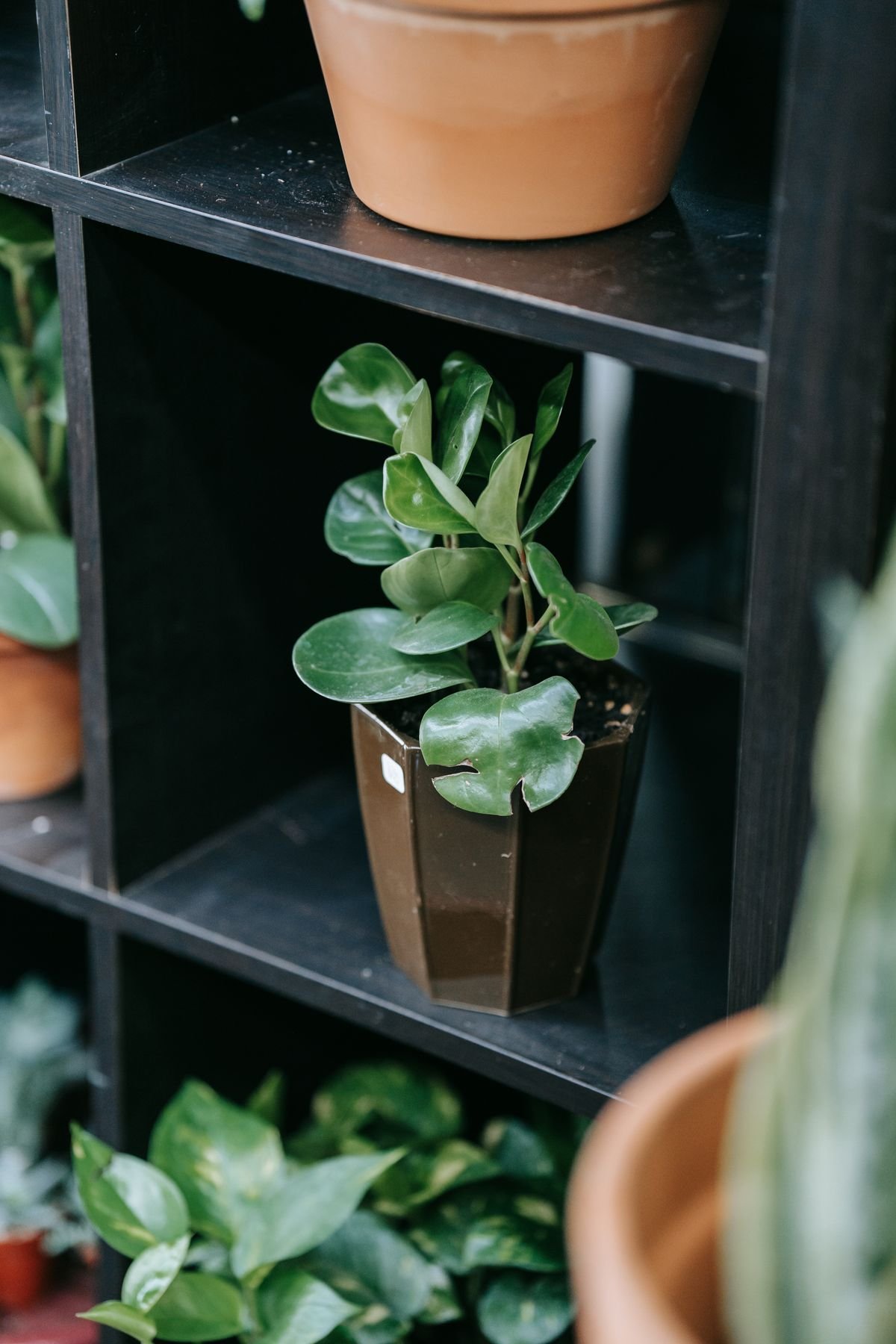
P. obtusifolia builds thick, waxy lamina and short internodes when light is adequate. Carbohydrate goes into leaf volume and cuticle, not into long vines. A Pothos centimetre is cheap tissue; a Peperomia centimetre is denser biomass. That is why the species feels “stuck” to growers who calibrate expectations on aroids.
Species habit: facultative epiphyte / understorey plant (NC State Extension). Survival strategy favours storage and toughness over race-to-the-canopy elongation.
2. Temperature and Season: Why Winter Looks Like Failure
Metabolic rate rises with temperature within the species’ safe band (optimum days 18–24 °C). Cool rooms near 15 °C and below slow cell division; sustained <10 °C risks damage. Q10 framing is useful as a reminder that cold rooms throttle enzymes — not as a licence to heat the plant past ~28 °C into high-VPD stress (temperature tolerance; keep clear of AC blasts — AC impact).
Seasonality matters more than most care cards admit. Shorter photoperiod and lower DLI from November to February push the plant under its photosynthetic surplus. New leaves pause even when watering is correct (dormancy; photoperiodism). Fertiliser in that window does not invent photons.
3. What Actually Changes How Fast Peperomia Grows
| Lever | Speeds healthy growth | Stall / false speed |
|---|---|---|
| Light | 2,000–4,000 lux at leaf | <800 lux → etiolation (long gaps, small leaves) |
| Water | Dry-down of top 2–3 cm | Chronic wet → root anoxia, then stop |
| Pot | Snug, free-draining | Overpotting → slow + rot risk |
| Nitrogen | Dilute feed spring–summer | Winter feeding / salt burn |
| Cultivar | Green forms | Variegates need more lux for same rate |
Light is the primary fuel (light requirements; window direction). Houseplant lighting basics: Illinois Extension.
Opinion: A larger pot does not make Peperomia grow faster. Oversizing keeps substrate wet longer than the shallow root system can process.
Etiolation is not acceleration. Internodes of 4–6 cm under dim light look like “growth” on a tape measure and fail as architecture (fix leggy peperomia).
4. Flush Growth vs Continuous Weekly Leaves
New nodes often arrive in short bursts after a quiet interval — carbohydrates accumulate, then 1–3 leaves expand, then another pause. Stem cuttings show the same pattern: weeks of apparent stillness, then a flush once roots and shoots couple (stem-cutting propagation). Weekly leaf calendars borrowed from fast vines misread this rhythm as failure.
How to measure honestly. Mark a stem with a soft tie or photograph the crown monthly from the same angle and distance. Score success as new leaves with internodes near 1–2 cm and normal thickness — not as raw height. A plant that adds 8 cm of pale stretch under 400 lux has not “grown fast”; it has etiolated.
5. Extra: Time-to-Mature, Variegation, and Lifespan Context
From a typical 10 cm nursery plant to a filled 20–30 cm multi-stem specimen usually spans about 2–3 years of decent culture — pruning and light decide bushiness more than force-feeding (prune guide; fertilizer).
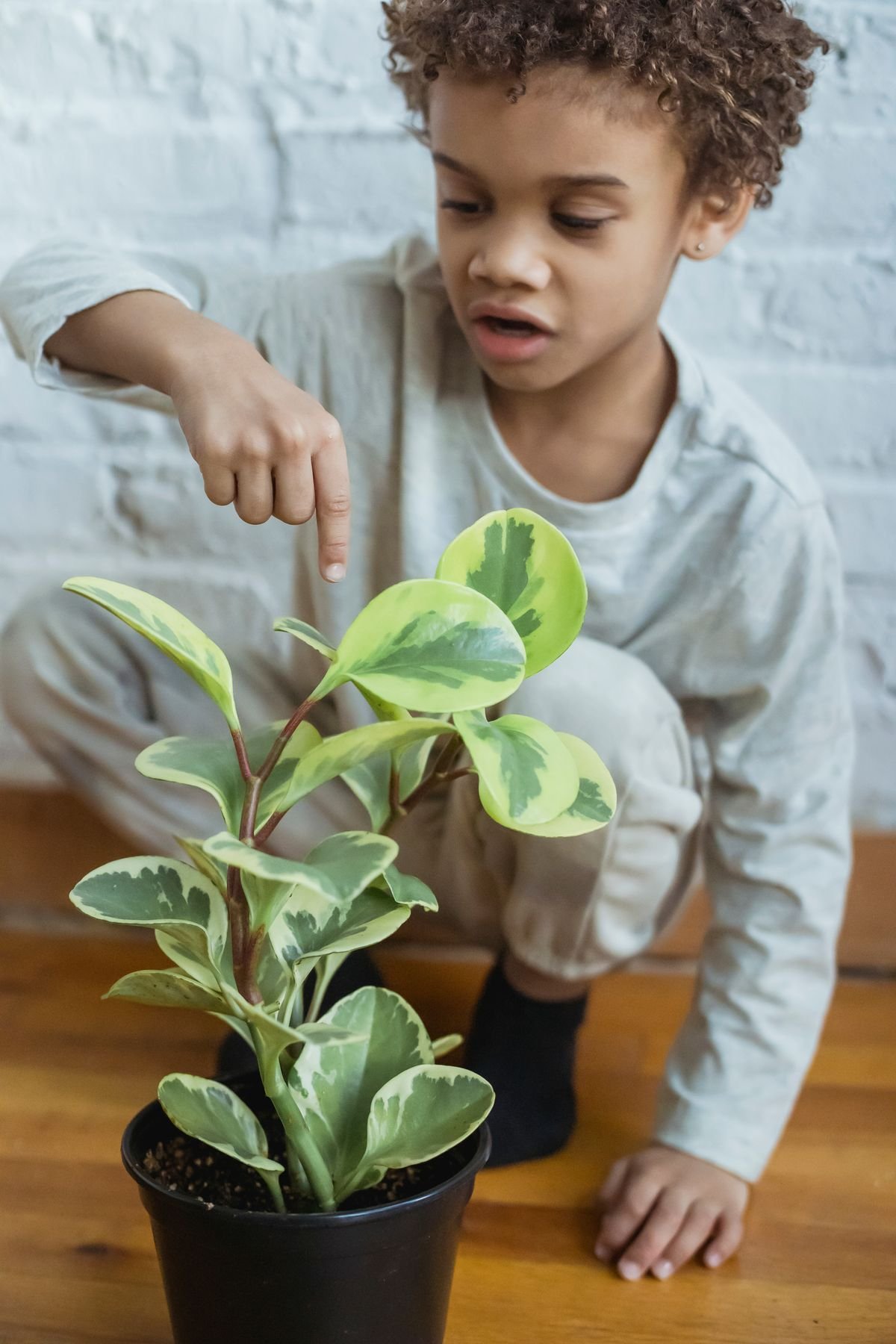
Variegated cultivars ('Variegata', 'Albo-Marginata', 'Alba') commonly put on nodes more slowly at the same lux because less leaf area is photosynthetically green. Raise intensity toward 2,800–4,000+ lux before blaming genetics alone (variegation and light) — a position near a bright window chosen with the feng shui placement guide's light-first approach usually gets there without extra equipment. Growers who find soil moisture control harder to judge than light sometimes move a specimen into LECA, which does not speed up the underlying rate but removes the guesswork around the dry-down cycle that stalls growth when done wrong.
Lifespan under stable culture is often 5–10+ years; rate questions and longevity questions are different axes (lifespan). A slow centimetre budget does not imply a short life.
Do not chase centimetres with heat lamps, oversized pots, or year-round high nitrogen. Those tactics raise stress and salt load faster than they raise quality growth.
Conclusion
How fast does peperomia grow? Treat 2–5 cm per growing season and a winter near-pause as normal for P. obtusifolia. Optimise lux, warmth in band, and dry-down; accept dense foliage as the reason centimetres stay modest. Anything that produces long pale stems is a light deficit in disguise, not a growth victory.
Care FAQ
How fast does Peperomia obtusifolia grow?
Under typical indoor culture it is slow to moderate: about 2–5 cm of new stem/extension in the active spring–summer window, with near-zero measurable elongation from November through February in temperate homes. Reaching a full 20–30 cm canopy usually takes a few seasons, not a few months.
Why is my Peperomia not growing?
Most often light below about 800–1,000 lux, winter photoperiod, temperatures near or below ~15 °C day averages, or root stress from chronic wet substrate. Confirm lux at the leaf and whether it is the dormant season before adding fertiliser.
Can I make my Peperomia grow faster?
You can remove limiters — hold 2,000–4,000 lux, 18–24 °C days, dry-down watering, and light feeding in spring–summer — but you cannot turn it into a Pothos. Thick leaf biomass caps centimetre speed genetically.
Does a bigger pot make a Peperomia grow faster?
No. Slightly snug pots suit the shallow root system. Oversizing slows the plant via prolonged saturation and anoxia risk more often than it unlocks shoot growth.
How long until a baby rubber plant looks mature?
From a standard nursery starter, expect roughly 2–3 years of consistent conditions to fill toward the 20–30 cm indoor height band with multiple stems. Final size limits are covered in the size guide.
Do variegated Peperomias grow slower?
Often yes. Reduced functional chlorophyll means less surplus carbohydrate for new nodes at the same lux. Keep variegates toward the upper end of the 2,000–4,000 lux band.