
How Large Can Peperomia Grow? Height, Spread & Habit
How large can peperomia grow? For Peperomia obtusifolia (baby rubber plant), mature indoor height is typically 20–30 cm, with a canopy spread of about 15–25 cm under standard container culture (RHS; Missouri Botanical Garden). Stems may later lean or trail, so horizontal stem length can exceed upright height — that is habit change, not a tree-like second growth programme. These figures assume the general care baseline in the complete care guide is being met; light or watering shortfalls change the numbers below.
How fast those centimetres arrive belongs in the growth-rate guide. This article is final size and habit only.
| Measure | Typical indoor range | What it means |
|---|---|---|
| Height | 20–30 cm | Upright canopy ceiling for most pots |
| Spread | 15–25 cm | Dense mound before heavy trailing |
| Leaf length | 4–12 cm | Broadly obovate / elliptic |
| Stem habit | Upright → decumbent | Weight + turgor limit vertical hold |
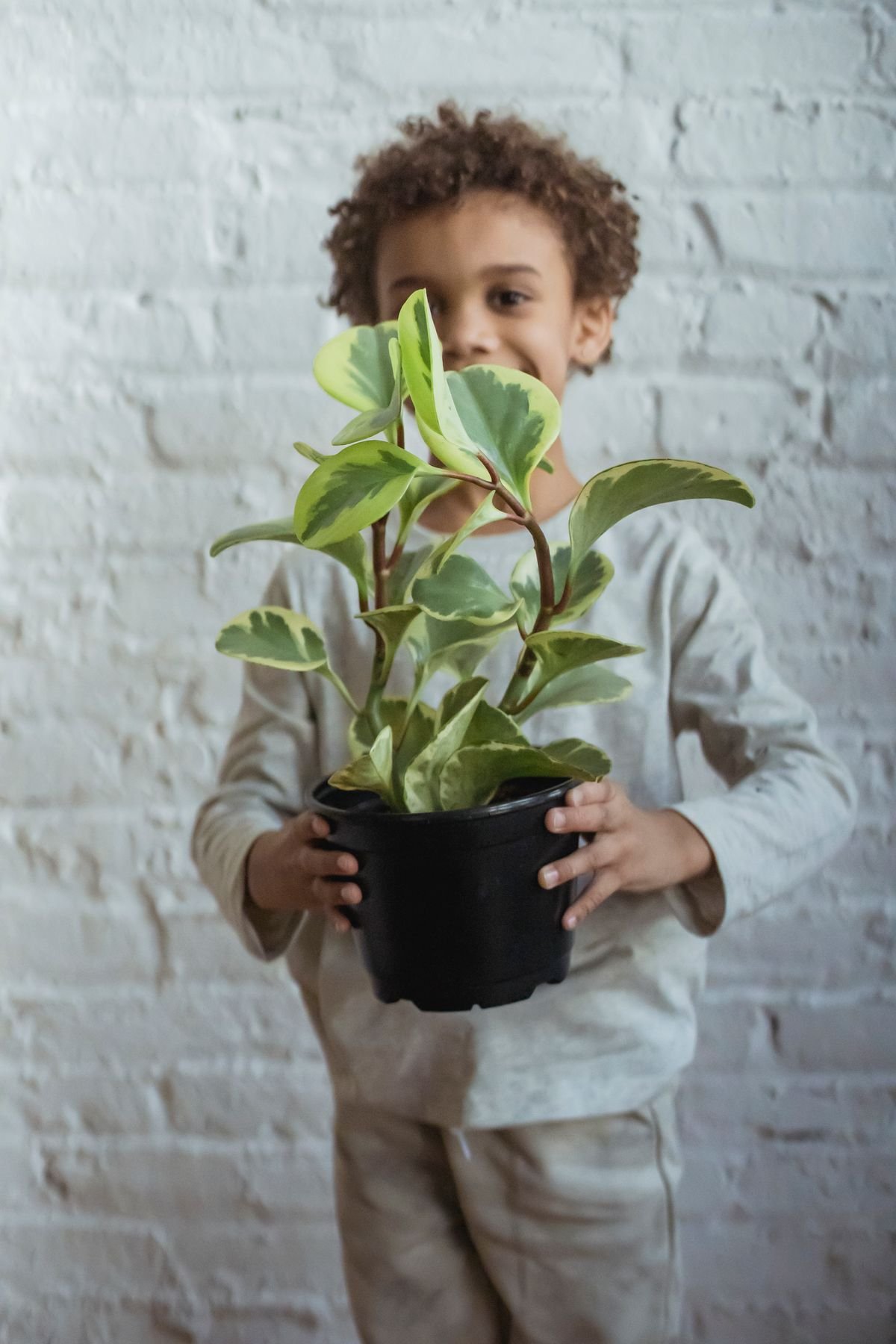
1. How Large Can Peperomia Grow: Upright Then Decumbent
Young plants run an upright phase: semi-succulent stems hold a compact column while internodes stay short under adequate light. As stem length and leaf mass increase, turgor alone cannot keep every axis vertical. Stems lean, then trail — a decumbent habit common in older containers and hanging baskets (NC State Extension).
A “large” specimen therefore often reads as a mounding or cascading volume, not a taller trunk. Measure:
- Crown height — soil line or pot rim to the highest upright leaf tip.
- Canopy width — widest horizontal foliar span still held above the rim.
- Longest stem — tip-to-base length on trailing axes (often longer than crown height).
Shelf plants are judged on (1) and (2). Hanging baskets are judged on (3). Mixing those metrics is why two honest growers report “12 inches” and “20 inches” for the same biological stage.
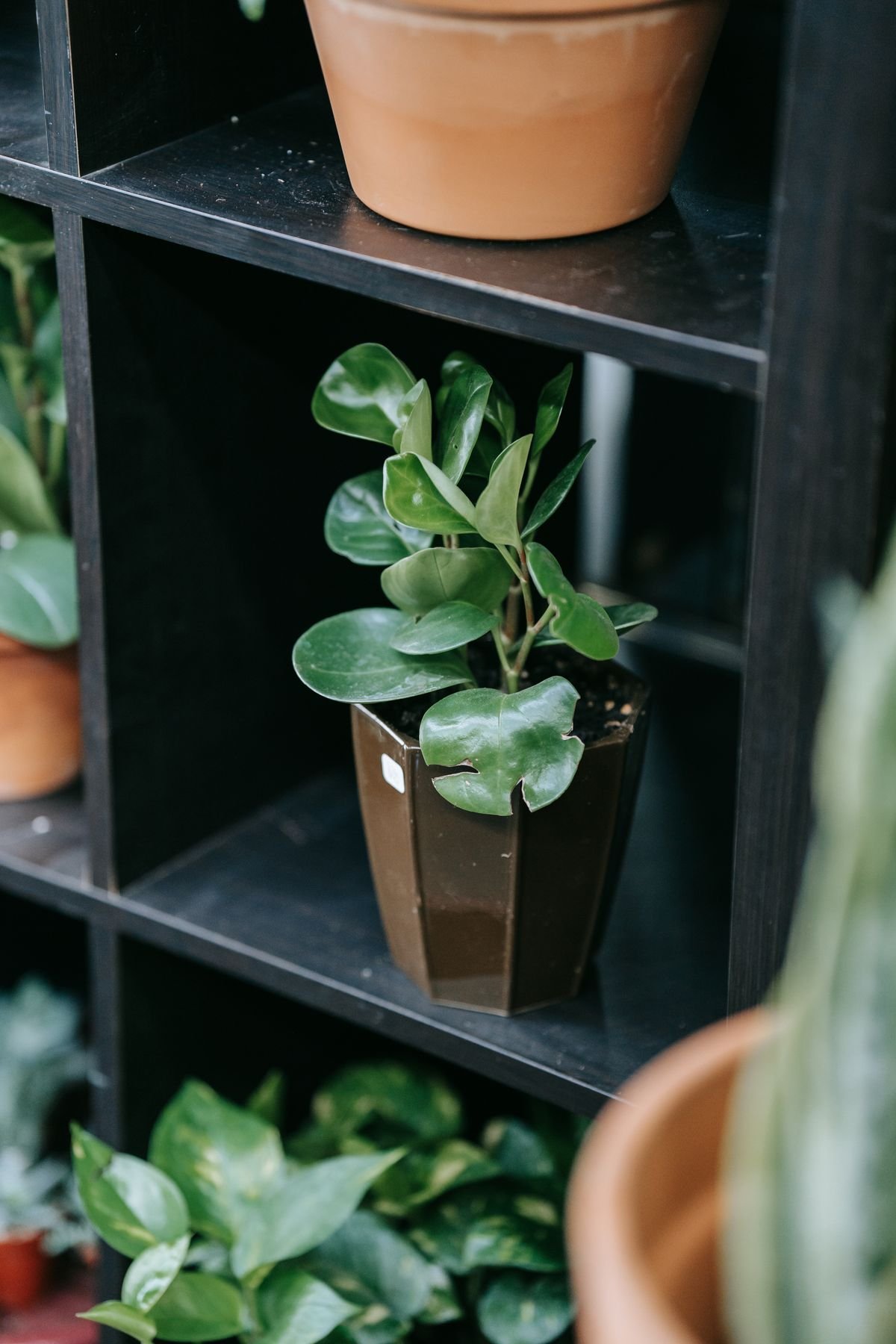
2. Authority Numbers vs Outdoor Groundcover Claims
Indoor references converge on roughly 0.5–1 ft height for houseplant culture (Missouri: typically to about 12 in / ~30 cm on thick erect stems). RHS pairs that with a modest 15–25 cm spread for container specimens.
Outdoor or landscape notes can sound larger. UF/IFAS describes spreading clumps suited to tropical groundcover, with height about 0.5–1 ft and spread cited up to about 1–2 ft in that use case (UF/IFAS FP466). That is open-ground lateral colonisation — not a promise that a windowsill pot becomes a 60 cm shrub overnight.
Keep the indoor ceiling as 20–30 cm height / 15–25 cm spread, and treat longer cascades as stem extension after the upright phase, not a revised genetic height limit.
Leaf length at maturity typically falls in the 4–12 cm band; stems thicken modestly (often near 1–2 cm on older axes) as water-storage parenchyma accumulates. Neither dimension scales into a woody trunk.
3. Four Proven Limits on How Large Peperomia Can Grow
| Limit | Effect on final size | False signal |
|---|---|---|
| Light | 2,000–4,000 lux → dense short internodes | <800 lux → long pale stems that look taller |
| Anatomy | No woody cambium — herbaceous ceiling | Confusing with Ficus elastica |
| Pot volume | Snug pots suit shallow roots; modest upsizing supports mound width | Huge wet pots stall or rot more than they “unlock height” |
| Pruning / division | Pinching holds height; division resets mound volume | Neglect ≠ bigger healthy plant |
Light quality vs “looking big.” Etiolation lengthens internodes under chronic low lux. Tape-measure height rises while leaf size and stem thickness fall — architecture fails (leggy fix; light requirements). Dense 25 cm plants outrank spindly 35 cm plants on every horticultural metric that matters.
Anatomy. P. obtusifolia is not a miniature rubber tree. Shared nicknames cause size confusion with Ficus elastica, which can reach metres indoors because it builds wood (baby rubber vs true rubber tree).
Opinion: A larger pot does not make Peperomia grow into a taller plant. It can support a wider multi-stem mound over years, but oversizing mainly lengthens wet periods around a shallow root system (pot guide).

4. Extra: Cultivar Scale, Time-to-Fill, and Size Control
Compact selections such as 'Minima' and 'Pixie' stay toward the lower end of the height band; standard green and many variegated forms fill the 20–30 cm indoor range when light is adequate (varieties). Variegates may need the upper lux band to match green-form canopy density because less leaf area is photosynthetically green.
From a typical 10 cm nursery plant to a filled multi-stem canopy usually takes about 2–3 years. Seasonal extension rate (roughly 2–5 cm in spring–summer) is covered separately (how fast peperomia grows).
To hold size: pinch terminals or cut stems back above a node to restart upright branching (prune guide). To reset a wide mound: divide the crown (division guide). Both are size tools, not growth-rate hacks. Growers who want tighter control over root volume and feeding while shaping a mound sometimes move a specimen into LECA, which does not change the height ceiling but makes it easier to judge exactly how much root mass is supporting the canopy above.
Display choice changes perceived size. The same genetic ceiling looks compact on a desk in a 12 cm pot and expansive in a hanging basket once stems cascade. If the goal is a tight upright silhouette, prune before the decumbent transition; if the goal is a cascade, allow stem length and secure a stable pot so the mass does not tip — the feng shui placement guide covers how mound versus cascade habit changes where a specimen reads best in a room.
Conclusion
How large can peperomia grow? Plan for 20–30 cm mature indoor height and about 15–25 cm spread, then expect older stems to lean or trail so volume expands sideways. Treat dense internodes as true size; treat pale stretch as a light deficit. Prune or divide when the mound outgrows the shelf — do not wait for a woody trunk that this species cannot build.
Care FAQ
How big does Peperomia obtusifolia get?
Under typical indoor culture, mature height is about 20–30 cm with a canopy spread of roughly 15–25 cm. Older trailing stems can extend further horizontally after the upright phase ends, but that is stem length and cascade, not a taller woody canopy.
Does Peperomia grow more leaves or just get taller?
Both, within a hard height band. Young plants add upright nodes and leaves; once stems become heavy, many specimens shift to a decumbent or trailing habit and gain width rather than extra vertical metres. Final height still clusters near 20–30 cm indoors.
Can I keep my Peperomia small?
Yes. Pinch or prune terminal growth to hold height and force branching. Division resets mound volume. Size control is pruning and light quality, not starvation.
How long does it take to reach full size?
From a standard nursery starter, expect about 2–3 years of consistent culture to fill toward a multi-stem 20–30 cm canopy. Seasonal centimetre rate belongs in the growth-rate guide, not here.
Can Peperomia obtusifolia get as big as a rubber tree?
No. Baby rubber plant is a herbaceous Peperomia without a woody cambium. True rubber tree (Ficus elastica) is a tree that can reach metres indoors. Shared common names do not share anatomy or size ceilings.
Does a bigger pot make Peperomia grow larger?
A modestly larger pot can support a wider multi-stem mound over time, but it does not convert the species into a tall plant. Oversizing mainly increases wet-mix volume and root-rot risk.