How to Air Layer Peperomia: When It Works & Step Protocol
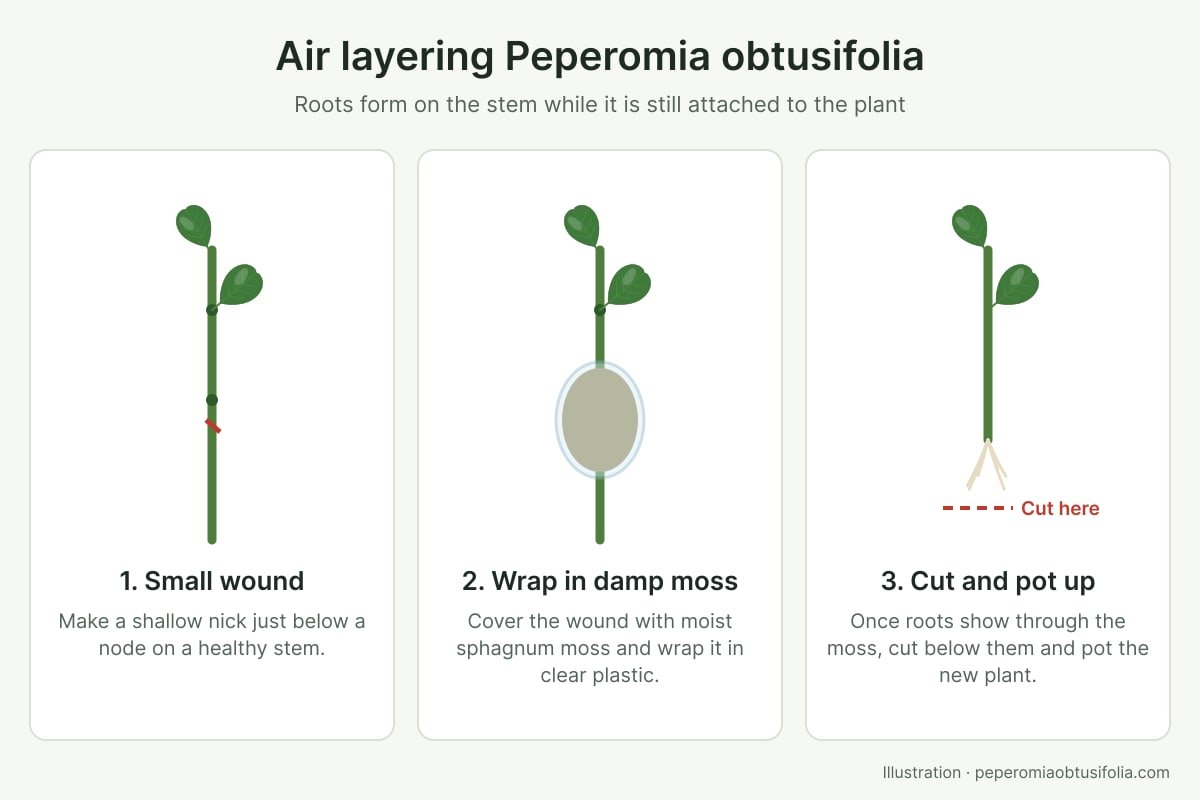
How to air layer peperomia: On Peperomia obtusifolia, make a shallow upward tongue cut about one-third into a thick stem, keep the slit open with a clean spacer, pack sponge-damp long-fibre sphagnum around the wound, seal with clear plastic, and wait until firm white roots fill the moss (often 4–8 weeks) before cutting below the wrap and potting. Air layering is layering done above the soil — roots form while the xylem still feeds the top from the parent (UAF Cooperative Extension: airlayer).
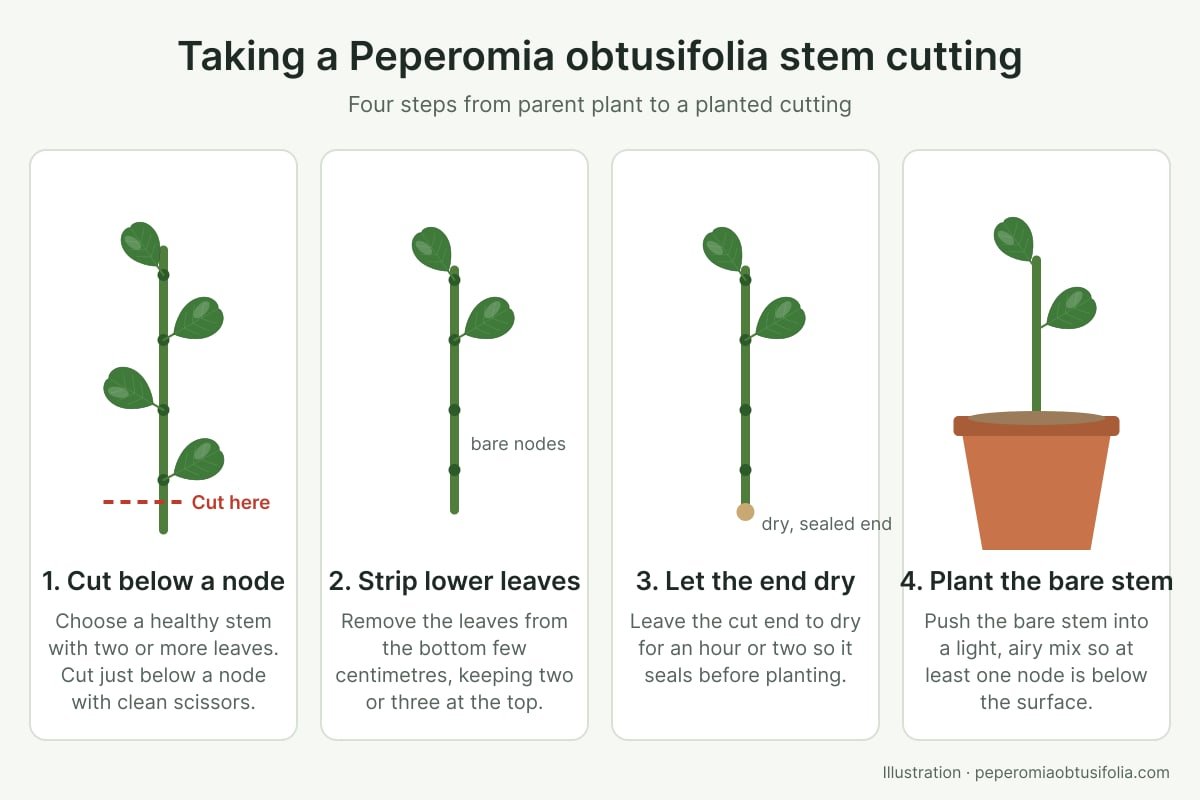
Default method first. Stem cuttings usually root within a few weeks in warm conditions, in water or an airy mix (stem-cutting guide; methods overview) — and simple water propagation specifically is faster to set up than an air layer and works just as well for routine material. Soft, barkless Peperomia stems are poorer candidates for a moist wrap than woody Ficus-type air layers. Use this protocol for niche cases (thick leggy tops you refuse to risk as detached cuttings) — not as a prestige upgrade. If the parent already has multiple stems at the base, division sidesteps the whole rooting question by separating already-established growth instead.
| Method | Parent support | Typical first roots | Main risk |
|---|---|---|---|
| Stem cutting | None after cut | Often a few weeks (medium-dependent) | Desiccation / medium rot |
| Air layer | Yes until sever | Often 4–8+ weeks | Soft-stem rot under wrap |
1. How to Air Layer Peperomia: Mechanism in Soft Stems
Sugars and auxin move downward in phloem. A wound that interrupts phloem (without destroying the whole stem) can concentrate those signals above the cut while xylem still lifts water. Darkness and moisture in the moss wrap favour adventitious roots at that site.
P. obtusifolia has herbaceous, high-water stems without woody bark (NC State; Missouri Botanical Garden). Full ring-bark girdles designed for woody trunks remove too much structural tissue and invite collapse. Prefer a partial tongue cut, not a complete girdle.
2. How to Air Layer Peperomia Safely in 7 Steps
Materials. Sterile blade, clean toothpick spacer, long-fibre sphagnum, clear plastic wrap, soft ties, optional IBA powder, and a pot of free-draining mix ready for pot-up.
- Choose the site. Thick stem (≥~5–8 mm), several healthy leaves above, node nearby if possible. Remove leaves that would sit inside the moss ball.
- Sterilise the blade. Alcohol-wipe; work dry.
- Tongue cut. Upward slanting incision ~1 cm long, about one-third of stem diameter — do not cut through.
- Spacer. Insert a clean toothpick sliver so the faces cannot heal shut.
- Optional hormone. Light IBA dust on the cut faces if desired; not required for this species’ routine rooting.
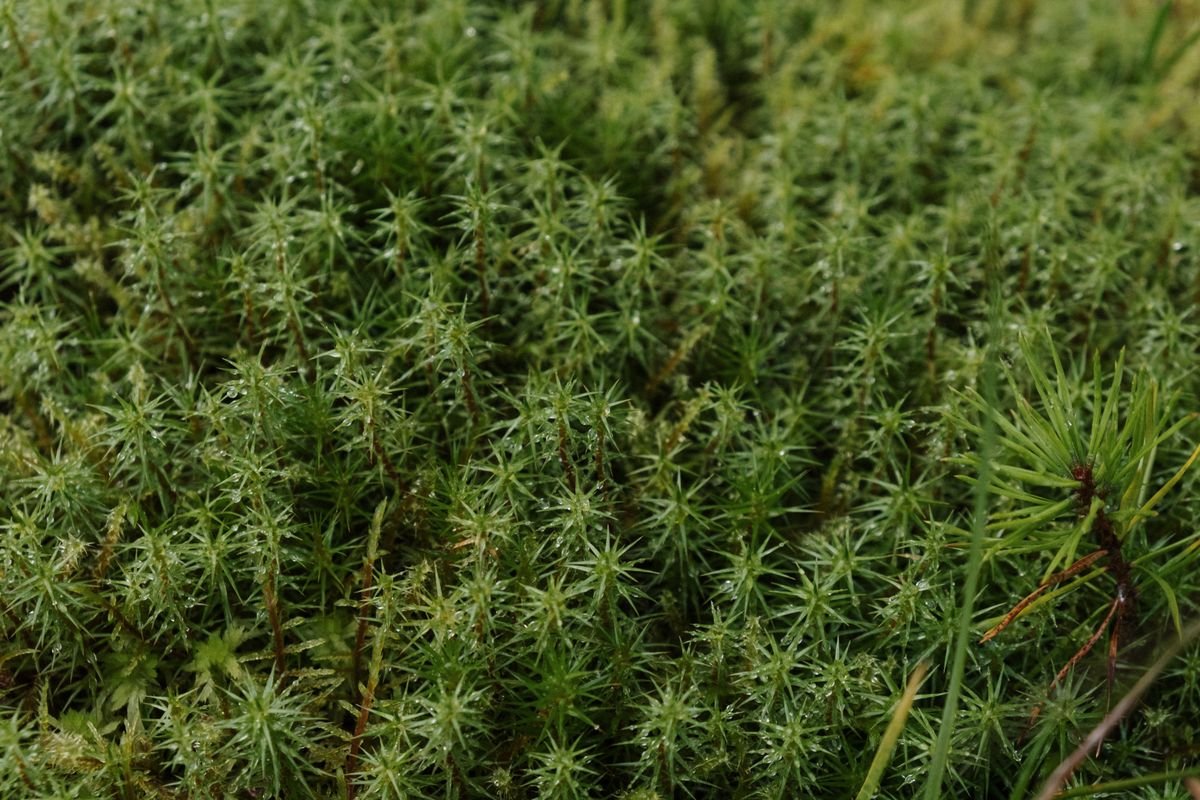
- Moss + wrap. Soak long-fibre sphagnum, wring to sponge-damp, pack around the wound, wrap in clear plastic, tie top and bottom. Leave no dripping water inside (sphagnum cutting notes).
- Monitor weekly. Look for white roots through the plastic; also for browning, mush, or foul smell.
Place the plant in bright indirect light while the wrap is on. Heat above ~28 °C with wet moss accelerates soft rot more than it accelerates useful roots.
3. Timelines, Severing, and Potting Up
| Stage | What you should see |
|---|---|
| Weeks 1–3 | Wound sealed; moss stays damp, not black/soggy |
| Weeks 4–8 | Root initials visible against plastic |
| Ready to sever | Moss ball filled with firm white roots |
Cut below the moss ball with a clean blade. Pot the rooted top with the moss still around the new roots into a free-draining mix (soil recipe). Do not tear moss off if roots are woven through it. Keep bright indirect light (roughly 2,000–4,000 lux as a working target) and avoid saturating the new pot for the first two weeks while the new root–soil interface settles.
The remaining stump often resprouts from nodes under good light and dry-down watering — same logic as rejuvenating leggy plants after topping. If the stump is bare and soft, discard diseased tissue rather than waiting indefinitely.
4. Extra: Rot Control and When to Abort to a Cutting
Opinion: Air layering is not safer than stem cuttings for average Peperomia material. The wrap’s humidity that induces roots also incubates soft rot on fleshy stems. Choose air layer for parent-supported tops; choose cuttings for speed and reliability.
If the stem softens or smells foul: remove wrap and moss immediately. If the top is still firm above clean tissue, cut to a healthy node and treat as a callused stem cutting. Do not “rescue” with wetter moss — the same soft, sour-smelling collapse covered in the why cuttings rot guide applies here too, and adding more moisture only accelerates it.
Keep moss oxygenated: sponge-damp only; clear wrap for inspection; never store the plant in stagnant heat with dripping media. Extension houseplant propagation notes stress moisture control and hygiene for any enclosed rooting method (Penn State Extension: propagating houseplants).
Common failure points, ranked by likelihood:
| Symptom | Likely cause | Fix |
|---|---|---|
| Moss soggy and black, stem soft underneath | Over-wet moss, no oxygen at the wound | Unwrap immediately; if tissue above is firm, cut and root as a standard cutting |
| No root initials visible after 8+ weeks, stem still firm | Cool ambient temperature or low light on the parent | Move parent to brighter, warmer conditions; wait rather than rewrap tighter |
| Wrap keeps drying out between checks | Too little moss or a loose seal | Repack with sponge-damp (not dripping) moss and reseal the wrap edges |
| Roots visible but sparse and thread-like | Severed too early | Wait until roots look firm and white and have filled a meaningful portion of the moss ball |
Prevention. Choose a stem that's already thick and firm before starting, not one already stressed by low light or recent overwatering — a marginal parent going into the process rarely produces a good outcome regardless of technique. Check the wrap weekly rather than daily; opening it too often disturbs the humid microclimate the roots need without meaningfully speeding anything up. If in doubt about whether a given stem is a good candidate, default to a standard stem cutting instead, since the downside of a failed cutting is smaller than losing a large, already-established leafy top to rot under a wrap.
Conclusion
How to air layer peperomia comes down to a shallow tongue cut, sponge-damp sphagnum, clear wrap, patient root fill, then a clean sever. Use it when the leafy top must stay on the parent; otherwise take a stem cutting. Soft-stem rot is the failure mode to design against — moisture discipline matters more than decorative technique.
Care FAQ
Can you air layer Peperomia obtusifolia?
Yes, on a thick, mature stem with leaves above the wound, but it is not the default method. Soft herbaceous stems rot more easily under a moist wrap than woody houseplants. Prefer stem cuttings for routine propagation.
How long does it take for an air-layered Peperomia to root?
Expect roughly 4–8 weeks to see root initials through clear wrap under warm indoor conditions (~22–25 °C), sometimes longer. Sever only when roots fill the moss and look firm and white, not sparse threads.
What moss is best for air layering Peperomia?
Long-fibre sphagnum, soaked then wrung to sponge-damp only. Dripping moss creates anoxia and soft rot on fleshy stems. See sphagnum propagation notes for moisture handling.
Is there a risk of rot with air layering?
Yes — that is the main failure mode. Soft stems plus wet moss and stagnant air favour bacterial soft rot. Check weekly; unwrap immediately if the stem softens or smells foul, then convert the top to a standard cutting if tissue is still clean.
Do I need rooting hormone to air layer Peperomia?
Optional. P. obtusifolia roots readily without IBA for routine cuttings. A light dusting is insurance on thick stems, not a requirement.
When should I choose air layering over stem cuttings?
When you need the leafy top kept turgid on the parent while roots form — for example a long leggy axis with a valuable variegated crown. Otherwise use stem cuttings; they are faster and usually more reliable.