
Grow Peperomia in a Terrarium: Open, Vented & Closed Setup
Grow peperomia in terrarium culture only if you treat glass as a humidity amplifier, not a set-and-forget jar. For Peperomia obtusifolia, an open or regularly vented vessel is the lower-risk default; a sealed closed terrarium can work but keeps RH and substrate moisture high enough to raise stem and root rot risk (terrarium types; RHS bottle gardens & terrariums). Success rests on a false-bottom reservoir, an airier-than-usual mix, bright indirect light (never direct sun through glass), and condensation-based watering.
Site ambient room optimum is about 40–60% RH, covered in full in the humidity guide; stagnant air above ~75% RH raises fungal/bacterial leaf-spot risk. Closed glass often exceeds that band. This article is terrarium engineering for P. obtusifolia — not a full soil recipe and root-oxygen guide or grow-tent guide, and it assumes the baseline thresholds from the complete care guide throughout.
| Vessel | Humidity / water | Fit for P. obtusifolia |
|---|---|---|
| Open glass | Near room RH; water like a pot | Most forgiving |
| Vented / loose lid | High but flushable | Good compromise |
| Sealed closed | Recycled moisture; rare watering | Possible; highest rot vigilance |
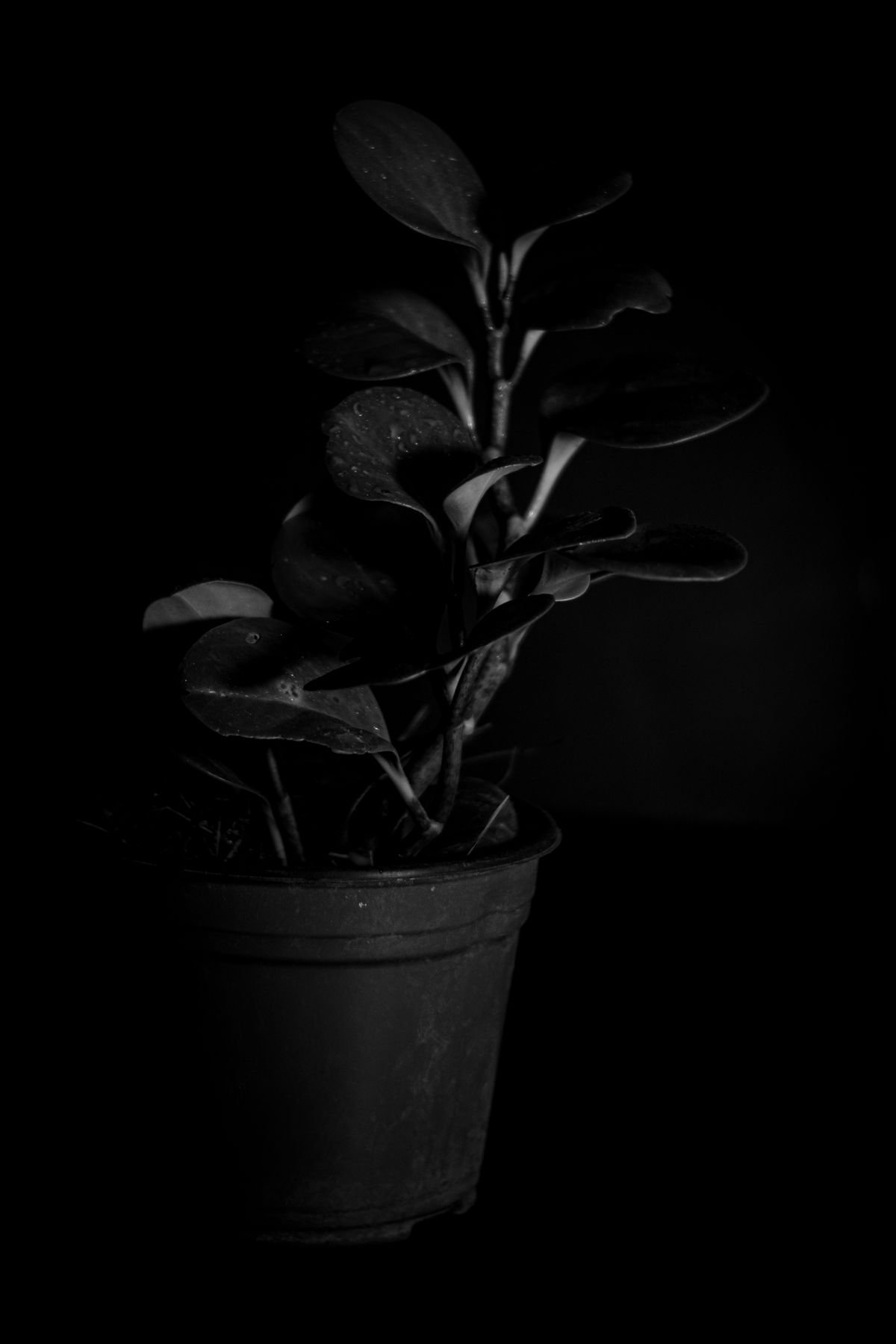
1. Grow Peperomia in Terrarium: Why Soft Stems Struggle in Sealed Glass
Closed vessels recycle evaporated and transpired water as condensation "rain." That loop is useful for thin tropical foliage plants listed by the RHS (including several Peperomia species) — but P. obtusifolia stores water in thick leaves and stems and keeps a shallow fibrous root system (NC State; Missouri Botanical Garden). When pores stay water-filled, root respiration fails the same way it does in overwatered pots.
Opinion: Prefer open or vented terrariums for baby rubber plant. Use sealed jars only if you will under-water relative to ferns/fittonias and vent on a schedule.
Compact forms ('Minima', 'Pixie') fit small jars better than a mature 20–30 cm canopy (minima guide).
2. Five Key Rules to Grow Peperomia in Terrarium Setups
Rule 1 — Drainage layer + barrier. Add 2–3 cm LECA, lava rock, or washed gravel (deeper in large vessels). Separate from substrate with mesh or a thin sphagnum barrier so fines do not clog the reservoir (RHS setup guidance).
Rule 2 — Airier substrate than a normal pot. No drainage hole means porosity must compensate. Target a mineral-heavy blend — for example roughly 40% coir, 40% coarse perlite/pumice, 20% fine bark (optional pinch of horticultural charcoal). Keep ≥30% coarse mineral as a floor.
Rule 3 — Light without a greenhouse cook. Aim for about 2,000–4,000 lux at the leaf face from bright indirect sources. Direct sun through glass spikes internal temperature and scorches tissue.
Rule 4 — Water by condensation, not calendar. Light morning fog on part of the glass is acceptable. Persistent heavy fog or drip → vent the lid for hours until it clears. No condensation for days in a closed jar → add a small amount of water down the glass wall, then reassess.
Rule 5 — Hygiene and scale. Remove yellow/soft leaves promptly. Prune before the plant presses the glass. Springtails help consume mould in bioactive builds; they do not fix chronic saturation.
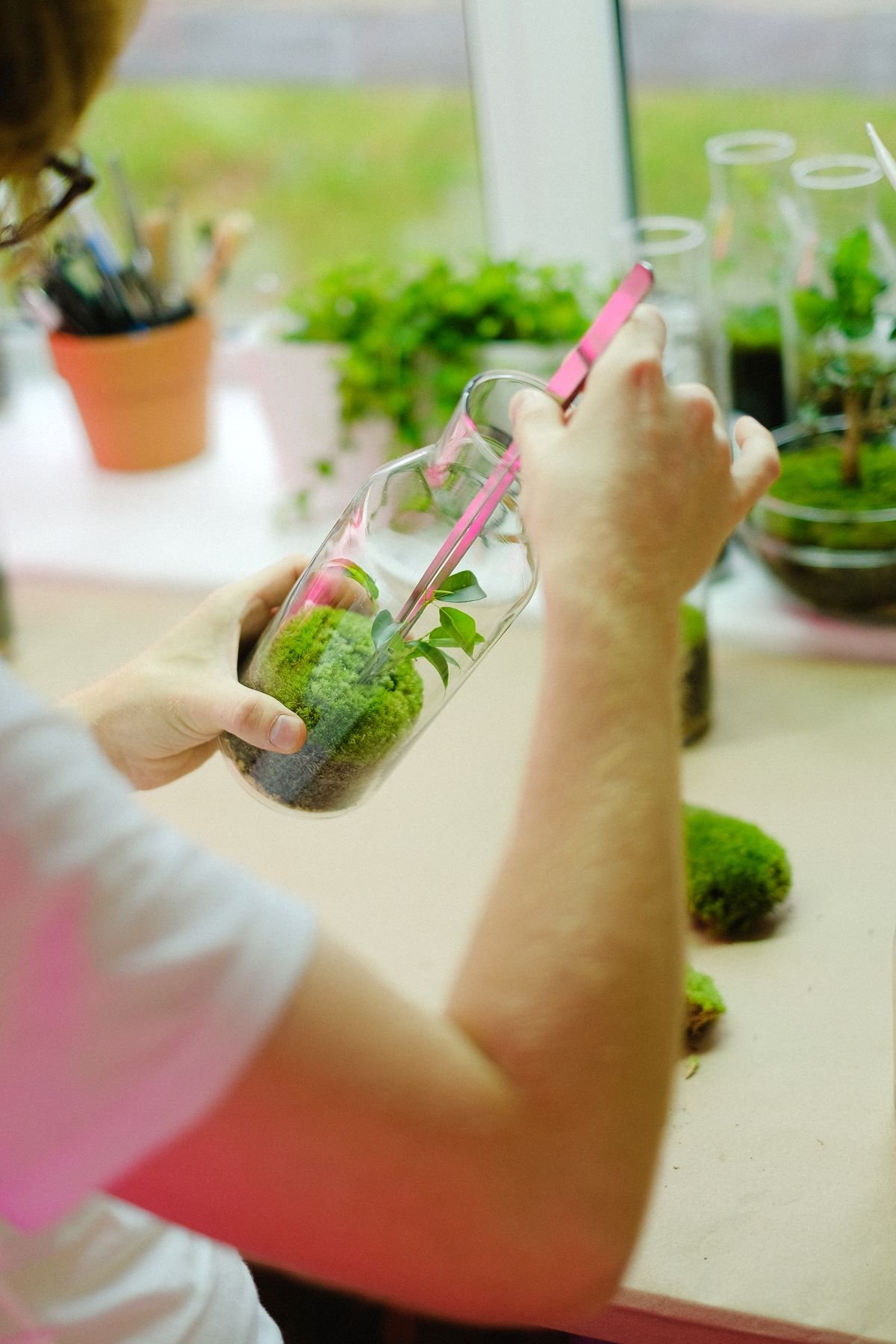
3. Layer Stack, Planting, and Early Stabilisation
- Clean glass; dry thoroughly.
- False bottom → barrier → moist (not wet) airy mix deep enough for the root ball (~5–7 cm for small plants).
- Plant so the crown sits slightly high; firm lightly without compacting.
- Optional surface moss — use sparingly; thick wet moss blankets hold excess water against stems.
- Mist lightly once; close or leave open per vessel type; observe 48–72 hours before adding more water.
Bioactive springtails are optional janitors for mould films, not a licence for swamp substrate. Fertiliser is usually unnecessary in balanced closed systems (fertilizer).
4. Extra: Failure Modes, Cultivar Choice, and Vivarium Note
| Symptom | Likely cause | Action |
|---|---|---|
| Soft black stem base | Stem rot in wet stagnant air | Vent; cut to clean tissue; reduce water (stem rot) |
| Wilt + wet mix | Root anoxia | Vent; check reservoir depth; rebuild mix if sour |
| Cooked/bleached leaves | Direct sun through glass | Move to indirect light |
| Constant wall drip | Overwatered closed loop | Lid open until fog clears; wipe excess |
Trailing Peperomia species used in hobby terrariums are not interchangeable with upright P. obtusifolia — habit and moisture tolerance differ. For pet bioactive tanks, plant safety is a separate topic (birds & reptiles). A sealed terrarium is also the most humidity-stable of the seasonal environments covered on this site — contrast it with the drier draft risk near an air conditioning unit or the higher-light, higher-airflow conditions of an outdoor summer placement, both of which demand the opposite adjustments to the ones in this guide.
Conclusion
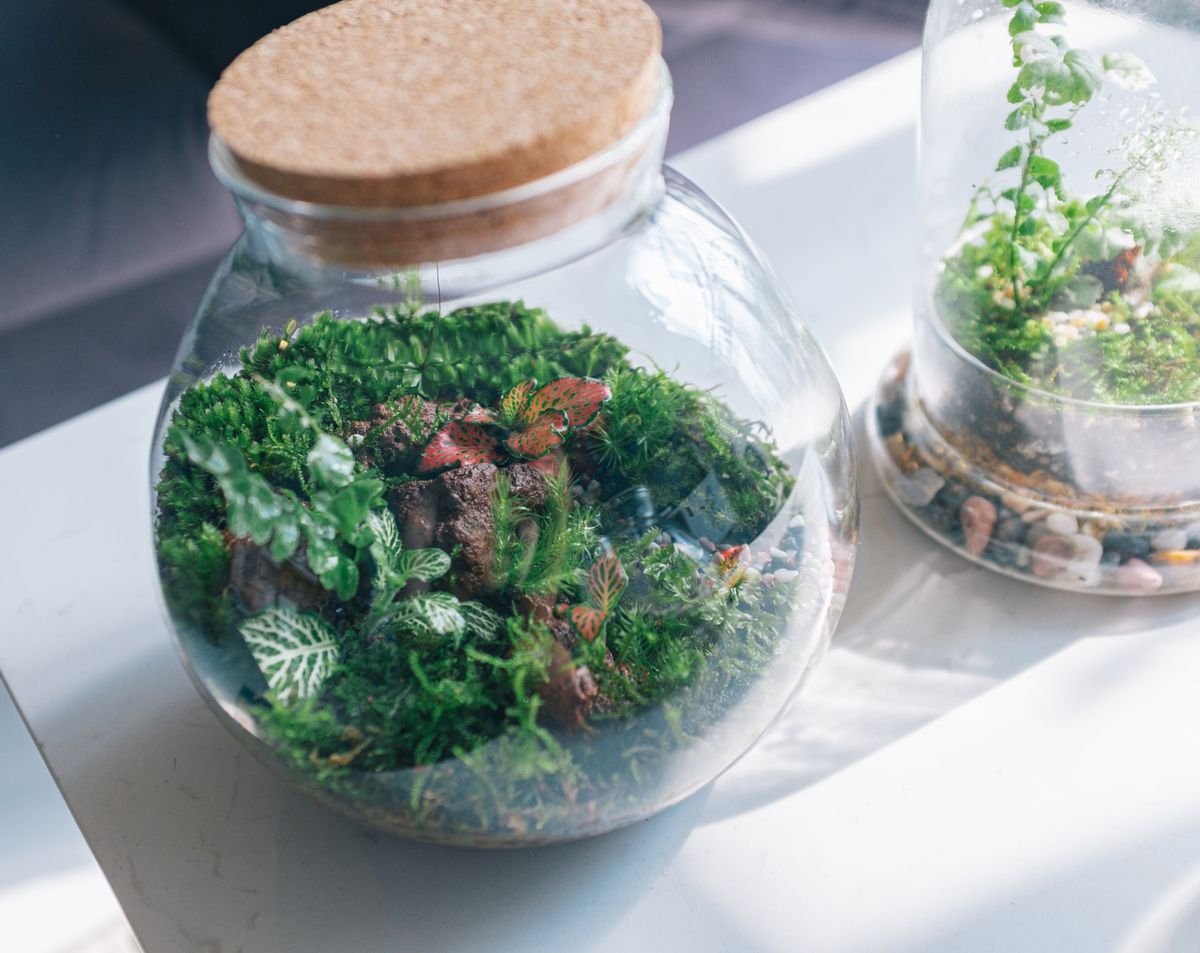
Grow peperomia in terrarium glass by matching vessel type to risk: open or vented for forgiveness, sealed only with false bottom, airy mix, indirect light, and condensation-led watering. The plant’s semi-succulent anatomy does not forgive a permanently swampy closed loop — engineer oxygen and dry-down the same way you would in a pot, then use humidity as a controlled bonus, not the whole strategy.
Care FAQ
Can Peperomia obtusifolia live in a closed terrarium?
Yes, but it is higher risk than an open or regularly vented vessel. Semi-succulent stems and shallow roots rot when substrate stays wet under stagnant high RH. Use a false bottom, an airy mix, minimal water, and vent when glass stays heavily fogged.
What is a false bottom in a terrarium?
A 2–3 cm (or deeper in large vessels) drainage reservoir of LECA, lava rock, or washed gravel under a barrier mesh so substrate does not sit in free water. It does not replace an aerated mix.
How do I know if my terrarium is too wet?
Persistent heavy condensation covering most of the glass after morning, water pooling in the false bottom, soft stems, or surface mould signal excess water or insufficient venting. Open the lid until fog clears; do not add water.
Do I need to fertilise a Peperomia terrarium?
Rarely. Closed systems recycle slowly; excess nitrogen pushes oversized growth in a small jar. Prefer near-zero feed; if growth stalls with healthy roots, use a very dilute dose in open/vented setups only.
Open or closed terrarium for baby rubber plant?
Open or loosely lidded vessels are more forgiving for P. obtusifolia because airflow reduces leaf-spot and stem-rot risk. Closed jars need stricter water discipline and weekly checks.
Which Peperomia obtusifolia size suits a jar?
Compact cultivars such as Minima or Pixie fit small vessels better than a full 20–30 cm multi-stem specimen. Standard plants need larger glass or frequent pruning.