Peperomia vs Monstera: Best Care & Structural Problems
Peperomia obtusifolia and Monstera deliciosa are both popular glossy-leaved tropicals, but their leaves solve opposite structural problems, one needs a climbing support and the other never does, and only one of them is safe around pets. Choose Monstera if you want a large, architectural climbing plant and have no pets at risk; choose Peperomia for a compact, genuinely pet-safe alternative that asks for less space and no vertical support.
Side-by-Side Comparison
| Factor | Peperomia obtusifolia | Monstera deliciosa |
|---|---|---|
| Family | Piperaceae | Araceae |
| Leaf structure | Solid, sealed, water-storing | Fenestrated (naturally holed) on mature leaves |
| Growth habit | Compact, self-supporting shrub | Climbing vine; sprawls without support |
| Mature size indoors | 20-30 cm | Can reach several metres with a support |
| Support needed | None | Moss pole or trellis once mature |
| Watering | Top 2-3 cm dry before rewatering | More consistent moisture; less full-dry tolerance |
| Humidity | Normal household humidity is fine | Prefers more humid air |
| Toxicity (ASPCA) | Non-toxic to cats, dogs, horses | Toxic to cats and dogs (insoluble calcium oxalates) |
| Growth rate | Slow | Fast, especially with a support to climb |
How to Tell Them Apart
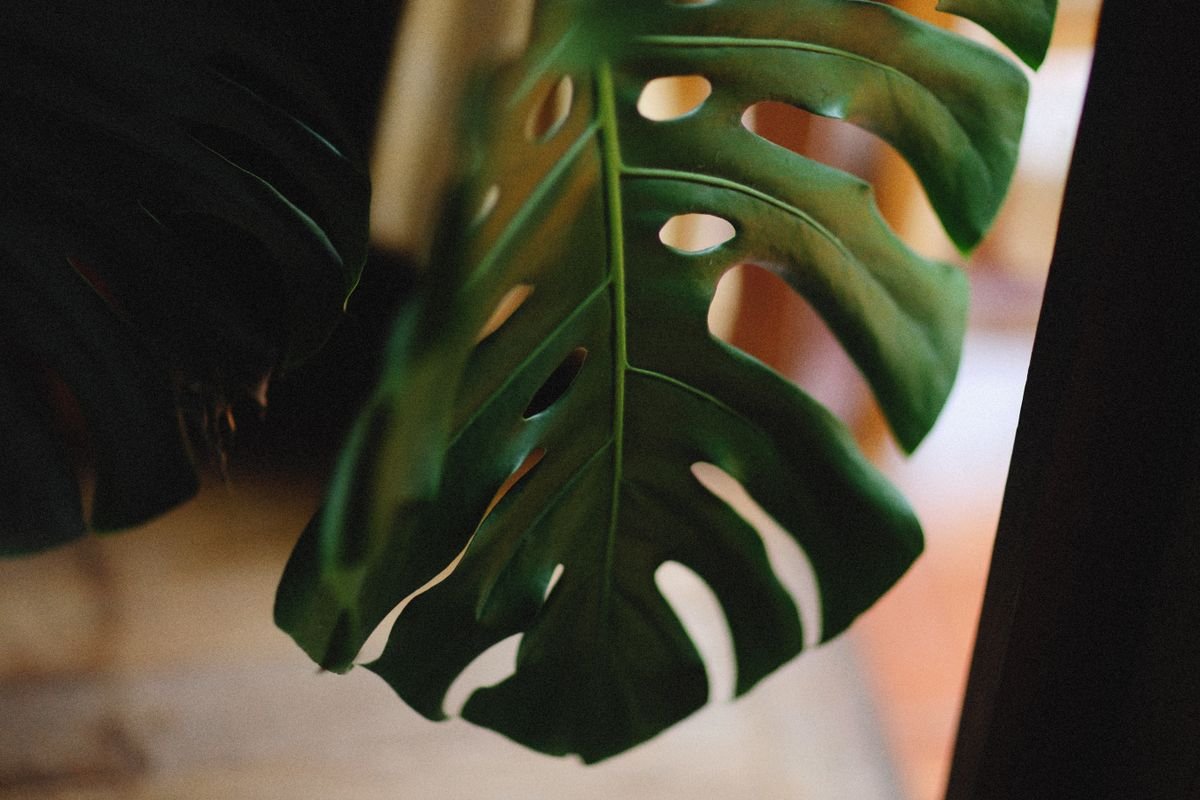
These two are not realistically confused at a glance — the comparison is about care and safety, not identification — but the underlying difference is worth understanding directly. Mature Monstera leaves develop distinctive splits and holes (fenestrations) as they age; young leaves emerge solid and only fenestrate as the plant matures. P. obtusifolia leaves never develop holes at any life stage — the leaf is a sealed, water-storing structure by design, and a hole in it would compromise the internal pressure that keeps it turgid.
Growth habit is the other clear tell. Monstera produces aerial roots and climbs, given the chance — left without a support, it sprawls and trails rather than growing upright. P. obtusifolia is a compact, self-supporting shrub that never produces aerial roots or attempts to climb.
Care Differences That Actually Change the Outcome
- Support requirements. Monstera is a climbing aroid — mature specimens benefit substantially from a moss pole or trellis, both for the plant's structural development and to keep its growth manageable in a room. P. obtusifolia never needs this; providing one would serve no purpose.
- Watering tolerance. P. obtusifolia wants the substrate to dry fully — top
2-3 cm— between waterings, and soil that stays wet for long periods leads to root rot (NC State Extension). Monstera prefers more consistently moist conditions and is less tolerant of the same full-dry cycle Peperomia needs; a Monstera watered on Peperomia's schedule will show stress from underwatering well before a Peperomia would. - Humidity target. P. obtusifolia is fine in normal household humidity, while Monstera generally does better in more humid air — a factor worth considering if the two are being kept in the same room and you're deciding where to place a humidifier.
- Space and mature footprint. Monstera with a support can reach a considerable height and width over a few years; P. obtusifolia stays compact indefinitely without repotting into progressively larger floor space.
- Toxicity. This is the difference with the clearest consequence for a household with pets. Monstera's insoluble calcium oxalate crystals cause oral irritation, drooling, and vomiting on contact — a real and common cause of pet emergency-vet visits. P. obtusifolia carries no comparable compounds.
Which Is Easier for a Specific Home
- Households with pets or young children who chew houseplants: P. obtusifolia is the meaningfully safer choice given Monstera's documented oxalate toxicity.
- Small apartment or limited floor space: P. obtusifolia stays compact; Monstera, especially with a support, will eventually need real floor and vertical space.
- Wanting a fast-growing, architectural statement plant: Monstera delivers this in a way Peperomia's slow, compact growth never will.
- Growers who travel often or water inconsistently: P. obtusifolia's tolerance for a full dry-down between waterings suits an irregular schedule better than Monstera's preference for more consistent moisture.
- A room with only moderate humidity and no humidifier planned: P. obtusifolia is the more forgiving choice; Monstera will show more visible stress (browning leaf edges, slowed fenestration) in persistently dry air.
Common Misidentification and Buying Mistakes
- Buying a young Monstera expecting immediate fenestrations — holes develop with maturity, and a small, solid-leaved specimen is not necessarily a different plant or a health problem.
- Skipping a support for a Monstera intended to grow large — without one, the plant sprawls rather than climbing, and retrofitting a pole onto an already-sprawling mature vine is more disruptive than starting with one early.
- Assuming both plants tolerate the same watering rhythm because both are marketed as easy tropicals — Monstera's higher moisture preference and Peperomia's need for a full dry-down are genuinely different targets.
- Underestimating Monstera's toxicity because "aroid" doesn't sound alarming — insoluble calcium oxalates are a well-documented, common cause of pet oral irritation, not a minor footnote.
Final Decision Guide
Choose Peperomia obtusifolia if you have pets or young children with plant access, limited space, and want a plant that tolerates a full dry-down between waterings.
Choose Monstera deliciosa if you want a large, fast-growing architectural plant, can provide a climbing support and consistently moist substrate, and have no pets or young children at risk from contact toxicity.
For the general care specification behind Peperomia's own thresholds referenced throughout this comparison, see the complete care guide. If you're not certain you actually have P. obtusifolia to begin with, confirm against the identification guide — the same care logic here doesn't necessarily transfer to a misidentified Hoya or Ficus elastica sold under similar "easy tropical" branding, and for houseplant marketing claims that don't hold up for either species in this comparison, see the air purification myths guide.
Care FAQ
Is Peperomia related to Monstera?
No. Monstera deliciosa belongs to Araceae (the aroid family); Peperomia obtusifolia belongs to Piperaceae (the pepper family). They are unrelated and only share a broadly tropical, glossy-leaved appearance.
Why does Monstera have holes in its leaves and Peperomia does not?
Monstera's fenestrations are understood to reduce wind resistance on its large mature leaves and let filtered light reach lower foliage in a dense native canopy. Peperomia obtusifolia's leaf functions as a sealed water-storage unit, and a hole would compromise the internal pressure that keeps the leaf turgid — the two species solved different problems with their leaf shape.
Which one needs a moss pole?
Monstera does, once mature — it is a climbing aroid that uses aerial roots to attach to a vertical support and will trail across the floor without one. Peperomia obtusifolia is self-supporting and compact; it never needs a pole or trellis.
Which is safer for pets, Peperomia or Monstera?
Peperomia obtusifolia, by a clear margin. Monstera deliciosa is ASPCA-listed as toxic to cats and dogs, containing insoluble calcium oxalate crystals that cause oral irritation, drooling, and vomiting on contact or ingestion. Peperomia obtusifolia carries no such compounds and is listed as non-toxic to cats, dogs, and horses.