Peperomia vs Magnoliifolia: A Safe ID Comparison
Peperomia obtusifolia and Peperomia magnoliifolia are close enough that early botanists sometimes treated them as the same species, and the practical difference for a houseplant owner is close to zero — the two require identical care. Where it matters is identification: leaf texture and venation, not overall size or shape, are the traits that actually separate them, and getting this right matters mainly for collectors who want the specific species they paid for rather than a mislabelled substitute.
Side-by-Side Comparison
| Trait | P. obtusifolia | P. magnoliifolia |
|---|---|---|
| Leaf texture | Waxy | Fleshy |
| Leaf venation | Faint, hard to see with the naked eye | More visible, noticeably marked |
| Leaf base | More uniformly obovate | Often slightly heart-shaped (cordate) |
| Stem cross-section | Rounder | More angular |
| Native range | Mexico, Caribbean, Central and northern South America | Extends further south, into parts of Uruguay as well as the shared range |
| Care | Identical | Identical |
| Retail commonality | Dominant species in the houseplant trade | Less common; frequently sold under the obtusifolia name |
How to Tell Them Apart
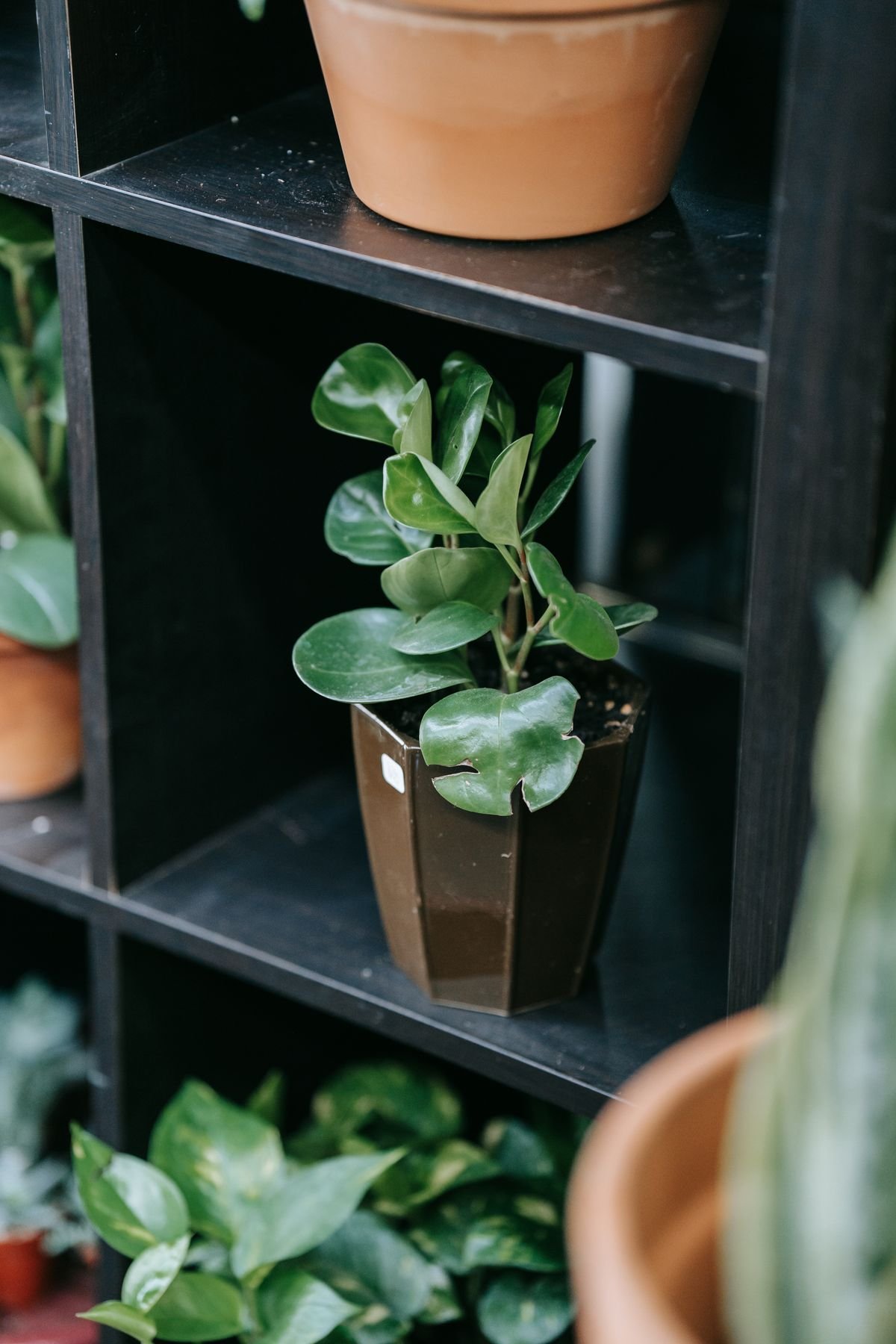
Leaf texture is the most reliable single check. P. obtusifolia leaves have a waxy quality — smooth, glossy, and slightly stiff to the touch. P. magnoliifolia leaves are described as fleshy rather than waxy — a subtler, softer surface quality that takes some side-by-side handling to notice confidently on a single specimen.
Venation is the second check, and often easier for a non-specialist. Hold a leaf up to bright light. P. obtusifolia's veins are faint and hard to make out; P. magnoliifolia's are more visibly marked, standing out more clearly against the leaf tissue.
Leaf base shape is a supporting detail. P. magnoliifolia leaves more often show a slightly heart-shaped (cordate) base, where the leaf blade curves inward at the point it meets the petiole, whereas P. obtusifolia's base is more uniformly obovate without that distinct notch.
Stem cross-section is the site's general position on this genus — rounder in P. obtusifolia, more angular in P. magnoliifolia — consistent with the broader pattern of retail mislabelling across Peperomia species. It is a real distinction but a subtle one, harder to judge with confidence than the leaf traits above unless you have a confirmed specimen of each to compare directly.
No single trait here is as clean-cut as, say, the sap test that separates Peperomia from Ficus. If you are not confident after checking texture and venation together, treat the identification as provisional — it has no bearing on how you care for the plant either way.
Care Differences That Actually Change the Outcome
There are none of practical consequence. Both species are facultative epiphytes from overlapping neotropical ranges, and both are managed on the same 2,000-4,000 lux light target, the same free-draining substrate, and the same dry-down watering cycle — top 2-3 cm of substrate fully dry before rewatering. This is the rare comparison on this site where the answer to "do I need to treat these differently" is simply no. For the full care specification either species should follow, see the complete care guide.
Which Is Easier for a Specific Home
Functionally, neither is easier than the other — this is the one comparison on this site where the deciding factor is not ease of care but which species you actually want to own. If you're a collector specifically seeking P. magnoliifolia for its own sake, buy from a source that can confirm the species by more than a hang-tag, since retail labelling routinely applies "Peperomia obtusifolia" across both. If you simply want a compact, glossy-leaved, low-maintenance plant and don't care which of the two you end up with, either will perform identically.
Common Misidentification and Buying Mistakes
- Trusting a generic "Peperomia" retail tag to confirm species — both plants are frequently sold under the more recognisable obtusifolia name regardless of which one is actually in the pot.
- Relying on stem cross-section alone as a confident check — it is a real distinction but subtle enough that leaf texture and venation are the more dependable starting point.
- Assuming a care difference exists and adjusting watering or light for one "species" versus the other — there is no documented care distinction to act on.
- Confusing either with a genuinely different genus, such as Hoya or Ficus elastica — those mix-ups carry real care and toxicity consequences that this obtusifolia-vs-magnoliifolia comparison does not.
Final Decision Guide
Confirming P. obtusifolia specifically matters if you are already following this site's species-specific thresholds and want certainty that they apply — use the full identification guide for the broader set of checks against unrelated lookalikes, since the obtusifolia-vs-magnoliifolia distinction covered here is a finer-grained question within that.
Not confirming the exact species is a reasonable choice for most owners, given the identical care requirements — spend the effort on ruling out a genuinely different, differently-cared-for genus instead, which is where a misidentification actually costs you something. For houseplant marketing claims that apply to neither species reliably, see the air purification myths guide.
Care FAQ
Are Peperomia obtusifolia and Peperomia magnoliifolia the same plant?
No, though they are close enough that some early botanical treatments considered them synonyms. They are distinct accepted species within the same genus, and the confusion persists in retail labelling today.
What is the easiest way to tell them apart?
Leaf texture and venation are the most observable clues: P. obtusifolia leaves are waxy with veins that are difficult to see with the naked eye, while P. magnoliifolia leaves are more fleshy with noticeably more visible venation. The site's general position — consistent with retail-mislabelling patterns across the genus — is that stem cross-section (rounder in obtusifolia, more angular in magnoliifolia) is a supporting check, though it is subtler and harder to judge confidently than the leaf traits.
Do they need different care?
No. Both are facultative epiphytes from overlapping neotropical ranges and are managed identically — the same free-draining substrate, the same 2,000-4,000 lux target, and the same dry-down watering cycle. Getting the species identification wrong has essentially no care consequence, unlike mixing up Peperomia with an unrelated toxic genus.
Which one is more common in stores?
Peperomia obtusifolia is significantly more common in the commercial houseplant trade. A plant sold simply as "Peperomia" or "Baby Rubber Plant" without a specific epithet is more likely to be P. obtusifolia, though retail labelling in this genus is unreliable enough that the visual checks are worth doing regardless.