
Peperomia Obtusifolia Dropping Leaves: 6 Causes & The Abscission Mechanism
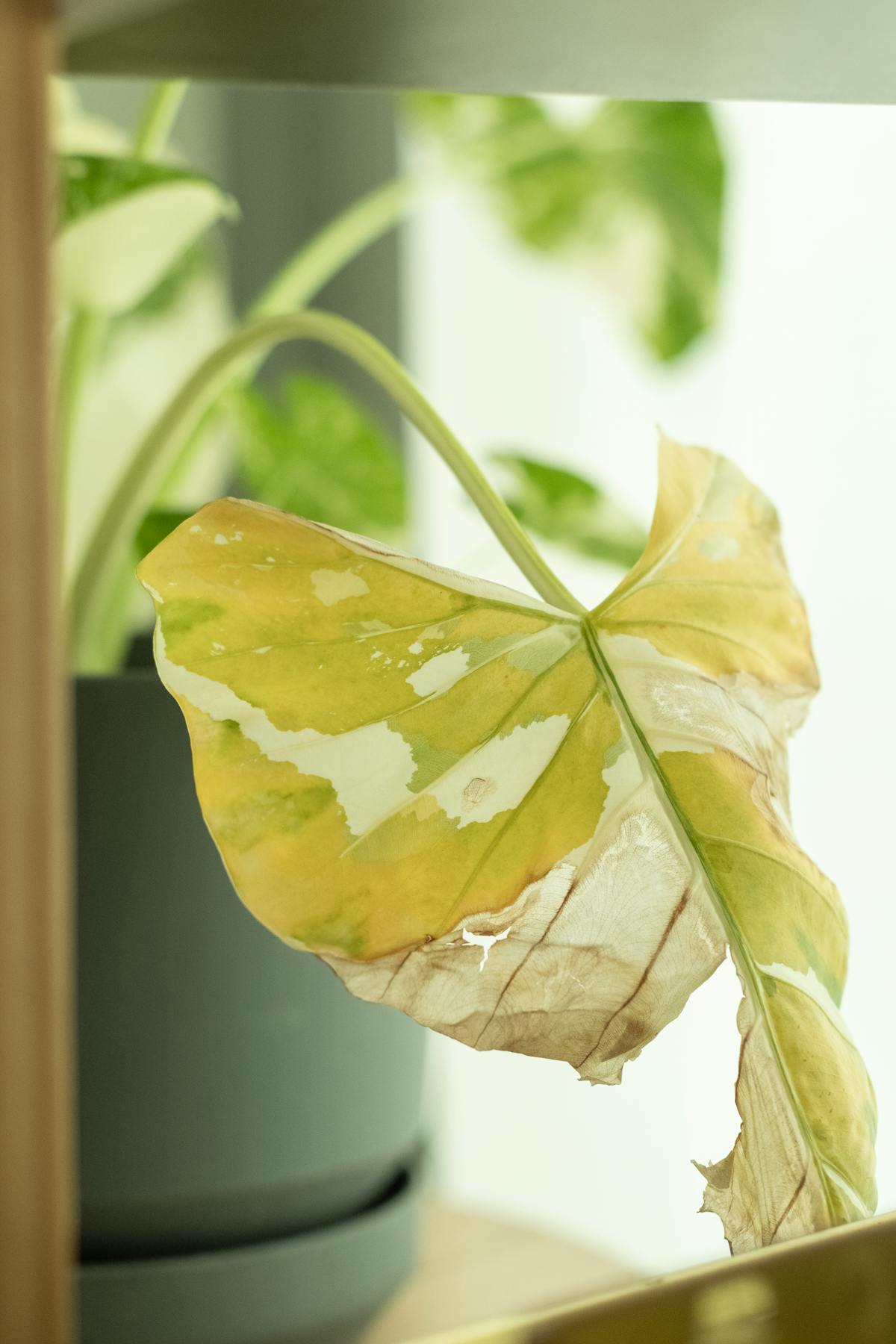
When Peperomia obtusifolia drops leaves — especially green, healthy-looking ones that detach at the lightest touch — the plant is not failing. It is executing a deliberate hormonal protocol called abscission: the plant grows a layer of corky cells at the base of the petiole, dissolves the vascular connection, and sheds the leaf to reduce metabolic load on a stressed root or stem system. The trigger is what matters for diagnosis. The colour of the leaf at the moment of drop, the firmness of the stem, and the moisture state of the substrate together identify which of the six causes below is active.
The short answer: Drop of green leaves indicates an acute trigger — cold shock below 10°C or a sudden ethylene surge from anoxic roots. Drop of yellow leaves indicates a chronic trigger — root rot, salt accumulation, or natural senescence. Acclimation drop after a move is normal at 10–20% over 2–3 weeks. The Stem Squeeze diagnostic (Section 7) distinguishes environmental triggers from pathological ones in five seconds. Adding water before diagnosis routinely accelerates the failure.
Diagnostic Table: Match the Drop Pattern to the Trigger
| Drop Signature | Leaf Colour at Drop | Substrate | Stem Firmness | Most Likely Trigger |
|---|---|---|---|---|
| Green leaves fall at a touch within 24–48 h | Fully green | Variable | Firm | Cold shock (<10°C draft) |
| Green leaves fall with substrate sour-smelling | Green, sometimes succulent-soft | Wet, sour | Firm initially, then soft | Acute root anoxia → ethylene surge |
| Yellow leaves drop, lower whorl first | Pale yellow | Wet or recently wet | Soft, hollow | Chronic root rot |
| Leaves thin and papery before drop | Wrinkled green | Bone-dry | Firm | Severe underwatering |
| 10–20% of older leaves drop over 2–3 weeks | Green or pale | Within range | Firm | Light/relocation acclimation |
| Leaves drop where touched repeatedly | Variable | Within range | Firm | Physical trauma / thigmo-stress |
| Tip-browning then drop, white substrate crust | Brown-tipped | Variable | Firm | Salt accumulation / fertiliser burn |
The Abscission Mechanism: Why Drop Is Active, Not Passive
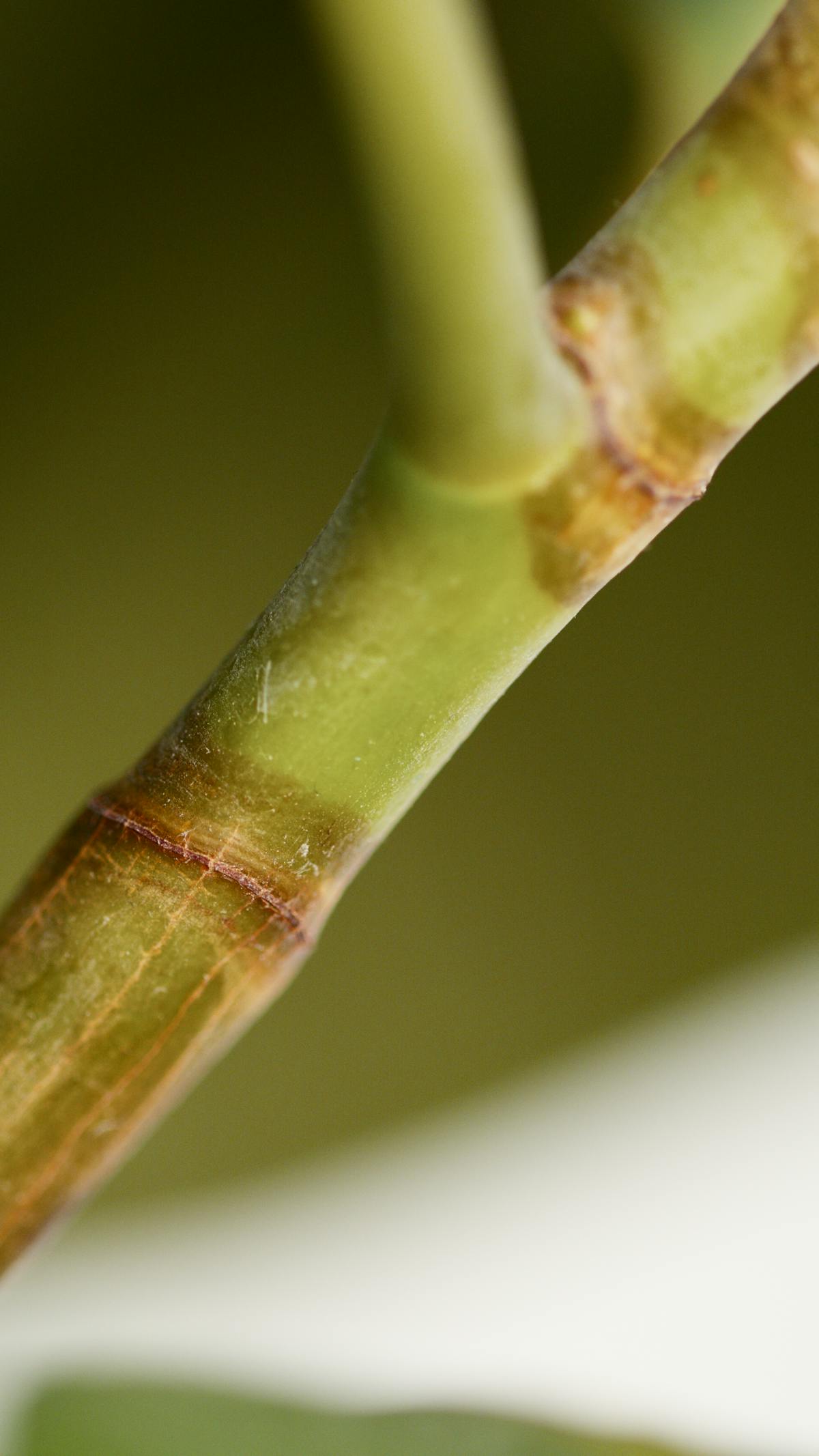
Every leaf on P. obtusifolia attaches to the stem through an abscission zone — a narrow band of cells at the base of the petiole, held together under normal conditions by calcium pectate (the structural "glue" of plant cell walls). Two hormones govern whether this zone holds or releases:
- Auxin — synthesised by healthy, photosynthesising leaves. Flows down the petiole and keeps the abscission zone locked closed.
- Ethylene — the stress hormone. When the plant experiences cold, anoxia, drought, or trauma, ethylene production spikes and auxin production falls.
The hormonal balance flips. Cells in the abscission zone produce two enzymes — cellulase and pectinase — that dissolve the cell walls binding the leaf to the stem. Simultaneously, the plant grows a waterproof corky layer across the wound to prevent pathogen entry. The leaf is now mechanically separated; it falls under its own weight at the next touch or air movement.
A specific mechanism worth naming: in waterlogged substrate, anoxic roots produce ACC (1-aminocyclopropane-1-carboxylic acid), the immediate precursor to ethylene. ACC travels up the xylem to the leaves and is converted to ethylene at the petiole. This is why overwatering produces leaf drop that often looks like a different problem — the trigger is hormonal, the visible event is mechanical separation, and the root cause sits beneath the substrate surface where the grower cannot see it.
Trigger 1: Cold Shock — The Green-Leaf Drop in 24–48 Hours
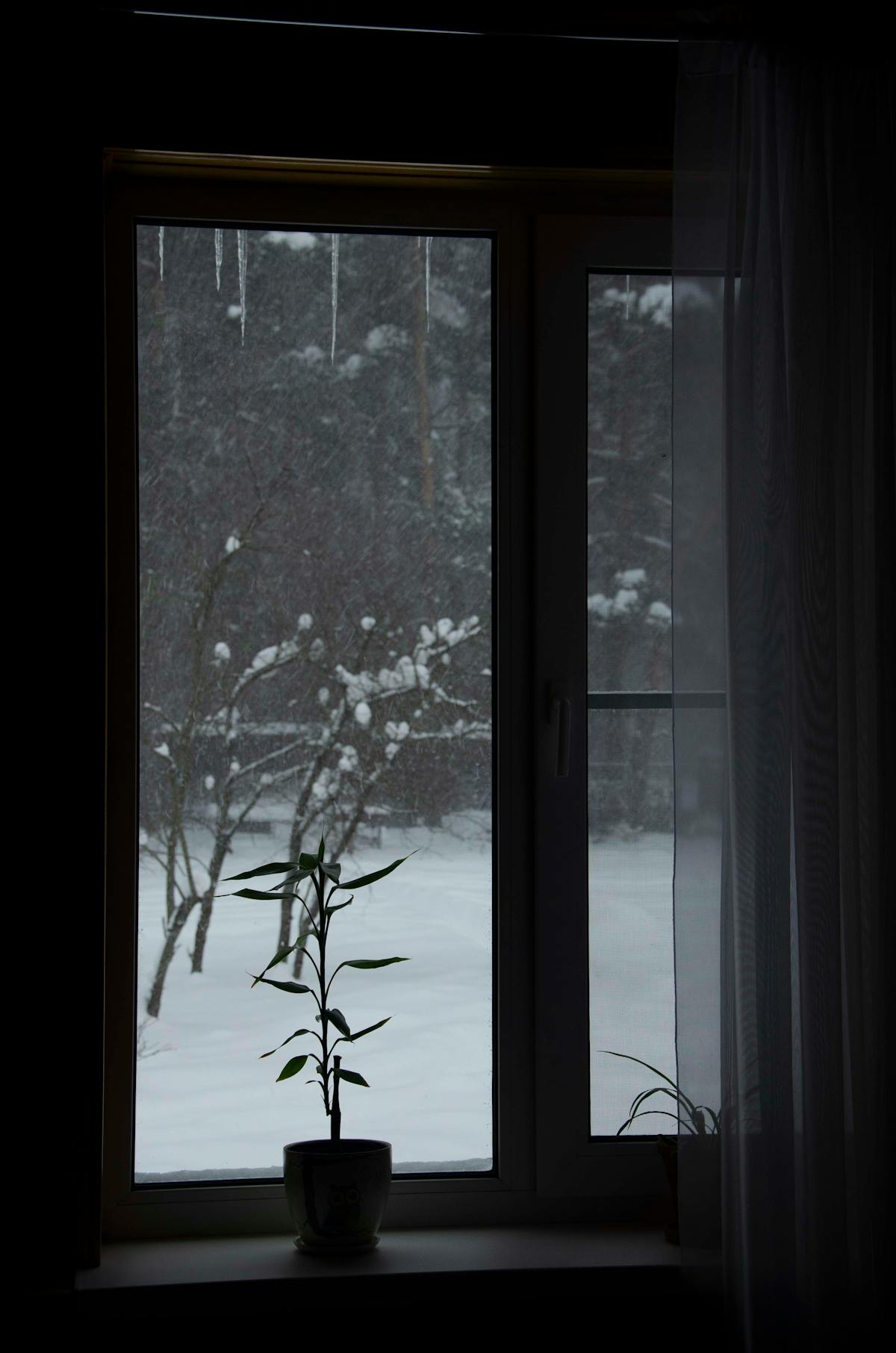
If fully green, healthy-looking leaves fall at the lightest touch within 24–48 hours of a known temperature event — a draft from an air-conditioning vent, a single-glazed window on a cold night, a move from a warm shop to a cold car — the cause is chilling injury.
P. obtusifolia is a tropical species adapted to the stable 18–24°C of its native Venezuelan and Colombian understorey. Cellular damage begins below 10°C sustained; even brief exposure to <10°C at leaf surface disrupts cell membrane fluidity. The plant interprets this as a threat to the central vascular core and triggers immediate abscission to reduce the metabolic and thermal load. Lipid membranes solidify; ion transport stalls; water and nutrient movement halts. The plant sheds the canopy to save the stem.
Diagnosis: Drop is sudden and confined to a 24–48 hour window. Fallen leaves are green and firm. The Stem Squeeze (Section 7) returns firm. A specific environmental cause is identifiable — usually a recent location change or seasonal temperature drop.
Fix: Move the plant immediately to a stable position between 18–24°C by day and 15–18°C by night. Keep at least 50 cm from exterior walls, single-glazed windows, air-conditioning vents, and exterior doors. Stop watering until the substrate dries completely; a defoliated plant has negligible transpiration demand and additional water will only saturate the root zone. Recovery takes 4–8 weeks, with new growth emerging from dormant nodes (Section 8).
Trigger 2: Root Anoxia and Overwatering — The Wet-Soil Shedding
The most common indoor cause of P. obtusifolia leaf drop is also the most counterintuitive: leaves shed from a plant whose substrate is moist or wet. The plant is shedding because the roots are suffocating, not because the leaves are thirsty.
A recurring diagnostic case: a reader reports leaf yellowing beginning at the lower whorl and progressing upward, with the substrate moist on inspection. The plant has been watered on a fixed weekly schedule for several months. Continuous saturation has eliminated air-filled porosity in the substrate within five days; root respiration has failed; Pythium or Phytophthora has colonised the anoxic root zone; functional root mass has collapsed from the tips upward. Lower-leaf yellowing reflects mobile-nutrient remobilisation as the plant scavenges from older tissue, but the drop itself is hormonal — ACC released by the anoxic roots converts to ethylene at every petiole, and the abscission zones open.
Two distinct timing patterns sit under this single mechanism. Sudden green drop indicates a recent acute saturation event (a heavy water, a saucer left full of standing water). Gradual yellow drop, lower-whorl-first indicates chronic saturation over weeks or months. Both are root failure; the rescue protocol is the same.
Self-watering pots are the wrong system for this species. Continuous wicking maintains substrate moisture above the species' tolerance — in effect, reproducing the conditions of root anoxia by design. Self-watering systems suit Cyperus, Spathiphyllum, and other plants with continuous-moisture tolerance. For P. obtusifolia, they are an active risk.
Diagnosis: Substrate is moist or wet. Lower leaves yellow before dropping (chronic) or drop while still green (acute). A sour or foul smell from the substrate confirms root anaerobiosis. The Stem Squeeze returns soft in advanced cases.
Fix: Stop watering. Unpot the plant. Trim all black, soft, or sour-smelling roots back to clean white tissue with sterilised scissors. Repot into a free-draining mix — 50% coir-based compost, 30% perlite, 20% fine orchid bark — in a container only 2–3 cm larger than the surviving root mass. Withhold water for 7–10 days. The full protocol is in the overwatering rescue guide.
Trigger 3: Severe Underwatering — The Papery Drop
Underwatering is the less common cause of P. obtusifolia leaf drop but produces a distinct presentation. The plant stores water in the parenchyma of its thick semi-succulent leaves. When the substrate is left bone-dry beyond 3–4 weeks — the species' actual drought tolerance is substantial — the stored reserve is depleted. The plant withdraws water from its oldest leaves to sustain the meristem and the growth tips; once those leaves are emptied, they undergo accelerated senescence and abscise.
The diagnostic signature is texture: leaves that drop from drought are thin, wrinkled, and papery rather than firm and glossy. The pot lifts noticeably light. There is no sour smell from the substrate.
Diagnosis: Substrate is bone-dry at depth — confirm with a chopstick or wooden skewer drawn from mid-pot, not just a knuckle touch at the surface. Dropped leaves feel thin and wrinkled rather than firm. Pot weighs perceptibly less than recently watered reference.
Fix: Rehydrate via bottom watering — the peat or coir component becomes hydrophobic after a missed cycle of three or more weeks, and top-watering channels straight down the pot wall and out the drainage holes. Place the pot in 3–5 cm of lukewarm water for 20–30 minutes. Drain fully. Going forward, water every 10–14 days in summer and every 21–28 days in winter for a 12 cm container under standard indoor conditions, triggered by the top 2–3 cm of substrate fully drying.
Trigger 4: Light Relocation and Acclimation — The Normal 10–20% Drop

A specimen brought home from a high-light nursery (often 4,000–10,000 lux under greenhouse glass with shading) to a residential interior (500–2,000 lux in most rooms) experiences an immediate energy mismatch. The existing canopy cannot photosynthesise enough to sustain itself in the new light environment. The plant performs a metabolic rebalancing — dropping 10–20% of the oldest, lowest, least-efficient leaves to align the canopy size with the new energy budget.
This is not pathology. It is acclimation, and it stops on its own once the canopy matches the available light.
Diagnosis: Drop began within 1–2 weeks of bringing the plant home or moving it. Affects older leaves first, while newer growth remains attached. Substrate moisture is in range; stem is firm; no sour smell. Total drop is under 30% of foliage and slows by the second week.
Fix: Do not intervene. Place the plant in a position receiving 2,000–4,000 lux measured at the leaf surface with a meter or calibrated phone app. Maintain stable temperature (18–24°C), humidity (40–60% RH), and avoid moving the plant again. If drop continues past 4 weeks or exceeds 30% of foliage, the cause is not acclimation — perform the Stem Squeeze and investigate substrate moisture.
Trigger 5: Physical Trauma — Thigmo-Stress at the Petiole
Repeated brushing, vibration, or mechanical contact at a specific leaf or stem produces localised abscission. The mechanical signal triggers ethylene production in the affected tissue specifically — not systemically. The plant abscises the leaves where the contact occurs, leaving neighbouring undisturbed leaves intact.
This is the only trigger that produces asymmetric, location-specific drop. A specimen positioned in a high-traffic area — a corridor, a corner brushed against when passing, a windowsill that bumps when the window opens — develops a gap of dropped leaves on the contact side while the opposite side of the canopy stays full.
Diagnosis: Drop is geographically localised on one side or one section of the plant. Substrate moisture is in range. Stem is firm. A specific physical contact pattern is identifiable.
Fix: Relocate to a position with at least 50 cm of clearance on all sides. The dropped leaves do not regrow at the original nodes, but new growth from dormant axillary buds will eventually fill the gap once mechanical contact ceases.
Trigger 6: Salt Accumulation and Fertiliser Burn
Brown tips that progress inward, followed by drop of the affected leaves, indicates osmotic stress rather than abscission per se. Dissolved fertiliser salts and tap-water minerals accumulate in the upper substrate over months — especially in chronically bottom-watered specimens, where capillary action moves moisture upward but never flushes salts downward. As the substrate ionic concentration rises, root osmotic potential is compromised; the leaf tips brown first (the end of the vascular line), and the affected leaves eventually abscise.
A white crust on the substrate surface or pot rim is the confirming visual sign.
Diagnosis: Tip browning advancing inward across many leaves, followed by drop of the most affected. White crust on substrate. Often correlates with recent over-fertilising or 12+ months of unflushed substrate.
Fix: Flush the substrate with low-mineral water — 3–5× pot volume of distilled, filtered, or rainwater applied from above over 20–30 minutes, allowing free drainage. The detailed procedure is in the substrate flush protocol. Resume fertiliser only after four weeks, at NPK 20-20-20 50% of label rate, monthly during spring and summer only — never in autumn or winter.
The Stem Squeeze Diagnostic
The Stem Squeeze is the five-second test that separates environmental triggers (Causes 1, 3, 4, 5) from pathological ones (Causes 2 and 6 in advanced state). Perform it before any intervention.
- Locate the main stem at the soil line.
- Gently squeeze between thumb and forefinger.
- Firm resistance, stem feels solid: the central vascular tissue is intact. The trigger is environmental — cold shock, acclimation, drought, or physical trauma. Stabilise conditions and the plant will recover from dormant nodes.
- Soft, spongy, hollow, or mushy: the central vascular tissue has rotted. This is advanced root or stem rot, and the plant requires emergency intervention — unpot, trim back to firm white tissue, and propagate from any healthy cuttings before the rot spreads further. See the stem-cutting rescue protocol.
A firm stem with a defoliated canopy is recoverable. A soft stem at the soil line is not, and the only salvage is to take cuttings from any still-firm sections higher up.
Operation Bare Stem — The Regeneration Protocol
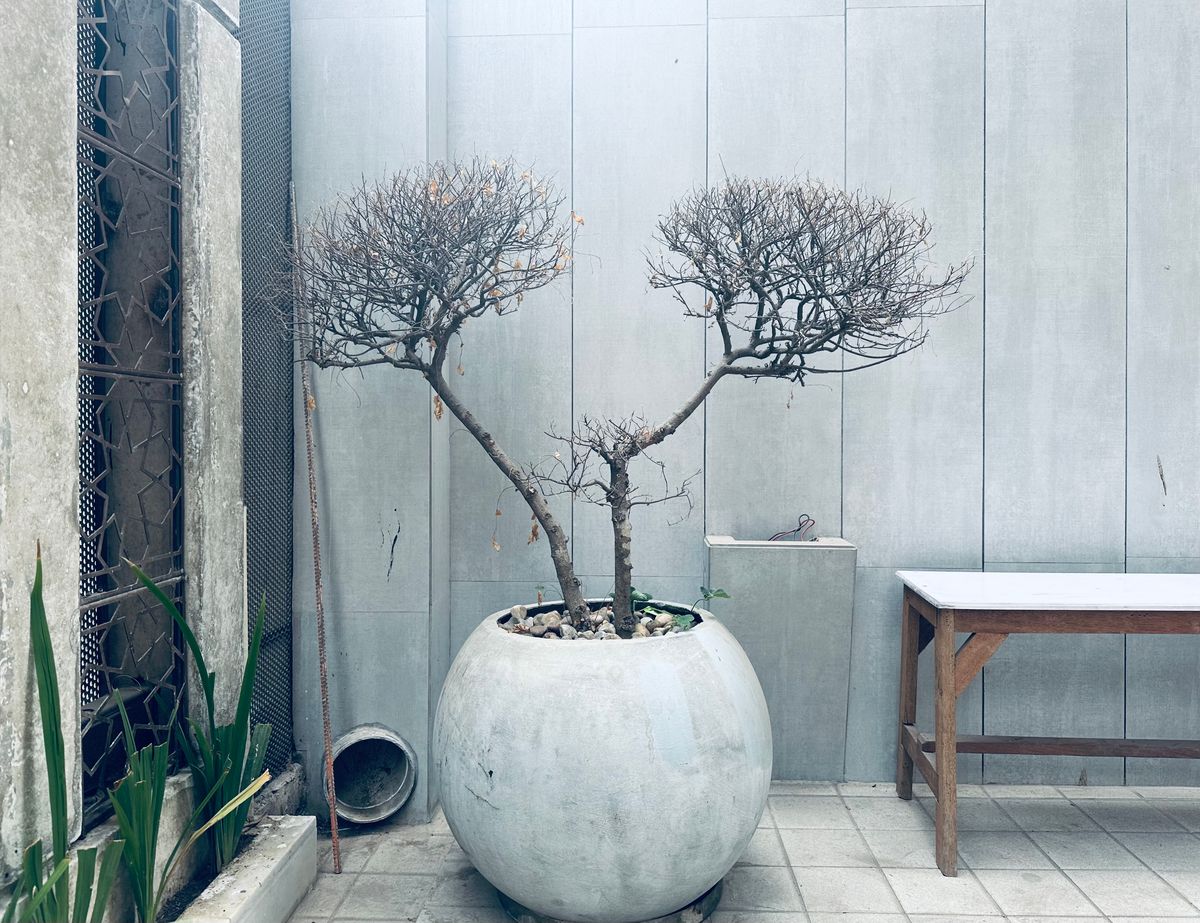
If the Stem Squeeze returns firm but the canopy is mostly or entirely gone, the plant is recoverable. P. obtusifolia carries dormant axillary buds at every former leaf node — small green bumps along the stem that can activate under stable conditions and produce new growth within 4–8 weeks.
The protocol is restraint:
- Stop watering. A defoliated plant has negligible transpiration. Wait until the substrate is fully dry — pot weight comparison against a freshly watered reference is the reliable signal.
- Maintain
2,000–4,000 luxat the stem. Dormant nodes require photosynthetically active light to activate. A position with bright indirect light from an east-facing window, or a supplemental LED grow light 30–40 cm above the stem, is appropriate. - Hold temperature at
18–24°Cday,15–18°Cnight. Stable conditions are the recovery signal. Avoid any further moves. - Do not fertilise. Salt accumulation in a stressed plant compounds the original damage. Resume fertiliser only after at least three new leaves have hardened off — typically 6–8 weeks after the first new growth appears.
- Do not repot. The roots have already been stressed; mechanical disturbance during regeneration extends recovery time. Repotting can wait until the canopy is restored.
Inspect the stem for new growth at 4-week intervals. Tiny green swellings at former leaf nodes are the signal that recovery is underway. From the moment a new leaf is visible, the plant is no longer in crisis.
Recommended Diagnostic Products
- Digital hygrometer and thermometer — confirms whether the plant's microclimate sits in the
18–24°C/40–60% RHtarget band, especially near windows where readings differ from the rest of the room. - Soil moisture meter — confirms substrate state at depth before applying any intervention. A wooden skewer drawn from mid-pot is a zero-cost alternative.
- Sterile pruning snips — required for root rot triage and dropped-leaf propagation. Disinfect with isopropyl alcohol between cuts.
Sources and Related Reading
- Wikipedia — Abscission (mechanism reference for the abscission zone, separation layer, and corky barrier)
- Wikipedia — Ethylene (plant hormone) (hormone reference for the stress-driven shedding signal)
- NC State Extension — Peperomia obtusifolia (species profile and indoor cultivation reference)
Internal mechanism references on this site:
- Peperomia obtusifolia care guide — the parent reference for thresholds.
- Peperomia obtusifolia curling leaves — the sibling diagnostic for curling that often precedes drop.
- Peperomia obtusifolia brown leaves — the sibling diagnostic for browning that can precede acclimation drop.
- Overwatering rescue protocol — the triage procedure for Trigger 2.
- Bottom-watering guide — the rehydration method for Trigger 3.
- Substrate flush protocol — the leaching procedure for Trigger 6.
- How to save rotted Peperomia stem cuttings — the salvage path when the Stem Squeeze returns soft.
Care FAQ
Why are my Peperomia obtusifolia leaves dropping off?
Leaf drop is an active hormonal process called abscission, not passive failure. Ethylene gas — produced during stress — triggers cells at the petiole base to dissolve their own connections, severing the leaf from the stem. The trigger is what matters: green-leaf drop typically signals cold shock below 10°C or sudden anoxia from overwatering; yellow-leaf drop signals chronic root rot. The substrate moisture and stem firmness together identify which trigger is active.
Why are green leaves falling off my Peperomia?
Drop of fully green leaves indicates an acute trigger — most commonly cold shock from a draft below 10°C, or a sudden ethylene surge from anoxic roots after recent overwatering. Cold-shocked leaves often fall at the lightest touch within 24–48 hours of the event. Anoxia-driven drop is accompanied by moist substrate and sometimes a sour smell. Both bypass the normal yellowing phase because abscission happens faster than chlorophyll degradation.
Can I reattach a fallen Peperomia leaf?
No. Once the abscission layer has formed, the plant has already grown a corky barrier across the wound and severed the vascular connection. The leaf cannot be reconnected. However, if the fallen leaf is still green and firm and includes part of the petiole, it can be rooted as a new plant. See the leaf propagation guide for the method.
Will my Peperomia regrow leaves on a bare stem?
Yes, if the stem is firm and green. P. obtusifolia carries dormant axillary buds at every leaf node; under stable conditions of 2,000–4,000 lux light and 18–24°C temperature, these nodes activate within 4–8 weeks and produce new growth. Withhold water until substrate is fully dry and do not fertilise during this period. If the stem is soft or hollow, the central vascular tissue has rotted and recovery is unlikely.
Does overwatering cause leaf drop?
Yes — but through a specific mechanism. Saturated substrate produces root anoxia within ~5 days. Anoxic roots release ACC, a precursor to ethylene, which travels up the vascular system and triggers the abscission layer at every leaf base. The plant sheds its canopy to reduce metabolic load on the failing root system. Substrate moisture combined with leaf drop is diagnostic of anoxia, not drought.
What is the Stem Squeeze diagnostic?
A 5-second test that distinguishes environmental drop from pathological drop. Gently squeeze the main stem at the soil line. If the stem is firm, the cause is environmental — cold shock, acclimation, or atmospheric stress — and recovery requires stabilising conditions. If the stem is soft, mushy, or hollow, the central vascular tissue has rotted and emergency intervention is required: unpot, trim, and repot into fresh free-draining substrate.
How long does acclimation leaf drop last?
Acclimation drop after a move from a high-light nursery to a lower-light home is normal and typically stops within 2–3 weeks. The plant sheds 10–20% of older leaves to match its canopy to the new energy budget. If drop continues past 4 weeks or exceeds 30% of foliage, the cause is not acclimation — investigate substrate moisture and stem firmness.