
Peperomia Cuttings in Perlite: Best Semi-Hydro Method
Peperomia cuttings in perlite root reliably because the inert, high-porosity granules keep oxygen available at the cut surface throughout the process while wicking just enough moisture up from a reservoir below. The method works well specifically because it skips the water-to-soil transition that trips up water-propagated cuttings — perlite-grown roots are already substrate-adapted by the time they're ready to pot.
When to Use This Method
Perlite suits a grower who wants the low transplant shock of soil propagation without soil's higher rot risk for a fresh, uncallused cut. It is a genuinely good default for variegated cultivars, since the sterile, inert medium carries none of the fungal or bacterial load organic mixes can, which matters more for a cutting already under some stress. Water propagation is the better choice if watching root development directly matters to you, since perlite in an opaque cup hides progress until you check by hand. If the goal is simply more plants from an already mature, multi-stem specimen rather than a genuinely new root system from a single cutting, division skips the rooting wait entirely, since each division already has its own roots attached.
Tools, Medium, and Cutting Selection
- 100% horticultural perlite — confirm it has no added fertiliser, which can stress an uncallused cut.
- A cup or jar, ideally with at least partially clear sides to allow some visual monitoring.
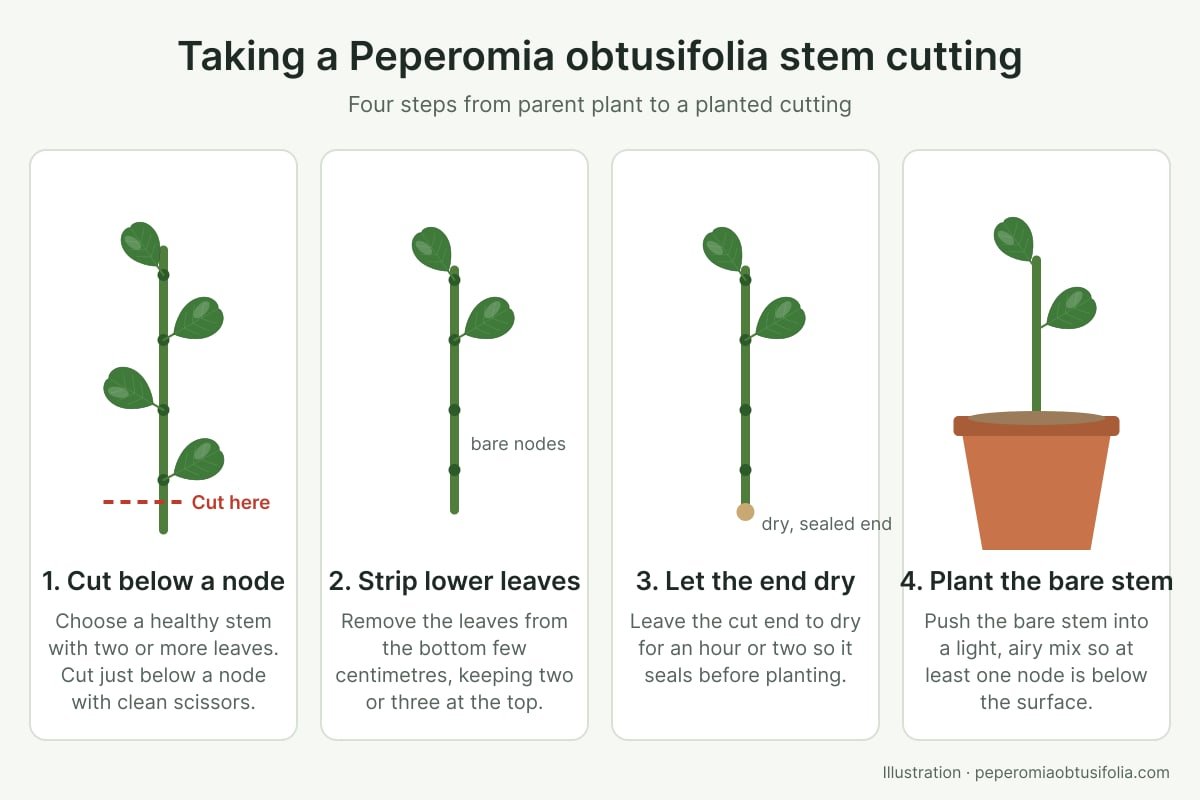
- A callused stem cutting with at least one node — take the cutting per the stem-cutting guide and let it callus per the callus timing guide before it ever touches the damp perlite.
Step-by-Step Method
- Rinse the perlite in a colander under running water until the runoff is clear, removing the fine dust that settles and reduces airflow if left in.
- Fill the container roughly three-quarters full with the rinsed, damp perlite.
- Add water to the bottom of the container, keeping the level a couple of centimetres below the perlite surface — a reservoir, not a soak.
- Insert the callused cutting, burying at least one node in the perlite while keeping that node above the standing water line, so it draws moisture by capillary action rather than sitting submerged.
- Place in bright, indirect light, out of direct sun, at normal room temperature. A loosely draped clear bag over the top raises local humidity if the room runs dry — see the humidity tent guide for that setup.
Rooting and New-Growth Signs
Roots are usually visible against a clear container within two to four weeks, appearing as thick, pale, and slightly fuzzy structures rather than the thinner, more translucent roots typical of water propagation. Because perlite offers essentially no physical resistance, roots often develop and spread faster than they would through denser soil. A new leaf emerging is the clearest confirmation the cutting has established functional roots, since leaf expansion draws on resources a rootless cutting cannot sustain. If the container isn't clear enough to see progress, a gentle, resistance-testing tug after three to four weeks serves the same purpose — noticeable resistance means roots have anchored into the perlite.
Transition and Aftercare
Once roots reach roughly 5-8 cm, the cutting is ready for a standard pot. Unlike water propagation, there is no root-shock transition to manage here — perlite-grown roots are already adapted to a substrate environment. Shake off loose perlite or leave some clinging to the roots (it does no harm and adds a little drainage), then plant directly into the standard soil mix. Hold off on fertiliser until a new leaf has fully expanded in the new pot, since a plant still settling its root system is more vulnerable to salt stress from feeding too early.
Failure Diagnosis
| Symptom | Likely cause | Action |
|---|---|---|
| Cut end turns soft or dark | Perlite was too wet, or the cutting wasn't callused first | Reduce reservoir depth; see the cuttings rotting guide |
| No roots after 4-6 weeks | Room too cool, or reservoir dried out entirely | Confirm 18-24°C and keep the reservoir topped up |
| Leaves wilt but stem stays firm | Normal hydraulic deficit before roots establish | Raise humidity slightly, keep out of direct sun |
| White dust settling at the base | Perlite wasn't rinsed before use | Not harmful, but rinse next time to protect airflow |
Pumice as a Heavier Alternative
Pumice — a porous volcanic rock sold for horticultural use — offers essentially the same core mechanism as perlite: a high-porosity, inert medium that keeps oxygen available at the cut surface while retaining enough moisture to support rooting. The practical difference is weight and durability rather than rooting performance. Perlite is light enough to float and shift when watered from above, which can unseat a heavy, top-heavy cutting before it has rooted; pumice's greater density holds a thick stem section steady in the medium and doesn't float to the surface when the reservoir is topped up. Pumice is also a genuine rock rather than a fragile, air-puffed glass particle, so it holds its structure over repeated reuse rather than gradually crushing into fine dust the way perlite does with handling over time.
Setup is otherwise identical to the perlite method above: rinse the pumice to remove volcanic dust before use, fill a container roughly three-quarters full, insert the callused cutting with at least one node buried, and maintain a shallow water reservoir below the medium surface rather than saturating it throughout. Choose pumice over perlite specifically for a heavy-stemmed or top-heavy cutting that struggles to stay upright in lighter perlite, or if reusing the same medium across many propagation cycles matters more than cost — pumice is typically pricier per volume than perlite but survives reuse better.
Comparison with Water Propagation
Perlite and water propagation both work well for this species, and the choice comes down to what you value more: water gives direct visibility into root progress at the cost of a transition period once potted; perlite skips that transition at the cost of needing to check root development by feel rather than by eye. Neither method requires rooting hormone for routine propagation of a healthy cutting. For the full comparison across every method this species tolerates, see the complete propagation guide.
Care FAQ
Is perlite better than water for propagating Peperomia obtusifolia?
Both work reliably. Perlite produces roots already adapted to substrate, removing the transition period water-grown roots need once potted, and its higher oxygen availability generally supports slightly faster, sturdier root development. Water offers easier visual monitoring, which perlite in an opaque container does not.
Do I need to keep perlite constantly wet?
No — the medium should stay consistently damp through capillary action from a shallow water reservoir, not saturated throughout. The node should sit above the standing water line, wicking moisture rather than sitting in it directly.
Can I use perlite straight from the bag without rinsing?
Rinsing first is worth doing. Perlite generates fine dust in the bag that settles at the bottom of a propagation container and can reduce the airflow the medium is chosen for in the first place.
How long does rooting take in perlite?
Similar to water propagation for this species — often two to four weeks for initial roots, depending on temperature and light, though perlite-grown roots tend to develop root hairs sooner since the medium already resembles the substrate the plant will eventually grow in.