Fluval Stratum for Peperomia: Best Propagation Method
Fluval Stratum for Peperomia propagation works because the porous, volcanic-soil aquarium substrate buffers water to a mildly acidic pH while supplying trace minerals that fully inert media like perlite or LECA do not. It is a genuinely useful option for a valuable or stubborn cutting, but it is not a guarantee — the same callusing and aeration fundamentals that determine success in any medium still apply here.
When to Use This Method
Stratum suits a grower propagating a particularly valuable or slow-to-root cutting — a highly variegated cultivar, for instance — where the modest nutrient and pH advantage over an inert medium is worth the extra cost and effort. It is less necessary for routine propagation of an easy, healthy cutting, where perlite or water works just as reliably at lower cost. Because the substrate is comparatively expensive and degrades over months of use, treat it as a propagation-stage medium rather than a long-term growing substrate — LECA is the better choice if the goal is a permanent semi-hydroponic setup. If the actual goal is simply more plants from an already mature, multi-stem specimen, division sidesteps the cost and wait of any cutting-based method, since each division already carries established roots.
Tools, Medium, and Cutting Selection
- Fluval Stratum (or an equivalent porous volcanic aquarium substrate).
- A small nursery pot with drainage holes, sized to the cutting.
- A slightly larger, solid outer cup with no holes, to act as a water reservoir.
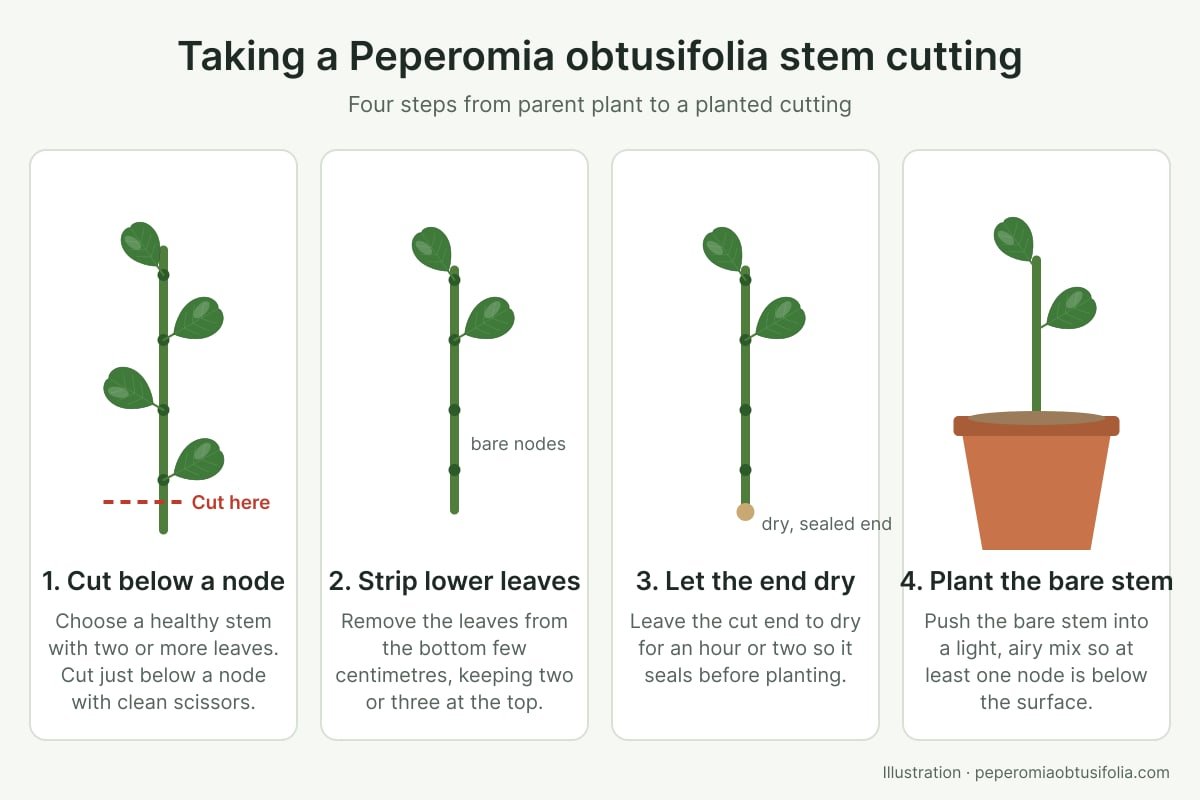
- A callused cutting with at least one node, prepared per the stem cutting guide and callus timing guide.
- Perlite, optionally, to stretch the substrate further in a 50/50 mix.
Step-by-Step Method
- Fill the inner nursery pot halfway with Stratum, then position the callused cutting and fill in around the stem with more substrate to support it upright.
- Set the inner pot inside the solid outer cup, creating a reservoir space between the two.
- Add water to the outer cup until it fills roughly the bottom third of the inner pot — the substrate wicks moisture upward to the cutting rather than the cutting sitting directly in standing water.
- Cover with a clear bag or place inside a humidity tent to maintain consistent moisture at the leaf surface while roots develop.
- If stretching a limited amount of substrate, mix it 50/50 with perlite — this adds aeration while retaining some of the mineral and pH-buffering benefit.
Rooting and New-Growth Signs
Roots typically become visible against the substrate within two to four weeks under normal indoor conditions, often appearing sturdier than water-grown roots because the medium supplies nutrients as soon as the first root tip develops, rather than the cutting relying solely on stored reserves. A gentle tug test after three to four weeks confirms anchoring if visual inspection is inconclusive. A new leaf emerging remains the most reliable overall sign that a functioning root system has established, and it matters more than root length alone — a cutting can show a modest root system but no new growth for weeks, which is worth monitoring rather than treating as failure on its own.
Transition and Aftercare
Because Stratum granules are soft enough for roots to grow directly through, there is no need to clean the substrate off before potting — plant the whole root-and-substrate mass into a standard free-draining soil mix once roots reach roughly 7-8 cm. Move the plant out of Stratum specifically once established, since the substrate breaks down into a finer, denser material over months and is not suited to long-term growing. Hold off on fertiliser until a new leaf has fully expanded in the new pot.
Failure Diagnosis
| Symptom | Likely cause | Action |
|---|---|---|
| Cut end turns soft or discoloured | Cutting wasn't callused before contact with the wet substrate | See the cuttings rotting guide |
| No roots after 4-6 weeks | Room too cool, or reservoir dried out | Confirm 18-24°C and keep the reservoir topped up |
| Substrate turning to fine mud | Normal degradation over extended use | Pot up promptly once roots are ready rather than leaving the cutting in ageing substrate |
| Leaves wilt but stem stays firm | Normal hydraulic deficit before roots establish | Raise humidity slightly, keep out of direct sun |
The Real Downsides
Stratum costs meaningfully more per use than perlite, moss, or plain water, which is worth weighing against how much the nutrient and pH advantage actually matters for an easy-rooting species like this one. It also degrades over time in a way LECA does not, so it has a genuine role at the propagation stage and a limited one beyond it. For the full comparison across every propagation method this species tolerates, see the complete propagation guide.
Care FAQ
What is Fluval Stratum and why do growers use it for Peperomia?
It is a porous, volcanic-soil aquarium substrate originally designed for freshwater planted tanks. Growers have adopted it for propagation because its high porosity supports oxygen at the root zone while its mineral content supplies trace nutrients that fully inert media like perlite or LECA do not.
Is Fluval Stratum better than perlite or LECA for propagation?
It offers a genuine advantage in nutrient supply and pH buffering that inert media lack, but it is not a guarantee of success — the same callusing and aeration principles that apply to any medium still determine whether a cutting roots. It also degrades over time in a way LECA does not, so it suits propagation rather than long-term growing.
Do I need to remove Fluval Stratum before potting a rooted cutting?
No. The substrate is soft enough that roots grow through it, and the whole root-and-substrate mass can go directly into the new pot, avoiding a disruptive root-cleaning step.
Can I stretch a bag of Fluval Stratum further by mixing it with perlite?
Yes. A 50/50 mix with perlite adds aeration while still delivering some of the substrate's mineral content, and is a reasonable way to use less of a comparatively costly product per cutting.