
Peperomia Office Lighting: Best PAR & Spectrum Guide
Peperomia office light from standard fluorescent or LED fixtures typically measures 300-500 lux at desk height — below the roughly 800 lux tolerated minimum this species needs just to hold steady, and well under the roughly 2,000-4,000 lux working target for active growth. The practical answer is not whether office light is "enough" in the abstract, but whether it clears that specific threshold at the specific desk, which only a lux reading confirms.
Quick Facts
| Factor | Typical office reality | Species threshold |
|---|---|---|
| Ambient desk-height light | 300-500 lux under standard fixtures | Tolerated minimum: about 800 lux |
| Growth-supporting light | Rare without supplementing | Working target: roughly 2,000-4,000 lux |
| Fixture colour temperature | 4,000-6,500K (blue-rich) | Suppresses stem elongation, secondary effect only |
| Distance to a desk lamp | Intensity drops sharply with distance | Closer and slightly off-axis beats overhead alone |
| Variegated cultivar light need | Same office lux as green form | Needs brighter light to avoid reversion |
The Main Explanation: Why Office Light Usually Falls Short
Office lighting is designed for human visual comfort, not plant photosynthesis, and the two have different targets. A room that reads as comfortably bright to a person can sit well under 1,000 lux at desk height — dim enough that this plant survives on stored reserves rather than actively growing. This is the same tolerated-minimum mechanism covered in the light requirements guide: below the threshold, the plant is not thriving quietly, it is drawing down energy it cannot fully replace.
Fixture colour does matter, but only as a secondary factor. Standard office fluorescent and LED lighting sits in the 4,000-6,500K range, which is rich in blue wavelengths. Blue light is a genuine signal plants use to suppress excessive stem elongation, which is part of why an office specimen sometimes looks more compact than an equally dim one under warmer, blue-poor light. This effect does not substitute for adequate intensity — a compact, energy-starved plant is still energy-starved.
Factors That Change the Answer
- Distance from the nearest window. A desk within a couple of metres of a window, even without direct sun, often measures meaningfully higher than one lit only by ceiling fixtures — check both before assuming the room is uniformly dim.
- Fixture type and age. Older fluorescent tubes lose output over their lifespan; a fixture that measured adequately a year ago may have dimmed without anyone noticing.
- Desk position relative to the light source. A desk directly under a fixture reads higher than one at the edge of the room, since intensity falls off sharply with distance from any given light source — this is the same distance-versus-direction principle covered in the best window guide, applied to an artificial source instead of a window.
- Cultivar. Solid green forms tolerate the low end of the range far better than variegated cultivars, which need brighter light to avoid reversion.
Practical Actions
- Measure lux at the desk before assuming the spot is adequate — a phone light-meter app is sufficient for a first read; see the lux and foot-candles guide for method and limitations.
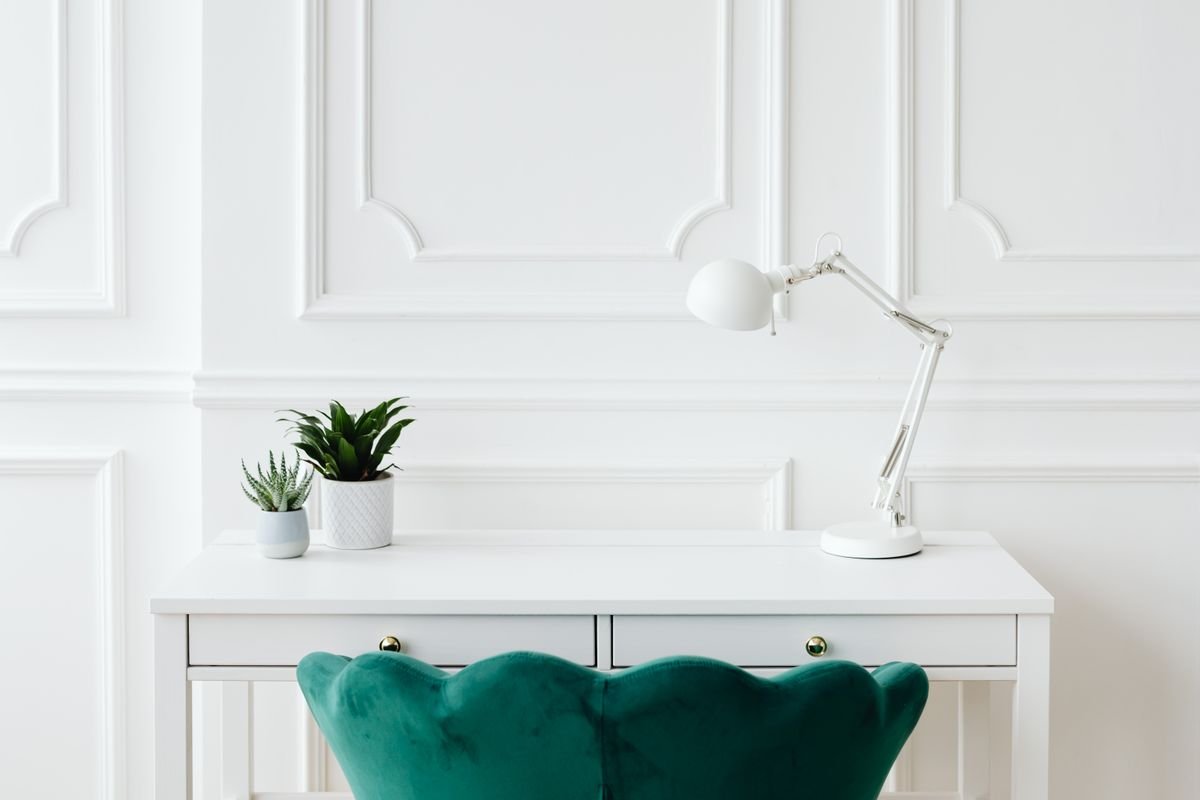
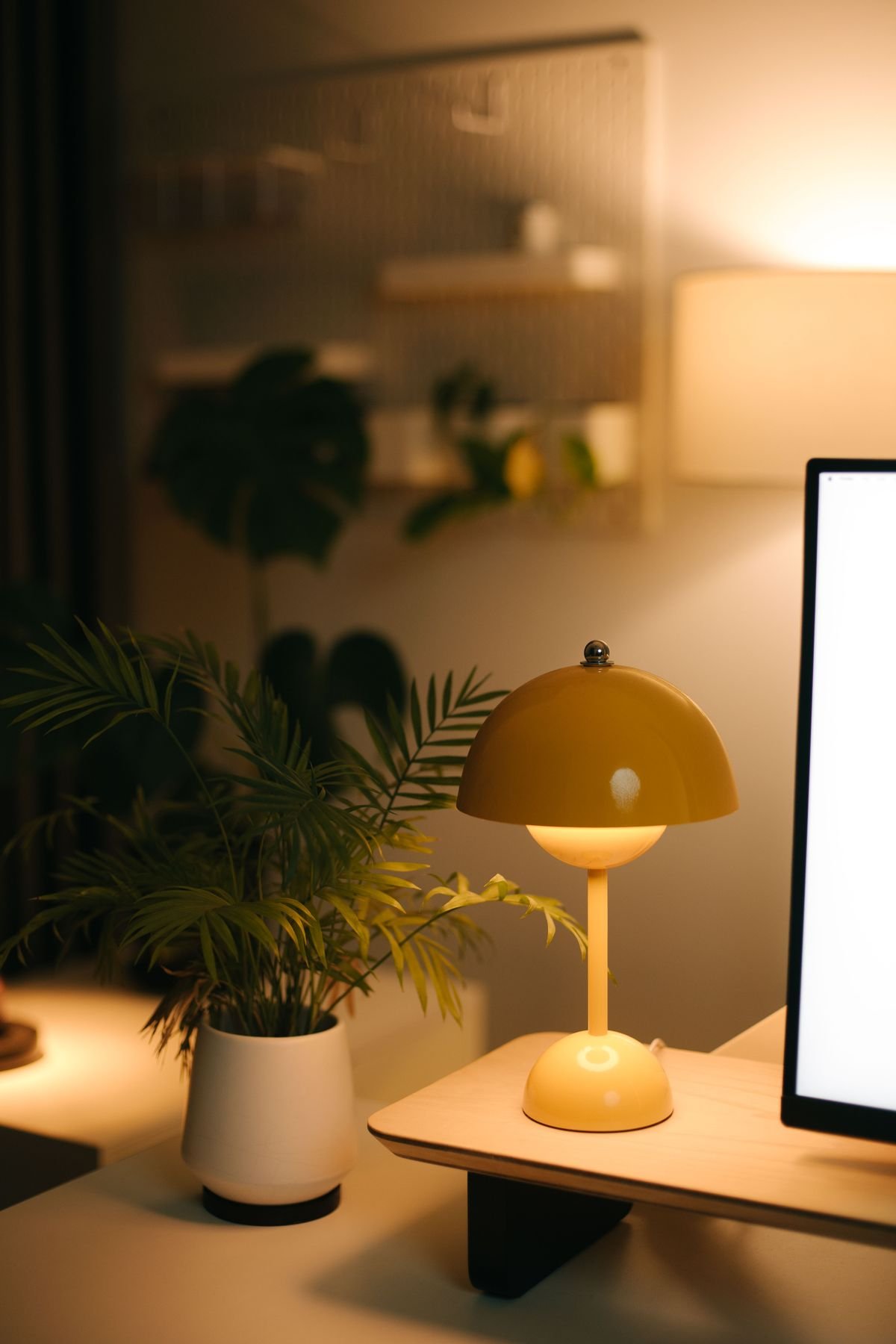
- If the reading sits below about 800 lux, add a small supplemental light rather than relocating repeatedly around the office — a compact LED desk lamp positioned close to the plant, angled so light reaches the leaf surface directly rather than passing overhead, raises the effective reading substantially. The grow lights guide covers fixture choice and mounting distance.
- Choose a solid green cultivar for a windowless desk rather than a variegated one, since the green form tolerates the lower end of the range without the reversion risk.
- Check the substrate directly before watering, using the usual top-2-3-cm-dry test, rather than watering on a fixed office-week schedule — transpiration slows during any dark period, whether that is one night or a weekend, so the correct response is checking the pot, not memorising a day of the week.
Mistakes and Limitations
- Assuming a "bright-looking" office is bright enough. Human perception of brightness and a plant's actual lux requirement are not the same measurement — always confirm with a reading rather than an impression.
- Watering by the calendar rather than the substrate. A rule like "always water on Monday" ignores how much the substrate actually dried over the preceding days, which varies with light, heating, and the specific desk — check the pot, not the day.
- Placing a variegated specimen on a windowless desk and expecting it to hold pattern. Reversion under light deficit is a genuine, well-documented response, not a defect in that particular plant — a green cultivar avoids the issue entirely.
- Relying on fixture colour temperature to compensate for low intensity. Blue-rich light shapes growth habit; it does not create the energy a genuinely dim desk is missing.
How This Connects to Broader Care
Office light is one specific light source among several a specimen might experience across its life — the same rough figures (about 800 lux as a floor, roughly 2,000-4,000 lux as a working target) apply whether the light comes from a window, an office fixture, or a grow light. For the full threshold set this guide sits on top of, see the light requirements guide; if a desk specimen has already stretched under chronically low office light, the fix leggy peperomia guide covers correcting the resulting etiolation.
Care FAQ
Is standard office lighting enough for Peperomia obtusifolia?
Usually not for active growth. Most offices measure 300-500 lux at desk height, below the roughly 800 lux tolerated minimum this species needs just to hold steady, let alone the roughly 2,000-4,000 lux working target for compact, active growth. It survives longer than most tropicals at that level, but it will not grow well without supplementing.
Does the blue-white colour of office lighting affect the plant?
Yes, but as a secondary effect, not a primary one. Office fixtures are typically 4,000-6,500K, rich in blue wavelengths that plants use as a cue to suppress stem elongation. This can make an office specimen look slightly more compact than one in an equally dim but blue-poor light source, but it does not compensate for genuinely low intensity.
Does turning office lights off overnight or on weekends harm the plant?
Not meaningfully on its own — plants routinely experience a dark period every night. What matters is total light accumulated during the hours lights are on, and whether watering is judged by an actual substrate check rather than by which day of the week it is, since transpiration slows during any dark period regardless of the calendar.
Will variegated Peperomia revert under office light?
It is a genuine risk. Variegated tissue carries less functional chlorophyll and needs brighter light than the solid green form to hold its pattern. In a light-limited office, new growth tends to come in progressively greener. A solid green cultivar avoids this risk entirely in a windowless office.