
Small Peperomia Leaves: Causes and Fixes
New Peperomia obtusifolia leaves that emerge noticeably smaller than the older foliage are the plant scaling its canopy down to match a constraint it is currently operating under. Insufficient light is the most common cause by a wide margin, followed by nutrient depletion in the substrate and a root system that has outgrown its pot. The size of new growth is a genuine signal, but it needs confirming against the substrate, the light level, and the season before deciding on a fix — smaller leaves in November are not the same problem as smaller leaves in June.
Quick Diagnosis: Small New Leaves
| Pattern | Other Signs | Season | Likely Cause |
|---|---|---|---|
| New leaves small, internodes elongated | Plant leans toward a window | Any | Light deficiency (etiolation) |
| New leaves small, pale, older leaves fine | No repotting in 2+ years | Spring/summer | Nutrient depletion |
| New leaves small, watering interval shortened | Roots visible at drainage holes | Any | Root-bound / hydraulic limit |
| New leaves small and distorted, silvered | Fine dark specks on youngest leaves | Any, often after a recent purchase | Thrips |
| New leaves small, growth otherwise normal | None | November–February | Seasonal slowdown (no action needed) |
What This Looks Like
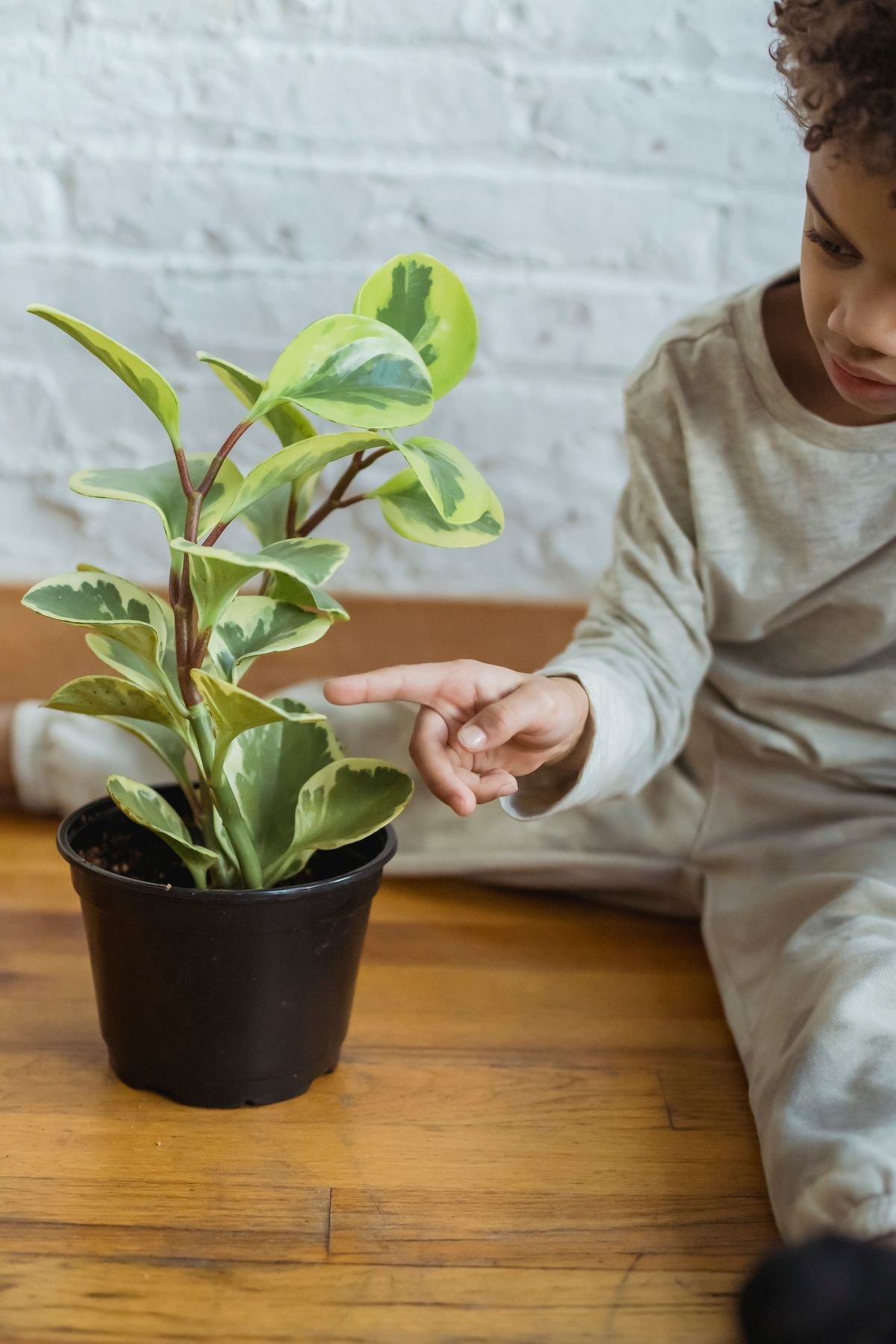
The pattern that matters here is specifically new growth versus old growth on the same plant — a newly unfurled leaf that is visibly smaller, sometimes thinner or paler, than leaves that formed months earlier lower on the same stem. This is distinct from an entire plant staying small (which is often simply a young or recently propagated specimen still building its root system) and from leaves changing colour or texture without a size change, which points to a different diagnostic altogether. Compare the two most recent leaves against a leaf from earlier in the season on the same stem, not against a photo of a different plant, since normal mature leaf size varies somewhat between specimens.
Causes Ranked From Most to Least Likely
1. Light Deficiency
Leaf size is a direct function of the carbohydrate surplus available during expansion. In dim light, roughly below 800 lux where this species survives but barely grows, the plant does not have enough photosynthetic output to fully expand new tissue, so it produces smaller leaves rather than starving existing ones. A specimen kept several metres from the nearest window frequently measures far below what it looks like it's receiving to the eye.
Confirm it: Measure light at the leaf surface with a light meter. A reading well below the site's working target of roughly 2,000–4,000 lux (based on UGA Extension indoor light categories), especially alongside elongated internodes or a lean toward the brightest point in the room, confirms this cause.
Rule it out: A light reading already in the 2,000–4,000 lux range at the leaf surface rules this out — check Cause 2 or 3 instead.
2. Nutrient Depletion in the Substrate
Nitrogen drives vegetative growth and magnesium sits at the centre of the chlorophyll molecule; both are consumed from the substrate over the growing season and are not replenished without fertilising. A specimen that has not been repotted or fertilised in over a year, particularly one in a small pot with a limited nutrient reserve, can run short of the raw material needed for full leaf expansion even with adequate light.
Confirm it: Light already measures 2,000–4,000 lux, the substrate hasn't been refreshed or fertilised in the current growing season, and older leaves may show mild pale mottling alongside the smaller new growth.
Rule it out: A plant fertilised on the standard schedule (balanced NPK 20-20-20 at 50% label rate, monthly in spring and summer) within the last month is unlikely to be nutrient-limited — look at Cause 1 or 3 instead.
3. Root System Outgrowing the Pot
Leaf expansion depends on turgor pressure — cells physically inflating with water as they grow. A root system that has filled the available pot volume cannot deliver water fast enough to support the same size of canopy it previously did, so new leaves emerge smaller to match what the roots can hydraulically supply. Increasing fertiliser does not correct this, since the constraint is water delivery, not nutrient supply.
Confirm it: Watering interval has shortened from the usual 10–14 days in summer to every 2–4 days, roots are visible at the drainage holes, or the pot has gone 2–3 years without a size increase. The full diagnostic combination is in the signs it's time to repot guide.
Rule it out: A recently repotted plant, or one with no change in watering frequency, is unlikely to be root-constrained.
4. Thrips Feeding on Developing Tissue
A common situation in specimens recently brought home from a nursery or received by post: thrips (common indoor and greenhouse pests) feed directly on meristematic tissue in developing leaves. Punctured cells fail to expand normally while the surrounding undamaged cells expand correctly, producing new growth that is not just smaller but twisted, silvered, or crinkled rather than uniformly scaled down.
Confirm it: The distortion is confined to new growth only, older leaves are unaffected, and close inspection of the youngest leaves shows fine silvering or dark faecal specks, sometimes alongside narrow-bodied insects visible under magnification.
Rule it out: Smaller but otherwise normally shaped and coloured new leaves, with no silvering or specks, rules out thrips — this is uniform scaling from Cause 1, 2, or 3, not pest damage.
5. Seasonal Slowdown — Often Not a Problem at All
Growth in this species falls to near zero between November and February in most temperate homes as ambient light drops and metabolic rate slows with it. Any new leaves produced during this window are often smaller than the previous season's growth, and this alone does not indicate a deficiency. The standard advice to fertilise at the first sign of smaller growth is the wrong response here — the site's position, consistent with opinions.md, is that fertilising in winter risks salt accumulation in a plant whose slowed uptake cannot process it, without addressing anything that is actually wrong.
Confirm it: The timing is November through February, light and watering habits haven't changed, and the reduction in size is modest rather than dramatic.
Rule it out: Smaller leaves appearing in spring or summer, when growth should be active, point back to Causes 1 through 4 instead.
Step-by-Step Recovery Plan
- Measure light at the leaf surface first. This resolves the most common cause immediately and prevents an unnecessary repot or fertiliser change.
- If light is well below that target: relocate to roughly
2,000–4,000 lux, measured at the leaf, or add a supplemental grow light. Do not fertilise in response to a light problem — it will not compensate for insufficient photons. - If light is adequate but the substrate hasn't been fertilised recently: apply a balanced NPK
20-20-20at50%of label rate, monthly, during the active growing season only. - If the watering interval has shortened and roots are visible at the drainage holes: follow the signs it's time to repot guide to confirm the trigger, then increase pot diameter by one inch rather than fertilising further.
- If silvering or distortion is present on new growth only: isolate the plant and treat for thrips before addressing anything else — a pest infestation will continue producing small, damaged leaves regardless of light or nutrient corrections.
- What not to do: do not fertilise a plant showing this symptom in November through February, and do not assume a root-bound plant needs more food rather than more room.
Recovery Signs and Timeline
An already-small leaf does not enlarge after the fact — leaf size is fixed once expansion completes. The reliable sign of correction is the size of the next new leaf to emerge after the fix is applied, often a few weeks later depending on the plant's current growth rate. A light correction shows in the next flush of growth; a nutrient correction takes a similar window once minerals reach the root zone; a repot needs a few weeks of root recovery before new growth reflects the larger hydraulic capacity. If new leaves continue to emerge small after the identified cause has been corrected for a full growth cycle, the original diagnosis was likely wrong and the plant should be re-checked against the other causes above.
How to Prevent Recurrence
- Check light with a meter periodically, not by eye. A spot that looks bright to a person standing in the room frequently measures well below the roughly
2,000–4,000 luxworking target at leaf height. - Fertilise on the standard schedule during the growing season — monthly, at
50%of label strength — rather than waiting until new growth is visibly undersized. - Track roughly how long the plant has been in its current pot. Every 2-3 years is the normal repotting interval; going well beyond that increases the odds of a hydraulic constraint developing unnoticed.
- Inspect new growth at the youngest leaves specifically during routine care, since thrips and other pests affecting meristematic tissue show up there first.
- Expect smaller winter growth as normal rather than intervening every time new leaves look undersized between November and February.
Smaller new leaves are the plant reporting a specific constraint rather than failing outright, and the constraint is usually confirmable in a few minutes with a light meter or a look at the substrate. If the presentation doesn't match any of the causes above, the complete symptom guide covers the rest of what this species can show, including sudden leaf drop, downward-curling leaves, and wrinkled, soft leaves that can accompany the same underlying light or root-health constraints.
Care FAQ
Why is my Peperomia growing smaller new leaves?
New leaves emerging smaller than older ones is an allometric response — the plant is rescaling its canopy to match a constraint on light, nutrients, or root capacity. It is not automatically a sign of illness. Checking light levels with a meter is the fastest first step, since insufficient light is the most common cause by a wide margin.
Will small new leaves grow back to full size?
No. A leaf's size is fixed once it finishes expanding. Once the underlying constraint is corrected, subsequent new leaves emerge at a normal size, but the already-small leaves themselves stay that size permanently. The size of new growth after correction is the reliable measure of recovery.
Is it normal for Peperomia to grow smaller leaves in winter?
Yes. Growth slows to near zero between November and February in most temperate homes as light levels drop and metabolic rate falls. Any new leaves produced during this period are often smaller, and this does not indicate a problem. Fertilising in response is the wrong intervention and risks salt accumulation in a plant that is not actively using the nutrients.
Can a root-bound Peperomia produce smaller leaves?
Yes. When the root system has filled the pot, it can no longer deliver enough water to support a canopy the size of the existing one, and new leaves emerge smaller to match what the roots can hydraulically support. Increasing fertiliser does not fix this, since the constraint is hydraulic, not nutritional — a one-inch pot upsize is the correct intervention.