
Peperomia Obtusifolia Indoors vs Outdoors: Safe Moves
Peperomia obtusifolia is not merely tolerant of indoor life — it does perfectly well as a permanent houseplant — but it can also genuinely benefit from a seasonal outdoor stay, and the choice between "indoors year-round" and "outdoors for summer" comes down to how much light your indoor spot actually provides and whether you're willing to manage the transition risk both ways. Only USDA zones 10-12 support this species outdoors permanently; everywhere else, outdoor time is a seasonal option, not a year-round alternative to growing it indoors.
Side-by-Side Comparison
| Factor | Indoors year-round | Seasonal outdoor summer |
|---|---|---|
| Light ceiling | Limited by window position; rarely exceeds 4,000 lux without a grow light | Considerably higher even in shade; risk shifts to too much light, not too little |
| Growth habit | Can be leggy if light is marginal | Often sturdier, more compact stems from increased airflow |
| Risk profile | Low — stable, controlled environment | Higher — sunburn if rushed, cold snaps, pests, heavy rain |
| Effort required | Routine care only | Gradual acclimation, monitoring, and an autumn quarantine |
| Suitable everywhere | Yes | Only as a seasonal measure outside USDA zones 10-12 |
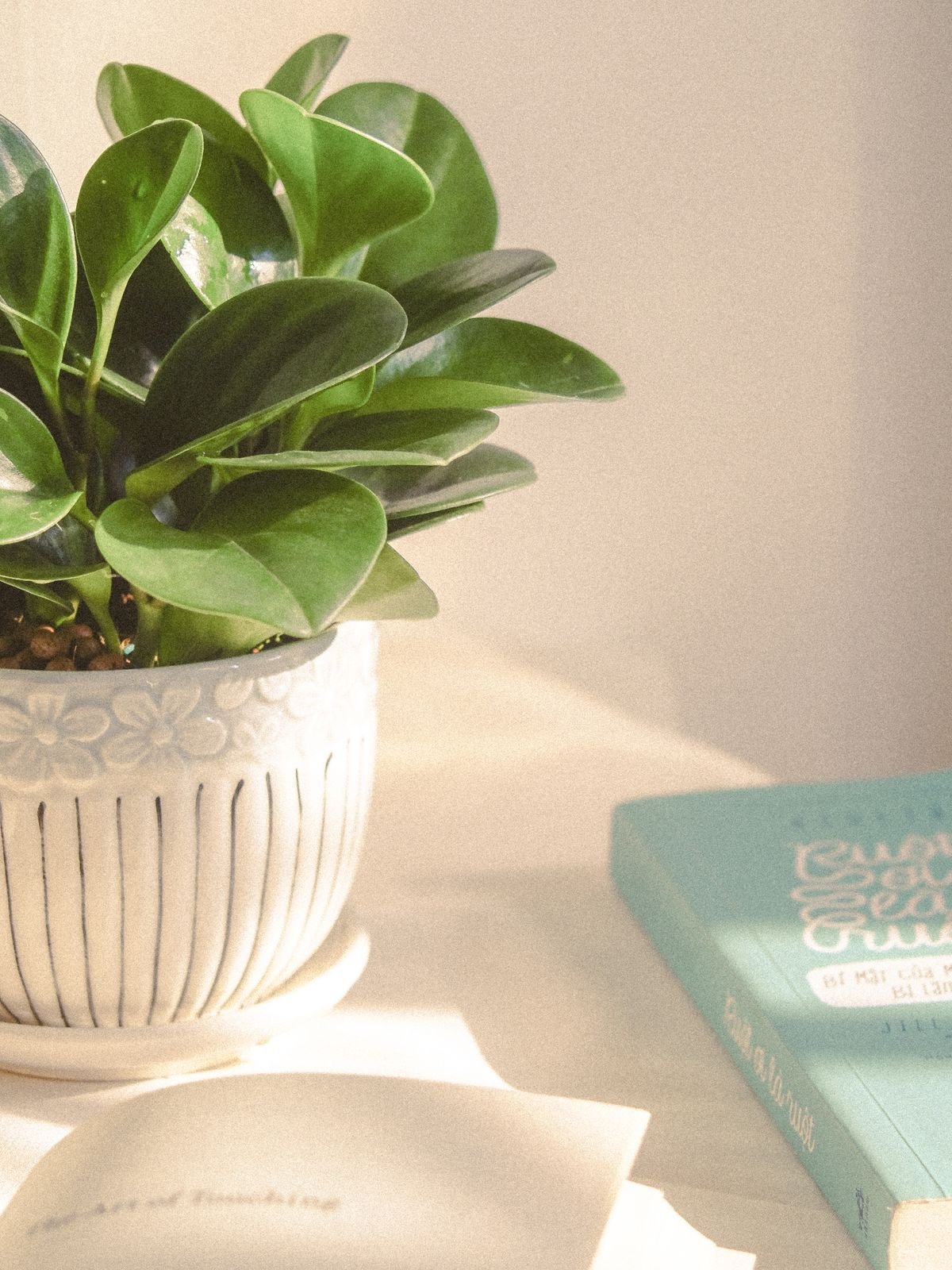
How to Tell Which Environment a Plant Has Been Growing In
An indoor-only specimen typically shows thinner stems, a more uniform pale-to-mid green colour, and — if light has been marginal — slightly elongated internodes. A plant that has spent time acclimated outdoors tends to show shorter internodes, a noticeably thicker stem, and deeper leaf colour, the visible result of the sturdier growth habit increased light and airflow produce. Neither appearance indicates a health problem on its own; they simply reflect which environment shaped the current growth.
Care Differences That Actually Change the Outcome
- Light ceiling. Indoors, the practical limit for most rooms is somewhere below
4,000 luxwithout supplemental lighting — plenty for healthy growth, but rarely more. Outdoors, even shaded positions frequently exceed that, which is a genuine growth advantage but also the source of the main outdoor risk: sunburn if the plant is moved into that brighter light abruptly rather than acclimated over roughly a week to ten days. The full transition protocol is covered in the outdoor summer guide rather than repeated here. - Airflow and structural growth. Indoor air is comparatively still; outdoor wind triggers a mechanical-stress growth response (thigmomorphogenesis) that produces thicker, more compact stems — part of why outdoor-summered specimens often look sturdier than their indoor-only counterparts, independent of the light difference.
- Watering rhythm. Indoors, the standard
10-14day summer interval holds fairly steadily. Outdoors, higher temperature and constant airflow increase transpiration meaningfully, and heavy rain can deliver far more water in one event than the plant would normally receive in weeks — outdoor pots need generous drainage and closer monitoring rather than a fixed schedule. - Pest exposure. An indoor-only plant rarely encounters outdoor pests. A summered plant will, and the risk isn't the outdoor exposure itself but carrying that exposure back into an indoor collection unmanaged.
- Temperature floor. Indoors, temperature is rarely a concern. Outdoors, sustained exposure below
10°Ccauses cellular damage, and this species has no frost tolerance at all — the hard limit that ends the outdoor season regardless of how well the summer went.
Which Is Easier for a Specific Home
- A bright room already hitting
2,000+ lux: indoor-only is entirely sufficient — outdoor time would add growth vigour but isn't filling a gap that exists. Pair a bright indoor spot with the humidity guide's40-60%target rather than assuming light alone covers everything an outdoor summer would have provided. - A dim room struggling to support active growth: outdoor summering is a genuine option worth considering, provided the transition is managed gradually rather than abruptly.
- A multi-plant indoor collection you're protective of: weigh the pest-quarantine responsibility seriously before summering a plant outdoors — it's a real, manageable risk, not a reason to avoid the outdoors entirely, but it does need following through on.
- A climate with harsh or unpredictable early-autumn cold snaps: indoor-only removes the risk of misjudging the seasonal cutoff; if you do summer the plant, err on the early side when bringing it back in.
- USDA zones 10-12: outdoor culture can be a legitimate year-round choice rather than only a seasonal one, though the same light-acclimation caution still applies to a newly acquired or newly planted specimen.
Common Misidentification and Buying Mistakes
- Assuming a leggy indoor specimen needs to go outdoors to "fix" itself — the underlying cause is usually insufficient indoor light, which moving outdoors addresses only temporarily and only for the season; the better fix is often a brighter permanent indoor spot or supplemental lighting.
- Moving a plant outdoors abruptly at the start of summer without a gradual transition — this is the single most common cause of outdoor sunburn on this species.
- Bringing a summered plant back indoors without inspection or quarantine, risking an outdoor pest population establishing itself in an indoor collection.
- Choosing an outdoor pot without adequate drainage, which turns a single heavy rain event into a root-rot risk rather than a manageable watering.
Final Decision Guide
Keep it indoors year-round if your space already provides 2,000+ lux, you'd rather avoid the seasonal transition and quarantine effort, or you live somewhere with an unpredictable early cold season.
Summer it outdoors if your indoor spot is genuinely light-limited, you're willing to follow a gradual acclimation schedule rather than an abrupt move, and you'll commit to inspecting and quarantining it before it rejoins an indoor collection in autumn.
For the general care baseline either choice sits on top of, see the complete care guide; for the detailed step-by-step transition protocol, see the outdoor summer guide; and for a sealed, indoor-only alternative that removes the outdoor question entirely, see the terrarium guide.
Care FAQ
Can Peperomia obtusifolia live outside year-round?
Only in USDA hardiness zones 10-12, where winter lows stay well above the species' cellular damage threshold. Outside those zones, it needs to come indoors before autumn nights approach 10°C, since it has no frost tolerance and sustained cold below that point causes irreversible tissue damage.
Does moving a Peperomia outdoors for summer actually help it?
Often yes — higher light levels and airflow than most indoor rooms provide can produce sturdier stems and more compact growth than the same plant gets indoors year-round. The benefit depends entirely on a gradual transition; a plant moved abruptly into full outdoor light burns rather than benefits.
Is an indoor-only Peperomia missing out?
Not necessarily. A well-lit indoor position at 2,000-4,000 lux supports full, healthy growth on its own. Outdoor time is a genuine option, not a requirement — it suits a grower willing to manage the seasonal transition and quarantine risk, not a mandatory upgrade every plant needs.
What is the biggest risk of bringing a summered plant back indoors?
Introducing pests picked up outdoors into an indoor collection. A plant that spent the season outside should be inspected, treated if needed, and quarantined away from other houseplants for a couple of weeks before rejoining them, regardless of how healthy it looks.