Peperomia Alba: Cream Variegation, Light & Reversion
Peperomia alba (Peperomia obtusifolia (L.) A.Dietr. 'Alba') is a cream-heavy cultivar of baby rubber plant: much of each leaf lacks functional chlorophyll, so green sectors must subsidise the cream. That single constraint sets light, pruning, and propagation rules that differ from the all-green species (species profile; Missouri Plant Finder; variegation). Confirm the plant is genuinely P. obtusifolia before applying any of this — the identification guide covers the leaf, sap, and stem checks that separate it from similar species.
Short answer: Keep it in bright indirect light, towards the top of the site's working target of roughly 2,000–4,000 lux at the leaf surface (measured). In lower light, new growth tends to green out. Strong unfiltered direct sun can scorch cream tissue. Water when the top 2–3 cm of mix is dry; use a free-draining mix (≥30% perlite or grit). Propagate stem cuttings with a variegated node — not leaf cuttings. Deep watering, soil recipes, and species basics live in the complete care guide.
What Peperomia Alba Is (and Is Not)
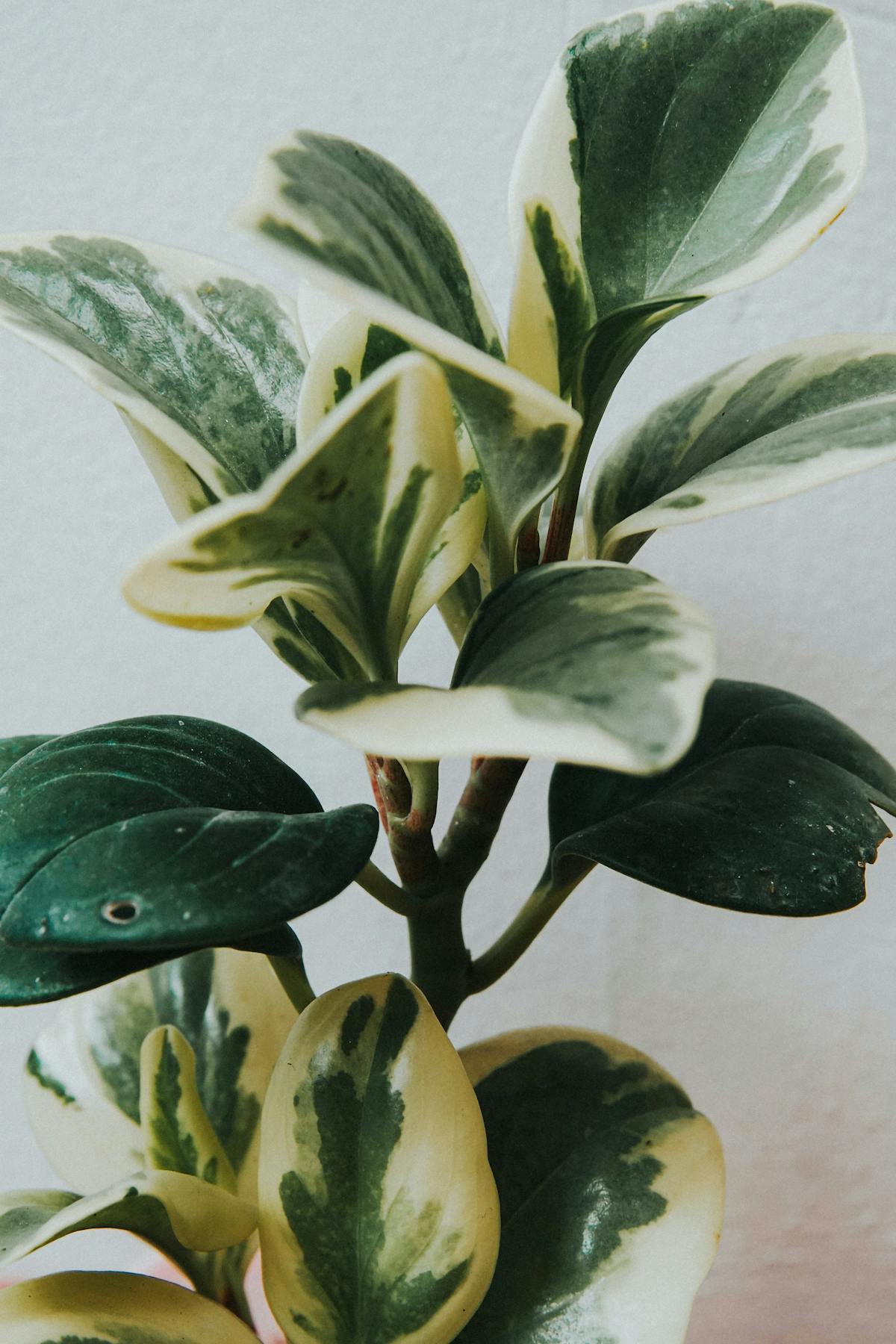
'Alba' is a horticultural selection, not a wild subspecies. New leaves often emerge pale cream or ivory; mature blades keep irregular sage-green splashes or veins on a pale ground. Cream cells lack working plastids — they produce no sugars — so a leaf that is mostly cream runs a thinner energy budget than 'Variegata' or solid green obtusifolia.
Nursery labels often say “peperomia alba” for any pale baby rubber plant. Confirm the pattern before you buy: large irregular cream fields with green as patches or veins point to 'Alba'; a stable green centre with a cream border is usually 'Variegata'. Background ecology (facultative epiphyte, understorey light, semi-succulent leaves) matches the species (Wikipedia). For a cultivar with a similar cream-and-green palette but a more compact growth habit, see the Lemon Lime care guide; for the fuller list of named forms, see the rare varieties guide.
Peperomia Alba vs Variegata vs Albo-Marginata
| Cultivar | Typical pattern | Rough green share | Light need |
|---|---|---|---|
| 'Variegata' | Green centre, cream–yellow margin | Higher | Bright indirect |
| 'Albo-Marginata' | Grey-green centre, narrow silvery-ivory edge | Highest of the three | Bright indirect |
| 'Alba' | Irregular cream–ivory fields; green as splashes/veins | Lowest | Brightest of the three (still indirect) |
Less green tissue means a narrower margin for error: too little light invites reversion; too much unfiltered sun cooks unprotected cream. For the margin-first form, see 'Variegata'.
Peperomia Alba Light Thresholds (Why Cream Needs More Photons)
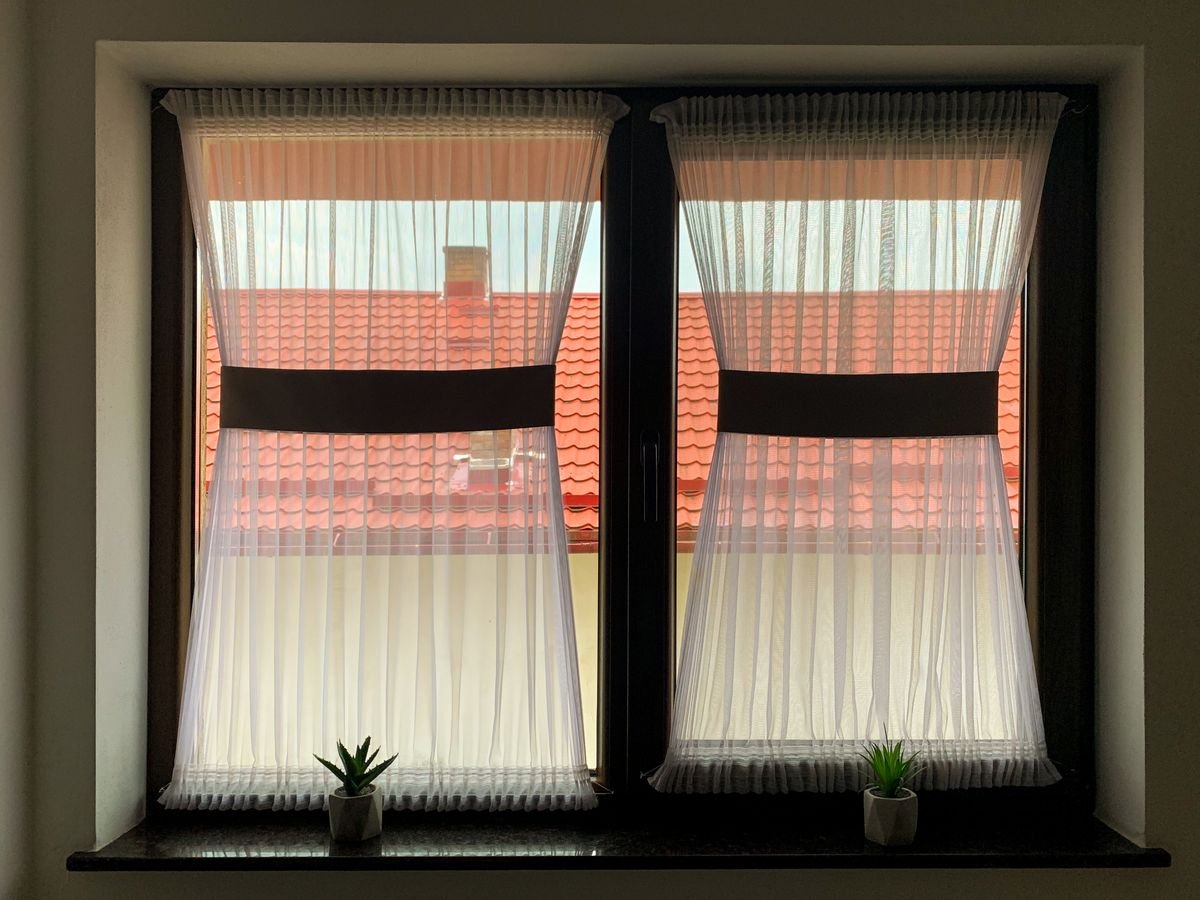
Cream sectors do not photosynthesise. The site's working target for the green form is roughly 2,000–4,000 lux, based on UGA Extension's indoor light categories; cream-heavy cultivars need the upper part of that range, and more light than a solid-green sibling in the same room. “Bright indirect” without a meter is not a protocol: the same phrase can mean 300 lux deep in a room or 10,000 lux behind a sheer south window.
| Band | What happens to 'Alba' |
|---|---|
| Bright indirect (upper part of the working target) | Compact internodes, stable cream/green patterning |
| Moderate light | Progressive greening of new leaves over weeks |
| Low light (towards ~800 lux) | Strong reversion pressure; etiolation often arrives with it |
| Strong unfiltered direct sun | Bleaching / cell death in cream tissue |
Opinion: Variegated peperomias need more light than green forms, not less. Advice that parks cream cultivars in deep shade “to protect white tissue” confuses bleaching from harsh sun with low-light reversion. Correct the meter reading; do not dim the plant further. Practical levers for holding expression: increase variegation protocol.
East windows with morning sun, or south/west positions 1–2 m back or behind sheer fabric, usually land in band. In short winter days, move closer to the glass or add a full-spectrum lamp that holds leaf-surface lux for 10–12 hours.
Avoid These 3 Peperomia Alba Reversion Myths
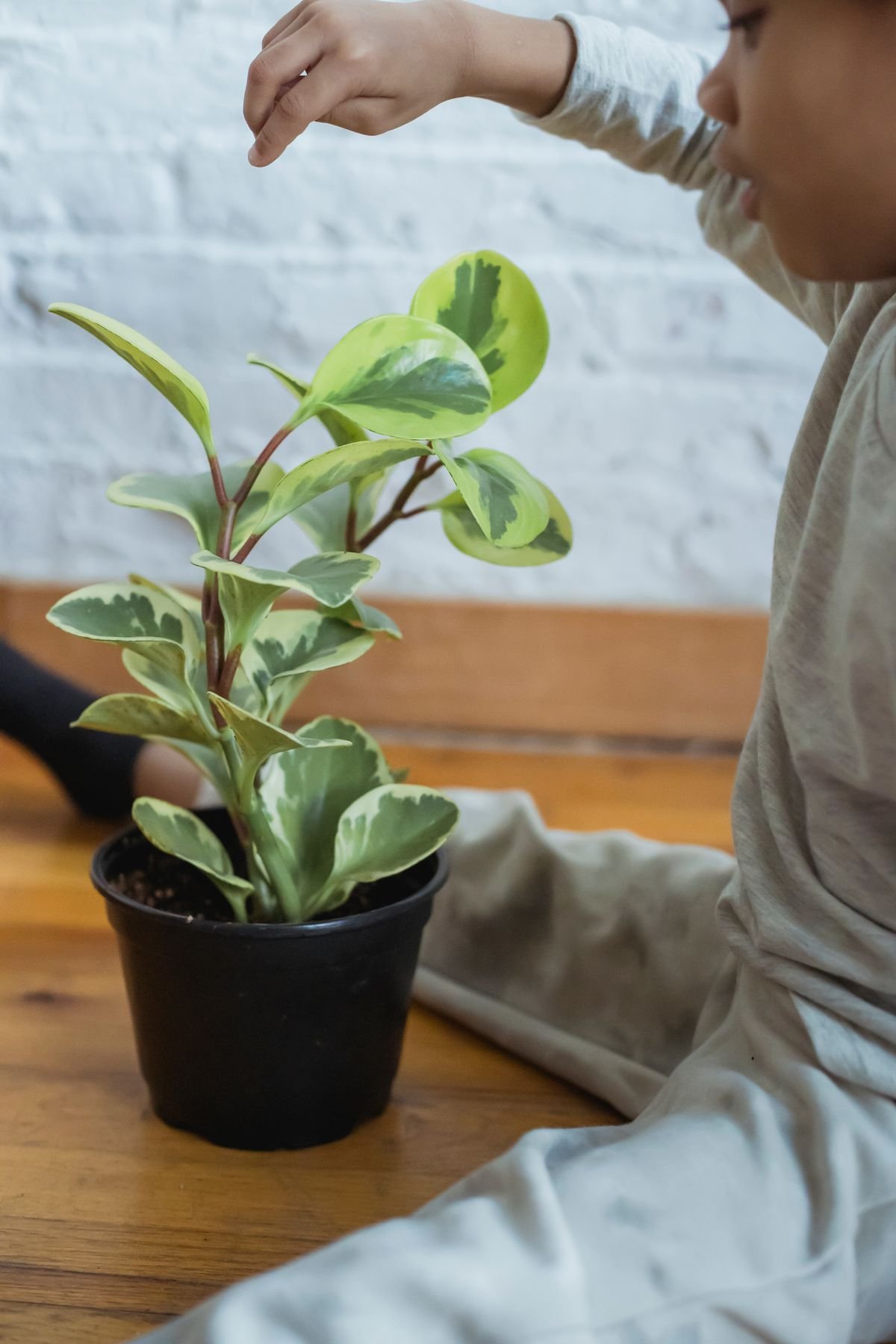
Myth 1 — “Existing green leaves will turn cream again if I move it.” No. Corrected lux only changes new growth. Older all-green blades stay green. Prune solid-green leaders back to the last variegated node so an axillary bud with chimeric layers can push.
Myth 2 — “Less light protects the white.” Shade accelerates the meristem’s preference for chlorophyll-rich tissue. Protect cream from unfiltered midday scorch; do not starve the plant of photons.
Myth 3 — “A leaf cutting clones the Alba pattern.” Chimeral variegation sits in organised shoot-tip layers. Leaf regenerants usually rebuild all-green plants. Detail: variegated leaf cuttings.
This is Pattern 2 — the reverting variegated specimen — applied to cream-heavy stock: progressive loss on new leaves with older patterned leaves intact points to chronic light deficit, not a mystery nutrient cure.
Quick Care Thresholds (Alba-Specific Notes Only)
Full schedules belong elsewhere. Alba does not rewrite species physics; it tightens the light bill and makes cream margins show damage earlier.
| Parameter | Alba-relevant threshold |
|---|---|
| Water | Top 2–3 cm dry; never let the mix stay wet for long periods (watering weight method) |
| Substrate | ≥30% inorganic drainage (soil mix recipe) |
| Temperature | Day 18–24°C; avoid sustained leaf temps below ~10–15°C and cold draughts |
| Humidity | 40–60% RH; cream edges crisp first below ~30% RH |
| Feed | Dilute balanced fertiliser in spring–summer only; cream tips show salt burn early |
| Pets | Non-toxic (ASPCA baby rubber plant; toxicity overview) |
Propagating Peperomia Alba: Stem Nodes, Not Leaves
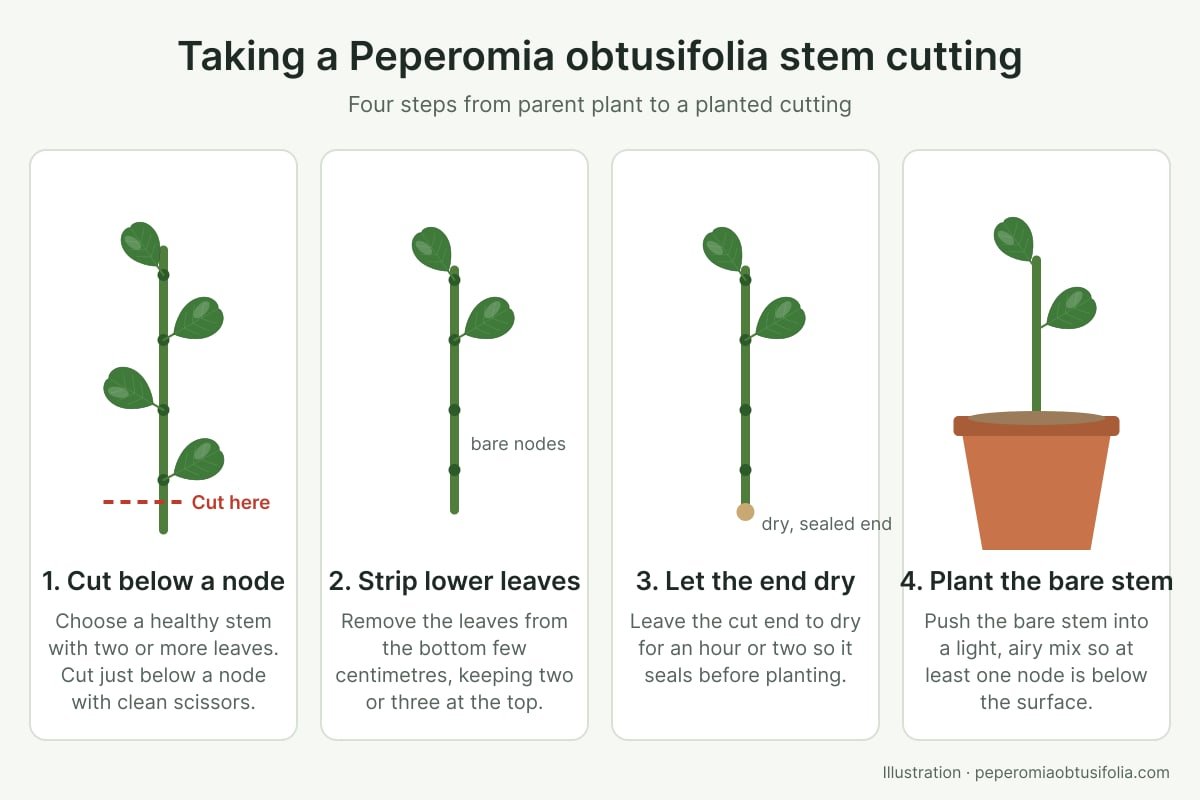
Take a stem tip or nodal cutting that includes at least one clearly variegated node. Root in a free-draining mix at warm room temperature under bright indirect light — not deep shade. Discard fully green cuttings if your goal is patterned stock; they root readily and then sell false hope. Leaf cuttings may root and still produce green plantlets in the large majority of cases for these chimeras (stem cutting guide).
Cream-Tissue Problems: Three Browns That Look Alike
| Symptom on cream tissue | Likely mechanism | First check |
|---|---|---|
| Pale, scorched patches with diffuse edges | Photon/UV overload | Move out of unfiltered midday sun |
| Crispy margin tip burn | Low RH or salt/fluoride stress | Hygrometer; flush salts; filtered water |
| Soft yellowing from oldest leaves up | Root anoxia / overwater | Pot weight; roots; drainage |
Sudden leaf drop after a cold night or heater blast is temperature shock — cream tissue has little metabolic buffer. Leggy internodes plus greening new leaves are light deficit, not a separate “stretch disease” — see the leggy and leaning guide if internode stretch is the dominant symptom rather than colour loss alone.
Conclusion
Peperomia alba is defined by expensive cream tissue: pay the light bill (bright indirect light, towards the top of the roughly 2,000–4,000 lux working target), prune green reversions to a variegated node, and multiply only from chimeric stems. Ignore the three myths — green leaves do not re-paint themselves white, shade does not “protect” chimera, and leaf cuttings do not clone Alba patterning. For day-to-day water and soil detail, use the care guide; for meristem competition, use the reversion guide.
Care FAQ
Is Peperomia obtusifolia alba easy to care for?
Moderately. The hard part is light: keep it towards the top of the site's working target of roughly 2,000–4,000 lux at the leaf so cream tissue does not give way to all-green new growth. Watering and substrate follow the species semi-succulent rules — top 2–3 cm dry before watering, mix with at least 30% inorganic drainage. Full baseline care belongs in the species care guide.
Why is my Peperomia alba losing its variegation and turning green?
Reversion under light deficit. The meristem favours all-green tissue with more chlorophyll. Existing cream leaves do not re-variegate. Raise leaf-surface light towards the top of the roughly 2,000–4,000 lux working target, prune solid-green shoots back to the last variegated node, and wait for new patterned growth.
Is Peperomia obtusifolia alba toxic to cats or dogs?
No. The ASPCA lists Peperomia obtusifolia (baby rubber plant) as non-toxic to cats, dogs, and horses. Cultivars including Alba share that classification.
What is the difference between Peperomia alba, Variegata, and Albo-Marginata?
Variegata usually shows a green centre with a cream-yellow border; Albo-Marginata a grey-green centre with a narrow silvery-ivory edge; Alba large irregular cream-to-ivory patches with green as splashes or veins. Alba typically carries the least green tissue and needs the upper bright-indirect lux band most consistently.
Can I propagate Peperomia alba from a leaf cutting?
You can root a leaf, but chimeric variegation is almost always lost. New plantlets regenerate from tissue that does not carry the organised chimera. Use a stem cutting that includes at least one variegated node.