Rare Peperomia Obtusifolia Varieties: ID Guide
Rare Peperomia obtusifolia varieties are distinguished from the common Jade and Variegata forms primarily by genuine, identifiable variegation traits — but the cultivar names circulating in collector networks are not all equally verifiable, and confirming a name before buying matters more than the rarity label itself. Care requirements are identical across every cultivar; the one real difference is that more heavily variegated forms need meaningfully more light to hold their pattern.
Is This Cultivar Name Verified?
'Variegata', 'Marble', 'Golden Gate', 'Red Edge', 'Lemon Lime', and 'Bicolor' are established, documented cultivars with consistent identification traits across nurseries and collector sources. (The RHS Award of Garden Merit belongs to the species itself, not to 'Variegata' or any other cultivar.) 'Boie' is a documented, named selection that circulates primarily through European specialist nurseries. Names like 'Celtis', single-word 'Greengold' as distinct from the two-word 'Green Gold', and informal designations such as "Neon Alba" or "Ghost Alba" appear in collector circles without the same breadth of independent documentation — treat these as informal trade names rather than confirmed registry cultivars, and verify against a photo of the actual plant before paying a rarity premium for the name alone.
Quick Reference
| Cultivar | Key Visual Trait | Light Needed |
|---|---|---|
| 'Jade' (species) | Solid deep green, oval leaf | Bright indirect (roughly 2,000-4,000 lux) |
| 'Variegata' | Cream-edged margin, dark green centre | Brighter than the green form |
| 'Marble' | Marbled cream and green across the blade | Brighter than the green form |
| 'Golden Gate' | Wide, clean cream margin, compact habit | Brighter than the green form |
| 'Red Edge' | Solid green with a thin anthocyanin red margin | Bright indirect (red edge intensifies in bright light) |
| 'Lemon Lime' | Chartreuse and green bands parallel to the midrib | Brighter than the green form |
| 'Bicolor' | Cream-green leaf variegation plus pink-red stems | Brighter than the green form |
| 'Boie' | Muted silver-wash over dark green | Brighter than the green form |
| 'Celtis' (unverified name) | Near-circular leaf, very compact, thick texture | Bright indirect, as the green form — not variegated |
| 'Greengold' (unverified, distinct from 'Green Gold') | Extensive yellow variegation, minimal green | Among the brightest needs of any form listed here |
Identification Traits
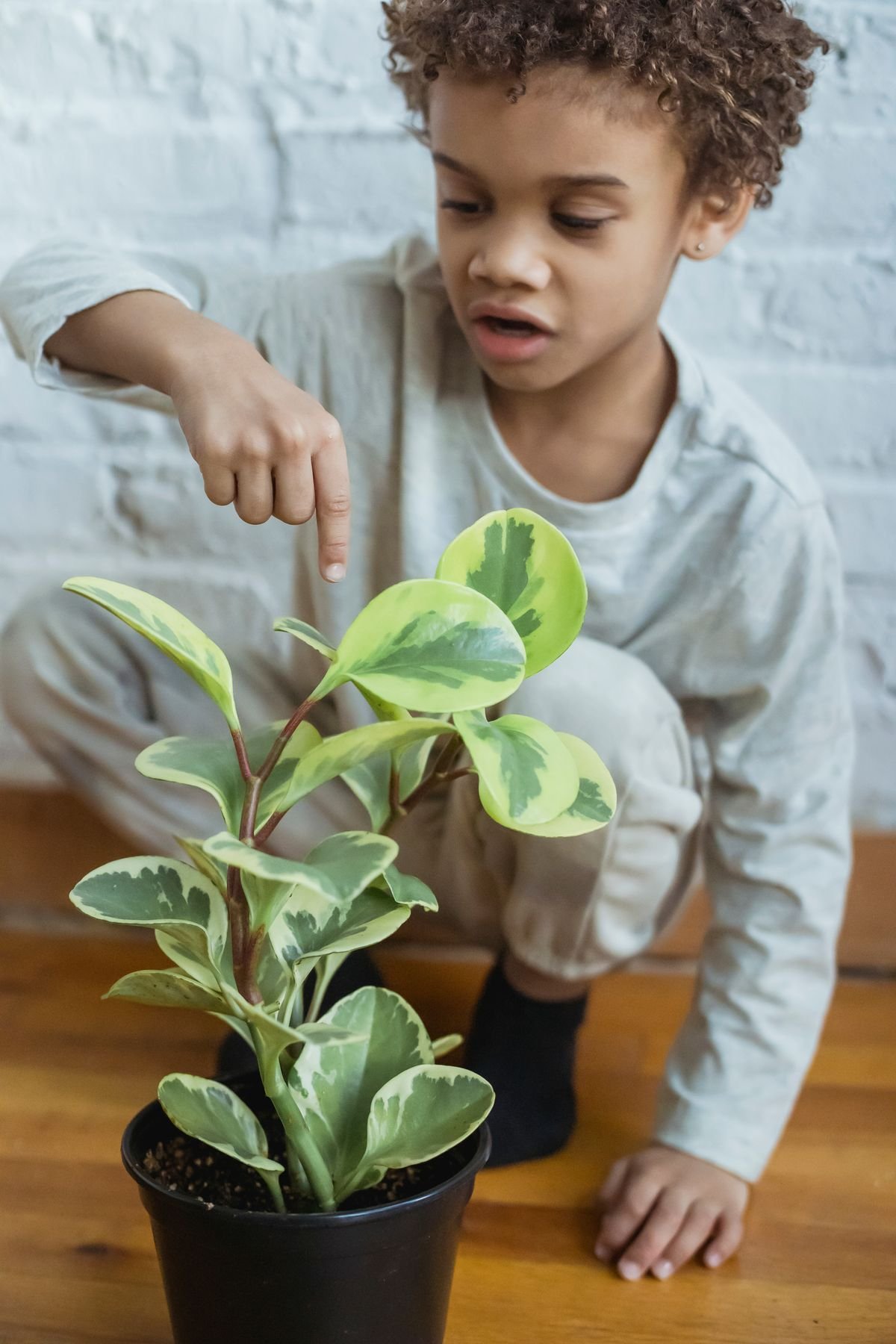
The all-green species — sold as 'Jade' — is the baseline: oval, blunt-tipped leaves (obtusifolia literally means blunt-leaved), thick and glossy, with no chlorophyll-deficient tissue. 'Variegata' shows an irregular cream border following the leaf edge, with the ratio of cream to green varying leaf to leaf on the same plant. 'Marble' differs by distributing its cream patches across the whole blade rather than concentrating them at the margin — fine, subtle colour transitions are the higher-quality expression of the same trait, coarse blocky patches the lower one. 'Golden Gate' is distinguished from 'Variegata' by a wider, cleaner, more uniform cream margin and a more compact habit. 'Red Edge' carries no chlorophyll loss at all — its thin red margin comes from anthocyanin pigment, which is why it doesn't revert under low light the way true variegation does; it simply fades. 'Bicolor' is identifiable by pink-red stem colouration in addition to leaf variegation, a combination not found in the other common cultivars. 'Boie' shows a diffuse, muted silver wash rather than the higher-contrast cream of 'Variegata', with a slightly more elongated leaf shape. For a lemon lime specimen, the chartreuse banding is the fastest visual confirmation against a mislabelled 'Variegata'.
Light and Colour Stability
Variegated tissue contains little to no functional chlorophyll, so a variegated cultivar has genuinely less photosynthetic leaf area than the all-green species. Placed at a light level that comfortably sustains the standard green species, a variegated cultivar tends to produce progressively greener new growth as the meristem favours its more efficient all-green cell layer — this is reversion, not decline, and more light for future growth is the fix, not a nutrient or watering change. To hold pattern reliably, keep variegated cultivars toward the upper end of the site's working target of roughly 2,000-4,000 lux; see how to increase and maintain variegation for the fuller management detail. Avoid overcorrecting into unfiltered direct sun, since pale variegated tissue scorches more easily than solid green tissue at the same light intensity.
Watering, Soil, and Pot Choice
None of these differ by cultivar — the same top-2-3-cm-dry watering trigger, free-draining substrate, and pot sizing apply equally to a common Jade and a rare Boie. See the complete care guide for the full thresholds rather than repeating them here; the only cultivar-specific adjustment in this entire care profile is the light level covered above.
Reversion, Propagation, and Pruning
Preserving a cultivar's pattern through propagation depends entirely on selecting the right material: a stem cutting taken from a node that still shows variegation carries a real chance of producing a patterned plant, while a leaf cutting or a cutting from already-reverted green growth will not — see the variegated leaf cutting guide for why leaf-only propagation fails to preserve chimeric variegation specifically. Rare cultivars are not mechanically harder to propagate; they simply grow more slowly and yield fewer usable cuttings per year from the same parent, which is the actual constraint behind their scarcity in the trade.
Common Problems and Lookalikes
The most frequent buying mistake is treating every collector-circle name as an equally documented cultivar — a "rare" name attached to a plant that, on close inspection, shows the same traits as a common 'Variegata' or 'Marble' is a mislabelling red flag rather than a genuine find. The second most common mistake is judging a specimen's health by its variegation intensity alone: a cultivar producing greener new growth than older leaves is showing reversion from insufficient light, not disease, and doesn't need pest or fungal treatment.
Sourcing and Authenticity Checklist
- Request a photo of the actual plant being sold, not a stock or catalogue image — this is the single most reliable authenticity check available before purchase.
- Compare leaf shape and variegation pattern against the identification traits above rather than trusting the listing name alone.
- Treat informal or unverified cultivar names with extra scrutiny — ask the seller directly where the name originates and whether it traces to a documented breeder or nursery selection.
- Be cautious of a "rare" cultivar priced identically to a common one — genuine scarcity from low propagation yield is usually reflected in price, and an inconsistency there is worth asking about before paying.
- Quarantine any new specimen for at least two weeks, checking leaf undersides, stem nodes, and the substrate surface daily, before it joins an existing collection — a single pest introduction can spread through a whole collection within weeks, and the stakes are higher when a rare specimen is involved.
For where a mature, well-lit specimen fits best in a room once sourced and settled, see the feng shui placement guide, and for the fuller catalogue of common cultivars beyond the rare tier covered here, see the varieties guide.
Care FAQ
Why are some Peperomia obtusifolia cultivars rarer than others?
Rarity mostly reflects propagation yield, not growing difficulty. A heavily variegated cultivar has less functional chlorophyll, grows more slowly, and produces fewer usable cuttings per parent plant per year than the standard green form — a genetic and economic constraint on supply, not a sign the plant is harder to keep alive.
Do rare Peperomia obtusifolia varieties need special care?
The core requirements — light, watering trigger, temperature, substrate — are identical across cultivars. The one genuine difference is light: variegated cultivars have less functional leaf area for photosynthesis and need meaningfully more light than the standard green form to hold their pattern, typically the upper end of the site's working target of roughly 2,000-4,000 lux.
How do I identify a genuine rare Peperomia obtusifolia cultivar?
Request a photo of the actual specimen you would receive, not stock photography, and compare leaf shape and variegation pattern against documented profiles of the named cultivar. Some names circulating in collector networks are well-documented; others are informal trade names without a verifiable registry entry, and treating every name as equally certain is a common buying mistake.
Should I quarantine a new rare Peperomia plant on arrival?
Yes, for at least two weeks, checking leaf undersides, stem nodes, and the substrate surface daily for pests before it joins an existing collection. This matters more, not less, for a rare or expensive specimen, since an introduced pest can spread to the rest of a collection within weeks.